
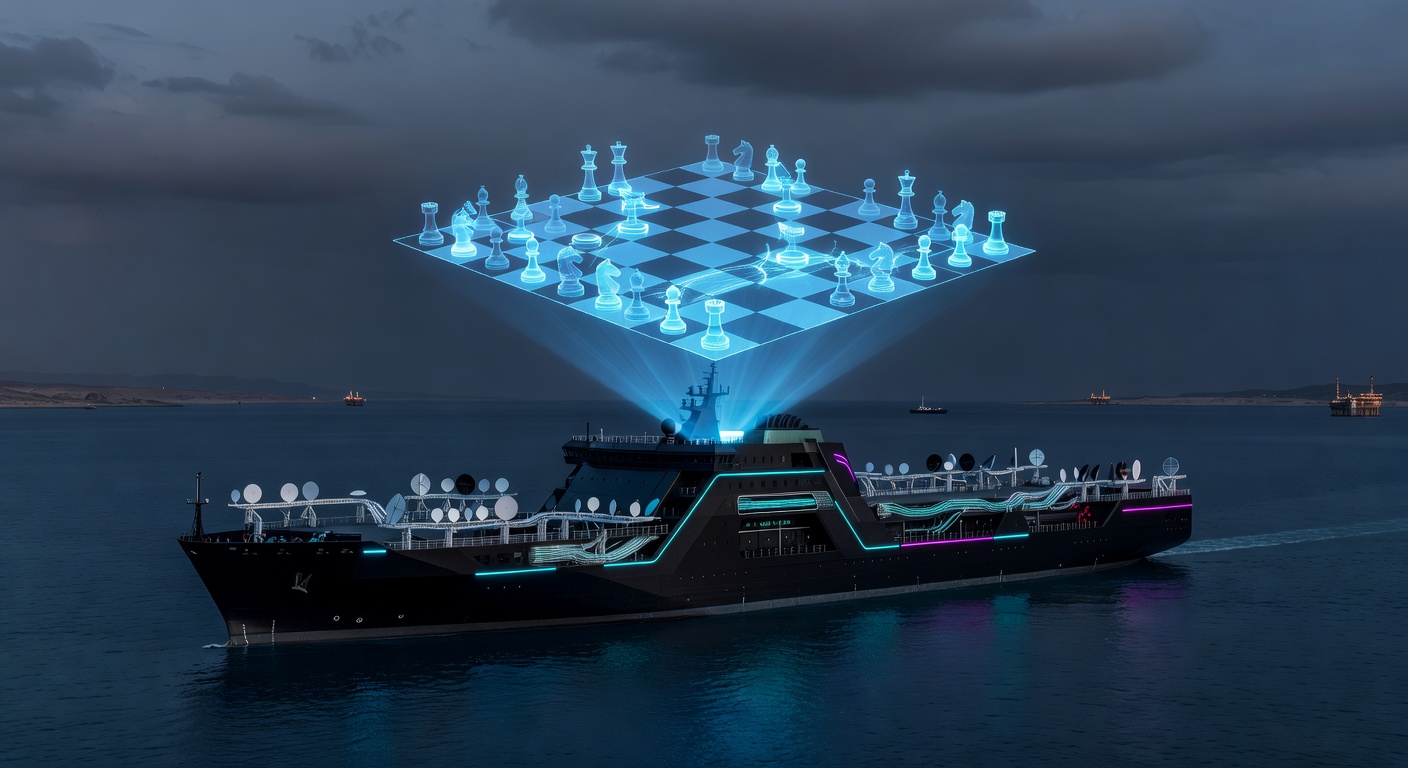
The Ocean's Newest (and Biggest) Neighbor
Imagine if someone took a datacenter, strapped it to a ship the size of a small city, and sent it cruising to one of the world's most strategically important waterways. That's essentially what China has done with the Liaowang-1, and honestly? It's both fascinating and a little unsettling.
This floating behemoth isn't your typical naval vessel. At 30,000 tons, it's roughly the weight of 200 blue whales, but instead of carrying weapons, it's packed with sensors, computers, and enough processing power to make your gaming rig weep with envy.
Why the Gulf of Oman Matters (Spoiler: It's All About Location)
The Gulf of Oman isn't just another patch of blue water – it's like the Times Square of global shipping lanes. Nearly 20% of the world's oil passes through the nearby Strait of Hormuz, and with tensions between the U.S., Israel, and Iran creating geopolitical fireworks, it's prime real estate for intelligence gathering.
China positioning the Liaowang-1 here is like setting up a lawn chair with the best view of the neighborhood drama. Except this lawn chair costs hundreds of millions of dollars and can eavesdrop on communications from thousands of miles away.
The 6,000-Kilometer Bubble of Curiosity
Here's where things get really wild. The ship's sensor range of 6,000 kilometers means it can potentially monitor activities from the eastern Mediterranean all the way to the Arabian Sea. That's like sitting in New York and being able to watch what's happening in Denver.
What exactly is it watching? Well, that's the million-dollar question. Electronic communications, radar signatures, ship movements, missile tests – basically anything that produces an electronic signature is fair game. It's like having a massive digital net cast across one of the world's most active regions.
The New Age of Naval Intelligence
This deployment represents something bigger than just one ship. We're witnessing the evolution of intelligence gathering from human spies with briefcases to floating AI-powered data centers. The Liaowang-1 can probably process more information in an hour than traditional intelligence ships could handle in weeks.
What's particularly interesting is China's approach here. Instead of deploying multiple smaller vessels or relying solely on satellites, they've gone all-in on this floating fortress concept. It's bold, it's expensive, and it sends a very clear message: "We're here, we're watching, and we're not going anywhere soon."
The Bigger Picture
While some might see this as aggressive posturing, I think it's more accurately described as China playing the long game. They're positioning themselves as a major player in a region traditionally dominated by U.S. and European powers. It's chess, not checkers – a calculated move to establish presence and gather intelligence in a critical area.
The real question isn't whether this ship can do what China claims (it almost certainly can), but what happens next. Will other nations deploy their own floating supercomputers? Are we heading toward a future where our oceans are filled with these digital fortresses?
One thing's for certain: the age of boring intelligence gathering is officially over. Welcome to the era of floating data centers that can see halfway around the world.