
Holy Cow, Earth Is Making a New Island
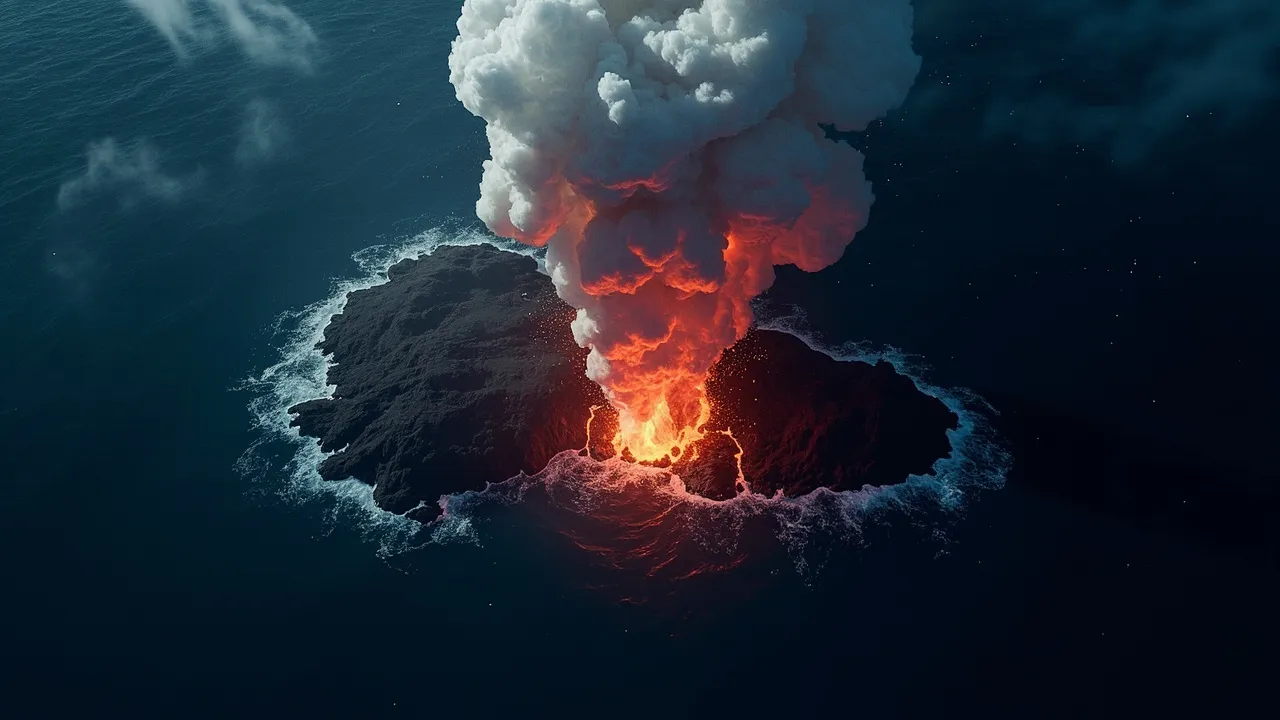
Okay, I need to tell you about something that just made me audibly gasp at my desk. NASA satellites are watching a volcano erupt underwater in the Pacific Ocean, and there's a real chance a brand new island is about to pop up from the sea.
Seriously. Land. Being. Born.
How cool is that?!
We're Actually Better at Mapping Mars Than Our Own Ocean
Here's something that'll blow your mind: scientists have mapped the surfaces of the Moon and Mars in incredible detail, but we know more about those distant worlds than we do about the bottom of our own ocean. I know, right? It sounds almost ridiculous when you say it out loud.
The Bismarck Sea, north of Papua New Guinea, is a perfect example. Despite being incredibly geologically active (volcanoes, faults, underwater cracks everywhere), the seafloor down there is still largely a mystery. The depths make it super hard to map with traditional sonar.
So when something interesting happens there, we often have no idea what's actually going on until satellites spot it from above.
The Birth Pangs of an Island?
That's exactly what happened on May 8, 2026. Seismometers picked up a swarm of small earthquakes, and almost immediately, NASA's Aqua and Terra satellites detected something wild: white volcanic plumes billowing up through the ocean into the atmosphere.
The images they captured? Absolutely stunning. Steam, ash, and volcanic material shooting upward like Earth's version of a lava lamp experiment.
But wait — it gets better.
Scientists also noticed huge areas of discolored, disturbed water surrounding the eruption site. The ocean color sensor on NASA's PACE satellite spotted this from space. And they've seen something else that's pretty remarkable: expansive rafts of floating volcanic rock called pumice, stretching across the ocean surface like some kind of alien river.
These pumice rafts are basically the volcanic equivalent of debris from an explosion, floating along with the currents. They're being tracked by multiple satellites as they stretch into long bands moving across the ocean.
And on May 12, instruments detected thermal anomalies covering about seven square kilometers — meaning there's a LOT of hot material very close to the ocean surface.
So... Is an Island Actually Coming?
This is the million-dollar question, and honestly? Scientists don't know yet.
"What we're eagerly waiting to see is if a new island is about to be born — something we've only rarely been able to observe with satellites as it happens," said Jim Garvin, chief scientist at NASA's Goddard Space Flight Center.
I love that he called it that. "Born." Like we're all just waiting to welcome a new piece of planet Earth into the world.
Here's the thing though: if land does emerge, it could go a lot of different ways. The volcano might build a tuff cone (a type of volcanic formation) with a nice long-lived vent crater. Or, the new land could collapse and erode away almost as quickly as it appeared. That's apparently happened before with submarine eruptions.
There's also the possibility — and scientists are watching this carefully — that the eruption could become way more explosive if seawater gets into the developing magma chamber. So yeah, not exactly a low-stakes situation here.
Why This Eruption Is Staying (Relatively) Calm
Compared to some other famous underwater volcanic events, this one has been surprisingly chill. Think about Hunga Tonga-Hunga Ha'apai in 2022 — that one was absolutely catastrophic. Or Fukutoku-Okanoba in 2021, which was also pretty dramatic.
This Bismarck Sea eruption? Way more subdued so far.
The reason, according to volcanologist Simon Carn, is related to where it's happening. The eruption is associated with a volcanic ridge near the intersection of a transform fault and a back arc spreading center.
"Spreading centers are associated with less explosive activity," Carn explained. "The most explosive eruptions are usually along subduction zones and involve large stratovolcanoes."
So think of it like this: if you poked a hole in a lava lamp, you'd probably get a gentler bubble-up compared to if you shook one up and then popped it. Different geological settings = different explosion styles.
The Real Treasure: A Natural Laboratory
If an island does form and stick around, scientists think it could become something extraordinary: a natural laboratory for studying how new land gets colonized by life.
I love this idea. You know how researchers sometimes call astronauts "astronauts"? Garvin has started calling researchers who study new islands "island-nauts."
How amazing would that be? To be among the first humans to set foot on land that didn't exist a year ago? To watch plants and animals arrive and establish themselves on virgin territory?
The team is planning to use radar data from NASA's NISAR satellite to map any new land and track how its shape changes over time. It's like watching a baby grow up, except the baby is a piece of planet Earth.
How Long Will This Last?
Here's the thing nobody can answer: nobody knows how long this eruption will continue.
A nearby submarine eruption in 1972 lasted only four days. But another event about 100 kilometers away in the St. Andrew Strait continued for nearly four years after starting in 1957.
So we could be looking at a brief geological hiccup, or we could be witnessing the beginning of a years-long process.
Either way, we're getting a front-row seat to something that most humans never get to see: the birth of land. And honestly? That feels like a pretty incredible privilege.
Keep watching the news on this one. I have a feeling the Bismarck Sea is about to make some headlines.