
markdown content with headings
So... Is the Earth Breaking?
Okay, I know the headline sounds dramatic. But stick with me because this is genuinely one of the coolest things I've read this week.
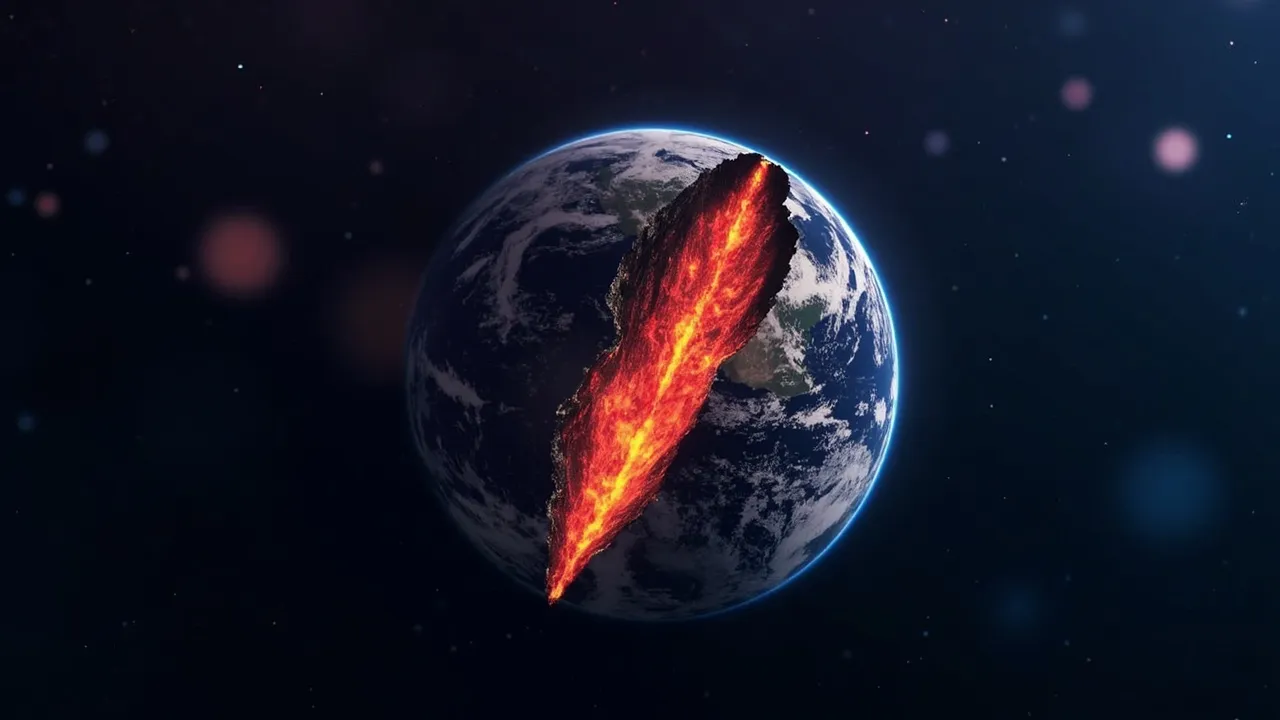
Scientists just caught a major tectonic system in the middle of literally falling apart — and it's happening right under the Pacific Northwest. We're talking about the ground beneath Washington State, Oregon, and British Columbia, where enormous chunks of Earth's outer shell are slowly, steadily tearing themselves to pieces.
I don't know about you, but I find this both terrifying and absolutely fascinating.
What's Happening Down There?
Let me paint you a picture. Deep beneath the ocean floor off Vancouver Island, there's a place where two tectonic plates — the Juan de Fuca and the Explorer plates — are being shoved underneath the North American continent. This is what's called a subduction zone, and it's part of the larger Cascadia system that stretches along the entire Pacific Northwest coast.
Normally, subduction zones are kind of like Earth's争 recycling system. One plate slides beneath another, carrying ocean crust down into the hot, gooey mantle below. It's been happening for millions of years, shaping continents and creating volcanic chains like the Cascades.
But here's the thing — scientists have never really understood how these massive systems actually end. Like, what causes the whole process to stop?
The Train Wreck Analogy
Brandon Shuck, a geologist at Louisiana State University and lead author of the study, gave an analogy that I honestly can't stop thinking about. He said:
"Getting a subduction zone started is like trying to push a train uphill — it takes a huge effort. But once it's moving, it's like the train is racing downhill, impossible to stop. Ending it requires something dramatic — basically, a train wreck."
And that train wreck? It might be happening right now, right beneath our feet.
Watching a Plate Die in Real Time
Here's what makes this study so special. Using sound waves (basically underwater ultrasound for the Earth), scientists created incredibly detailed images of structures hidden miles beneath the seafloor. They saw large faults and fractures cutting through the sinking plate — places where it's actively snapping apart.
Shuck put it this way: "This is the first time we have a clear picture of a subduction zone caught in the act of dying."
And get this — it's not collapsing all at once. Instead, the plate is "ripping apart piece by piece, creating smaller microplates and new boundaries." So rather than one big train wreck, it's more like watching a train slowly derail, one car at a time.
A 75-Kilometer Tear
The researchers identified several tears running through the oceanic plate. One of the most dramatic features is an enormous offset where part of the slab has dropped by roughly five kilometers — that's over three miles of vertical displacement.
"There's a very large fault that's actively breaking the plate," Shuck explained. "It's not 100% torn off yet, but it's close."
And along one tear stretching about 75 kilometers, scientists noticed something telling: some sections are still producing earthquakes while others have gone eerily quiet. The quiet parts matter because earthquakes happen when connected blocks of rock are stuck together, building up stress until they slip.
Once a piece breaks off completely? No more stuck rocks. No more earthquakes. So that absence of seismic activity suggests a section of the plate has already separated — and that detached area is gradually expanding.
Pieces Breaking Off Instead of One Big Collapse
Here's what makes this discovery really interesting for scientists. For decades, they assumed subduction zones probably ended in one dramatic event — a catastrophic shutdown that reshaped everything nearby. But what they're seeing beneath Cascadia suggests a different story.
The zone appears to be shutting down through what researchers call "piecewise" or "episodic" termination. Individual sections tear away at different times, slowly dismantling the larger system like someone methodically taking apart a machine, one bolt at a time.
Transform boundaries — faults where sections of Earth's crust slide sideways past each other — seem to act like geological scissors, cutting across the plate and helping isolate individual fragments. Once separated, these fragments become microplates: smaller pieces of Earth's rigid outer shell that move somewhat independently from their larger neighbors.
Should We Be Worried?
Honestly? Not immediately. These processes happen on geological timescales — we're talking thousands to millions of years. The scientists aren't predicting any imminent disaster. But understanding how subduction zones die is crucial for understanding Earth's past, and potentially its future.
Plus, let's be real: how often do you get to watch something this massive actually happen? Scientists have studied subduction zones for decades, but this is the first time anyone's gotten such a clear picture of one actively dying.
I don't know about you, but I think there's something both humbling and exhilarating about that. We're standing on ground that looks solid and permanent, and underneath, the very fabric of our planet is slowly tearing itself apart — one piece at a time.
At least now we get to watch it happen.
Source: ScienceDaily — Earth is tearing apart beneath the Pacific Northwest