
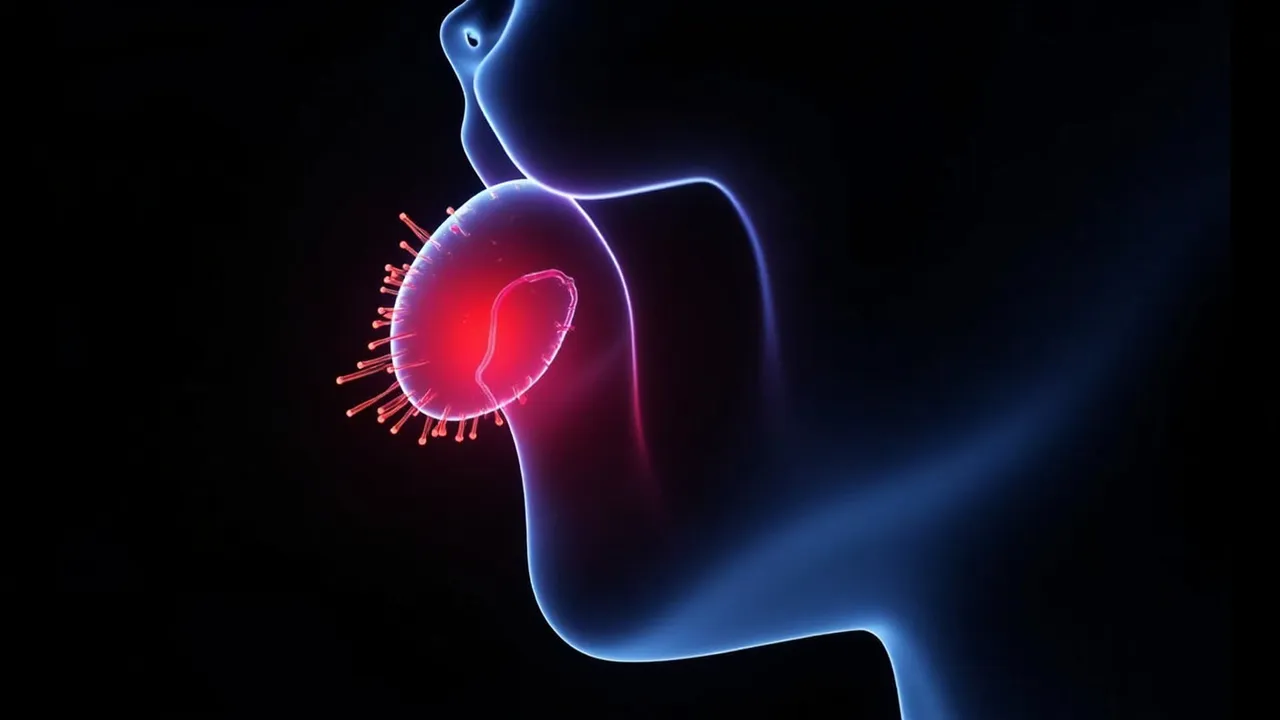
The Mystery of the Missing Flavor
We’ve all been there: you take a bite of a decadent chocolate cake or a savory bowl of ramen, expecting a flavor explosion, but instead? Nothing. Just texture. No sweetness, no richness, just... chewing.
For most people, the loss of taste during COVID-19 was a temporary annoyance that cleared up in a few weeks. But for a specific group of people, that "flavor fog" has lingered for over a year. It’s been a massive headache for scientists, but a brand-new study might have finally cracked the case.
It’s Not Your Brain, It’s Your "Amplifier"
For a long time, people wondered if the issue was neurological (the brain not processing the signal) or sensory (the tongue not sending it). Well, researchers from the University of Colorado Anschutz and several Swedish universities just gave us a definitive answer: it's the cells themselves.
Here is the "nerdy" part, simplified: Inside your taste buds, there is a specific protein called PLCβ2.
Think of PLCβ2 as a molecular amplifier. When you eat something sweet, bitter, or savory (umami), your taste cells pick up that signal and send it to your brain. But those signals are tiny! You need that PLCβ2 "amplifier" to boost the signal so your brain can actually hear it.
The study found that in people with lingering taste issues, the levels of this protein were significantly lower. Without that boost, the signal from the sweet or savory food is so quiet that the brain basically thinks it’s hearing silence.
Why Can You Still Taste Salt and Sour?
This discovery explains a very weird pattern researchers noticed: people could still taste salt and sourness just fine, but sweet, bitter, and umami flavors were totally missing.
Why? Because salt and sour tastes use a completely different "wiring" system that doesn't rely on that PLCβ2 amplifier. It’s like having a stereo where the bass and treble work perfectly, but the mid-range is totally muted. You can still hear the beat, but the melody is gone.
It’s Not Just the Signal—It’s the Hardware
The researchers didn't stop at the molecular level. When they looked at the actual tissue under a microscope, they found something even more wild: structural disorganization.
In some participants, the physical arrangement of the taste cells was messy and disorganized. It wasn't just that the "software" (the chemical signals) was glitchy; the "hardware" (the actual architecture of the taste bud) was built incorrectly.
The Big Question: Is It Permanent?
Here is the part that really boggles the mind: Taste cells are supposed to renew themselves every two to four weeks. Theoretically, the "bad" cells should have been replaced by "good" cells months ago.
The fact that the taste disruption persists suggests that the virus might have caused a deep-seated disruption in how these cells are programmed or organized.
So, is there hope? Absolutely! Now that we know exactly what is broken—the molecular amplifier and the cellular structure—the next step for scientists is to figure out how to fix it. We're moving from "Why is this happening?" to "How do we boost that signal back to normal?"
Until then, if your favorite meal tastes a little bland, hang in there—science is working on getting your taste buds back in the game!