
The Plot Twist Nobody Saw Coming
Here's something wild to think about: if you could rewind life on Earth and press "play" again, would things turn out the same way? For decades, scientists assumed evolution was basically a cosmic dice roll—totally unpredictable, totally random. But a group of researchers just found evidence that nature might be way more predictable than we ever imagined.
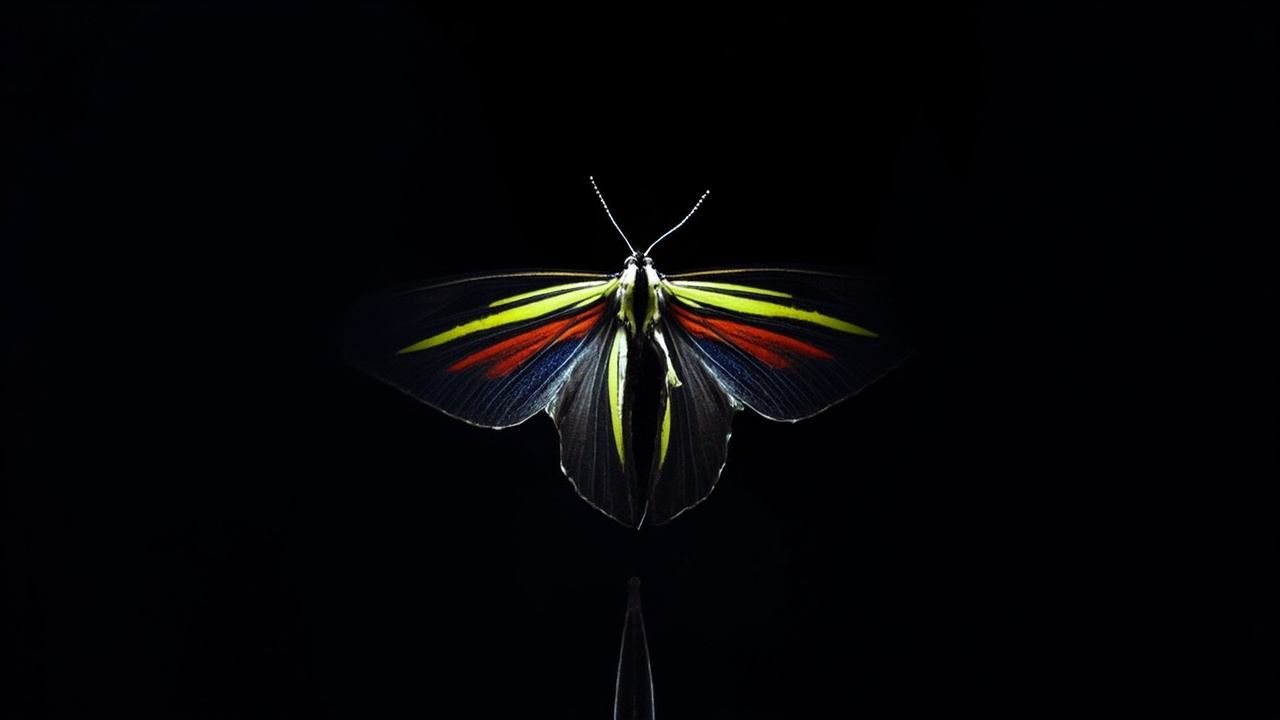
And the clue? A bunch of tropical butterflies and moths that happen to look shockingly similar despite being evolutionary cousins separated by millions of years.
When Distant Cousins Dress Alike
Picture this: You're deep in a South American rainforest, and you spot these gorgeous butterflies and moths with nearly identical warning colors on their wings. They're bright, bold, and unmistakable. At first glance, you'd think they're closely related, right?
Nope. These creatures are actually distant relatives that evolved separately. Yet somehow, they ended up wearing basically the same outfit.
Scientists call this "mimicry," and it happens for a pretty clever reason. These insects are toxic and nasty to eat. Birds learned the hard way: "If it has that color pattern, don't eat it." So other toxic species basically thought, "Hey, that's genius branding! Let's use the same warning colors too." It's like everyone copying the most successful restaurant's logo because customers already know what that means.
The Genetic Plot Thickens
Here's where it gets really interesting. A team led by the University of York and the Wellcome Sanger Institute decided to dig into the genetic nitty-gritty. They wanted to know: which genes were actually making these matching color patterns?
They studied seven different butterfly species and one day-flying moth—all distantly related, all with strikingly similar warning colors. What they found was genuinely shocking.
The same two genes kept showing up. Over and over again. For over 120 million years. The genes are called ivory and optix, and evolution apparently discovered them early and never looked back.
Nature's Genetic Shortcuts
But here's the really clever part: evolution didn't rewrite these genes from scratch each time. Instead, it tinkered with the switches that control them—genetic regulatory elements that basically say "activate this gene here, in this tissue, at this time."
Think of it like having a really good recipe. You don't reinvent the ingredients every time you make it; you just adjust the seasoning and cooking time to suit what you're making. Nature found a winning recipe with ivory and optix and kept adjusting the dials.
Even wilder? The moth took a slightly different approach than the butterflies. Instead of just tweaking the switches, it flipped a huge chunk of DNA backwards (yes, literally inverted it) to achieve almost the same result. It's like taking two different routes to the same destination.
So... Evolution Isn't Random?
This is the mind-bending implication: maybe evolution isn't as chaotic and unpredictable as we thought. Instead of having infinite possible solutions to every problem, life seems to have certain "favorite" genetic tools it returns to repeatedly.
Professor Kanchon Dasmahapatra from the study put it perfectly: evolution can actually be surprisingly predictable. These butterflies and moths have been using the exact same genetic tricks since the age of dinosaurs. If you're a species that needs bright warning colors, the path of least resistance apparently runs through ivory and optix.
Why This Actually Matters
So what does this mean beyond being intellectually cool (which, let's be honest, it is)?
It means scientists might actually be able to predict how species will adapt to change. Climate change, new environments, shifting food sources—if evolution tends to reuse successful genetic solutions, we might be able to anticipate how wild species will respond. That's kind of a big deal when you're trying to conservation strategies or understand how ecosystems will shift.
The Bigger Picture
This research cracks open a fundamental question about how life works. We tend to think of evolution as pure creativity—infinite possibilities, random mutations, survival of the fittest. And sure, that's part of it. But it's starting to look like evolution also has constraints. Like a painter who keeps using the same brilliant colors even though theoretically they could use any color imaginable.
Nature seems to prefer elegant solutions. Proven solutions. Genetic pathways that work so well, they're worth using again and again across millions of years of evolutionary history.
That's not just a fun fact for science nerds (though it definitely is). It's a window into how life itself "thinks"—and it turns out life is way more strategic than we gave it credit for.