
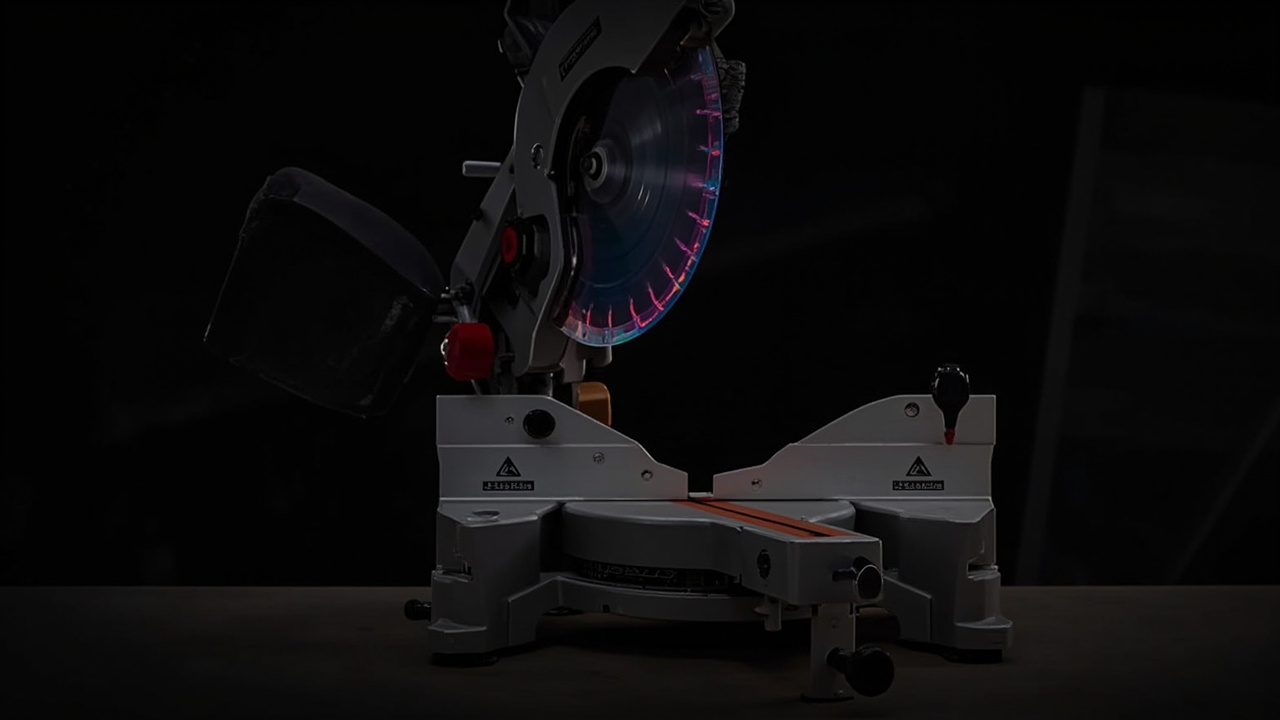
Why Miter Saws Are Kind of a Big Deal
Let me be honest—a miter saw changed my life. Not in a dramatic, earth-shattering way, but in that quiet way where you suddenly realize you've been doing something the hard way for years. If you've ever tried to cut a perfect 45-degree angle with a hand saw (spoiler: it's not fun), you'll understand why these machines are basically magic.
But here's where it gets tricky: there are a LOT of miter saws out there, and they're definitely not all created equal. Some are beasts that can tackle massive lumber. Others are lightweight ninjas designed for delicate trim work. Some plug in, some run on batteries. Some cost as much as a decent used car, and some are surprisingly affordable.
The Bosch Game-Changer: When Space Is Your Enemy
Have you ever looked at a workbench and thought, "I'd love a miter saw, but there's literally no room"? Bosch apparently heard this complaint and decided to do something about it with their GCM12SD.
Most sliding miter saws use rails that extend way back—kind of like they're reaching toward the wall behind your workbench. But Bosch went a different direction. They used this clever axial-arm mechanism that basically makes the saw compress into itself. It's like the difference between a telescope that extends three feet versus one that fits in your pocket.
The practical upside? This thing doesn't need all that rear clearance, so it can live on a smaller workbench. The downside? It weighs about as much as a golden retriever (65 pounds), and it doesn't have a laser guide to show you exactly where you're cutting. That clear blade guard helps, but it's not quite the same.
The Budget-Friendly Warrior: Skil's Surprising Powerhouse
Here's something I love about the tool world: sometimes the most expensive option isn't the best option for you. The Skil 10-inch dual-bevel saw is proof of this.
At roughly half the price of premium brands, it shouldn't work this well. But it does. The blade spins up fast (4,800 rpm), the cuts are clean even when you're slicing through thick lumber like 2x12s, and the stability is genuinely impressive. I'm talking furniture-grade stability here, not the wobbly feeling you sometimes get with budget tools.
What makes this particularly cool is how it handles compound miters—those fancy angled cuts you need for crown molding and other detailed work. You know how some saws make you feel like you need a engineering degree to dial in the right angle? Not this one. The rear bevel knob is intuitive, and if you're left-handed, you'll actually be comfortable using it (seriously, that's rare and wonderful).
And at under 50 pounds? You can actually throw it in a truck or move it around your yard without feeling like you're training for a weightlifting competition.
When Cordless Is Actually Worth It
The cordless revolution has been interesting to watch unfold. A few years ago, cordless power tools were kind of the "nice try, but they can't really handle real work" category. Now? They're legitimately impressive.
The ONE+ HP 18V cordless option is interesting because it proves you don't need a corded saw to get real capability. You get roughly 500 cuts per battery charge, nine preset miter stops for quick angle changes, and LED indicators so you can see exactly where you're cutting. For someone who might only use a miter saw a few times a month, the convenience of not managing cords might actually be worth more than raw power.
DeWalt's 20V MAX XR cordless model is the opposite energy—this thing is essentially a corded saw that just happens to run on batteries. It maintains power and speed beautifully, the stabilizer bar keeps everything rock solid, and it actually includes an LED work light that creates a shadow line showing exactly where your blade will cut. At a little over 50 pounds (without the battery), it's surprisingly portable for something this capable.
When Size Actually Matters: The Lightweight Specialists
Not every job needs a massive sliding compound miter saw. Sometimes you just need to trim baseboards, cut picture frame corners, or slice delicate hardwood flooring.
The Makita 18V cordless compound saw tips the scales at just over 14 pounds—you could literally carry it up a ladder without thinking twice. It maxes out at 2x4 lumber, so it's not trying to be something it's not. But that 64-tooth blade? It delivers cuts so clean you'd think a fairy godmother was involved. The built-in LED is positioned perfectly to light up your entire cutting path.
This is the kind of saw that makes sense if you're doing interior trim work or you value the ability to move between rooms without breaking a sweat.
The Real Talk About Choosing One
Here's what I've learned: the "best" miter saw is the one that matches your actual needs, not the one with the longest spec sheet.
Are you building decks and cutting rough lumber? You want something with power and heft. Are you a trim carpenter doing 20 cuts a day? You might want that lightweight cordless option. Do you have a tiny workshop? That space-saving Bosch suddenly becomes the obvious choice.
The good news is that the options available now are legitimately good across different price points and use cases. You're not choosing between "this amazing saw" and "this terrible saw." You're choosing which amazing saw fits your life best.
And honestly? That's a much better problem to have.