
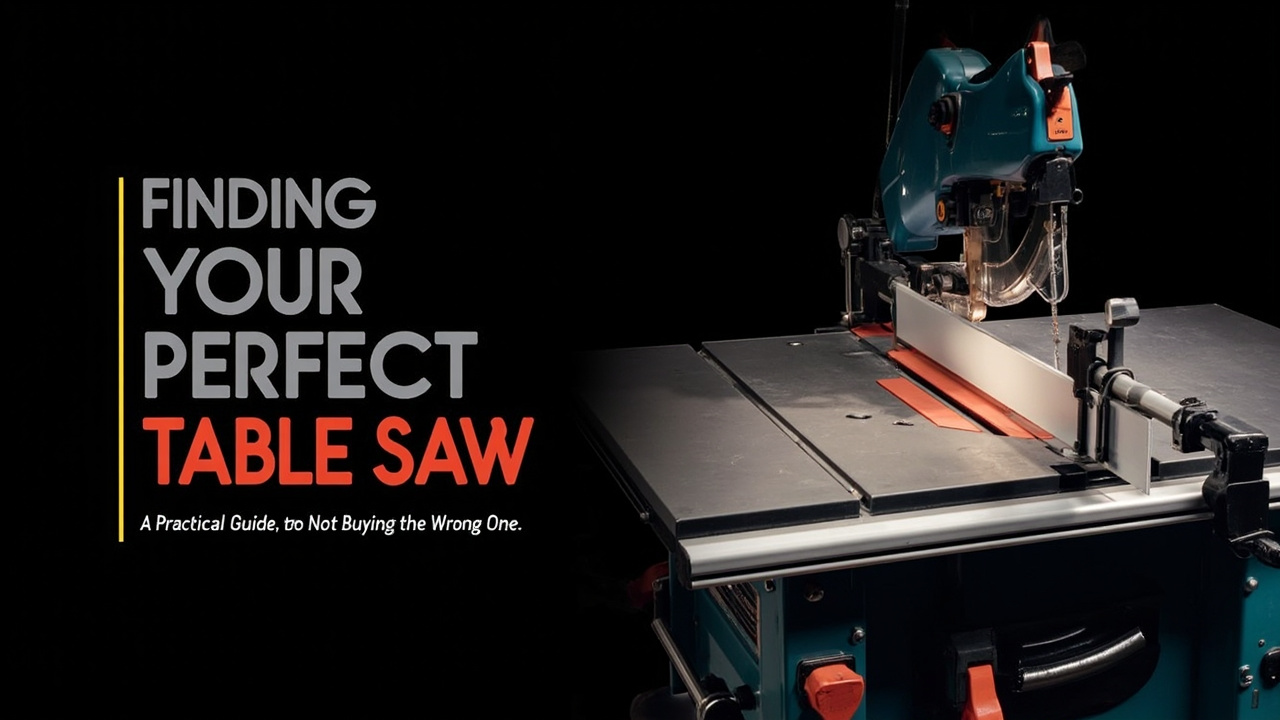
Why Everyone Needs to Stop Making the Same Table Saw Mistakes
Here's what I've learned talking to woodworkers: people buy table saws based on brand recognition or whatever their neighbor has. Then six months later, they're frustrated because the fence isn't accurate, dust is everywhere, or they can't even fit the thing in their workshop.
The good news? If you know what to actually look for, you can find something that genuinely fits your needs—and your budget.
The Real Deal About Accuracy and Setup Time
Let me be honest: if your fence isn't accurate right out of the box, everything else is kind of pointless. You could have the fanciest motor on the planet, but if your rips are crooked, you're just making expensive kindling.
This is why I'm always shocked when people overlook the setup process. Some saws take 20 minutes to assembly. Others take 45. That might not sound like much, but that difference reflects how thoughtfully the manufacturer designed the whole thing. A well-designed saw should feel intuitive to put together—it should tell you what goes where without requiring a engineering degree.
Portability Isn't a Luxury Anymore
Here's something that's changed in recent years: you no longer have to choose between portability and performance.
Gone are the days when jobsite saws were flimsy compromises. Modern portable models actually deliver legitimate cutting power. Some use clever folding leg designs that lock solid when you're working but tuck away when you're done. Others have wheels and gravity-rise stands that make moving the saw feel less like moving furniture and more like rolling out a cabinet.
If you work in multiple locations or have a crowded shop, this matters way more than people realize.
Dust Control: The Overlooked Feature
Nobody gets excited about dust collection. But let me tell you—the first time you use a saw with genuinely good dust management versus one that just... fills your workspace with particles... you'll understand why this isn't boring.
Some saws are honestly mediocre here. Others route dust so efficiently that you barely notice a mess. And the difference usually comes down to how the designer thought about the airflow path, not the price tag.
Budget vs. Performance: Where's the Sweet Spot?
Here's what surprised me: you can get an impressive amount of cutting capability for under $400. That's genuinely budget-friendly territory.
Of course, you'll make tradeoffs. A cheaper saw might be slightly lighter (which is nice for portability but means less stability), or it might have a smaller rip capacity (fine for trim work, limiting for bigger projects). The key is matching those tradeoffs to what you actually do.
Spending more gets you better motors, more robust construction, and features like automatic blade brakes that might save you precious minutes if you're doing repetitive cuts. But "more expensive" doesn't automatically mean "better for you."
Features That Actually Matter (And Some That Don't)
The fence: Seriously, this is everything. It needs to be dead-on accurate and easy to adjust. If it isn't, return it.
Blade height and bevel adjustments: These should feel smooth. If they're stiff, you'll avoid making beveled cuts because the adjustment is annoying. Bad design creates habits.
Onboard storage: Sounds silly, but if your riving knife and blade guards are always getting lost or buried in a toolbox, you'll find yourself working without them. Good organization prevents bad practices.
Motor performance under load: A saw that slows down when you're making serious cuts is telling you it's reaching its limit. You want something that maintains speed.
Blade quality: A cheap blade will tear your wood. A good blade creates cuts so clean you barely need to sand them. Sometimes the difference is just the blade that comes with the saw.
The Gravity-Rise Stand Thing (It's Legit)
I was skeptical about gravity-rise stands at first—seemed like unnecessary complexity. But there's something genuinely satisfying about stepping on a foot pedal and watching the entire saw smoothly rise into working position. More importantly, it works reliably, and the stand takes up almost no space when folded down.
It's one of those features where the engineering is so good that it becomes invisible. You just use it and forget you're using something clever.
My Honest Take
The "best" table saw doesn't exist. But the best saw for you absolutely does—and it's probably something that:
- Arrives ready to work (or takes minimal time to set up)
- Has an accurate fence that stays accurate
- Fits your space and workflow (portable, stationary, or something in between)
- Produces clean cuts with minimal dust
- Won't break the bank given how often you'll actually use it
Stop looking for the perfect saw. Start looking for the one that solves your actual problems. That's when you'll stop buying saws and start actually using them.