
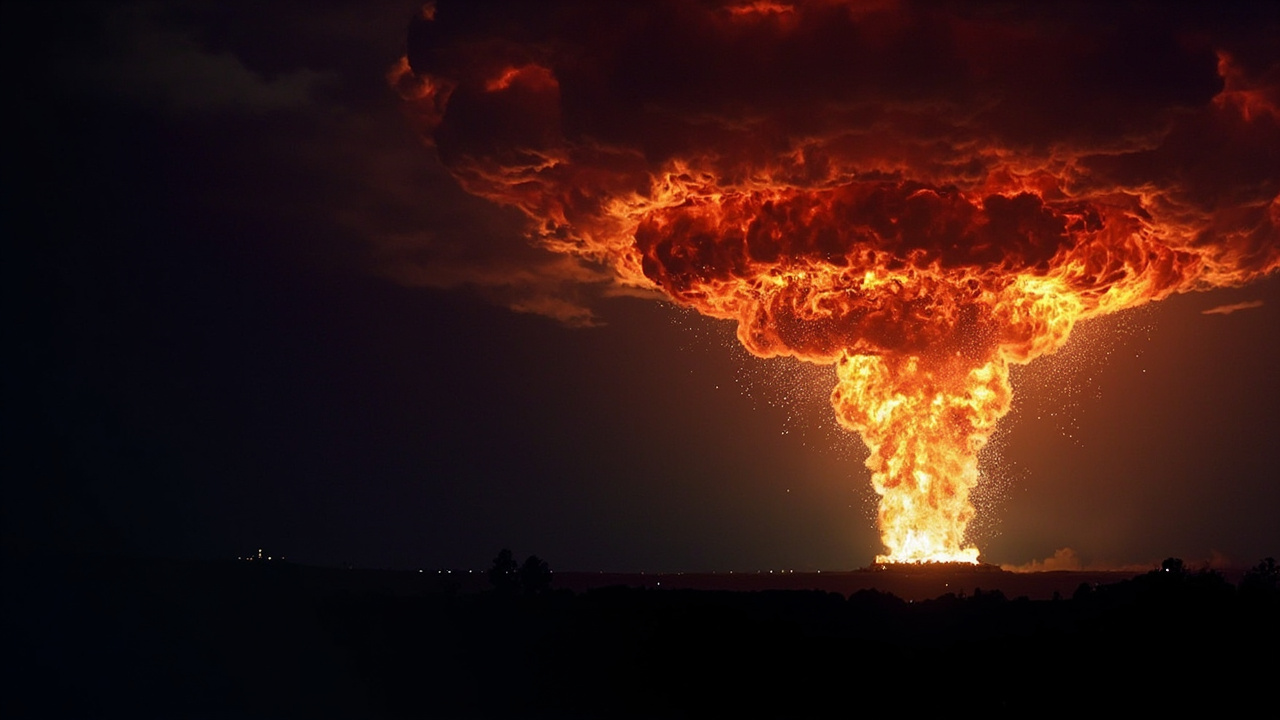
Okay, I need you to picture this with me.
An oil tanker has just spilled thousands of gallons of crude into the ocean. The slick is spreading toward a fragile coastline. Emergency crews have hours—maybe minutes—to act before the damage becomes irreversible.
What if the solution... was to set the ocean on fire?
Sounds insane, right? But here's the thing: oil spill response teams actually do use controlled burning as a cleanup method. It's called an "in-situ burn," and it works by igniting the oil slick before it can spread. The problem? Those fires are smoky, wasteful, and leave behind a nasty residue of unburned oil that keeps polluting the water.
But now, researchers from Texas A&M and UC Berkeley have demonstrated something that sounds almost too wild to be real: fire whirls—those spectacular spinning tornado-like columns of flame you might have seen in wildfire footage—could actually be the answer we've been looking for.
And get this: the team just published results showing fire whirls burn oil nearly twice as fast as traditional methods, while cutting down on that choking black smoke by 40%. That's a pretty significant deal when you're racing against time to protect marine ecosystems.
So What Exactly IS a Fire Whirl?
Think of it like this: when you have a spinning column of air catching fire, it creates a self-sustaining vortex. The spinning motion pulls in massive amounts of oxygen, which feeds the flames and makes them burn hotter and more efficiently. It's essentially turning chaos into a feature rather than a bug.
In their experiment, the researchers built a 16-foot-tall structure and placed a pool of crude oil on water at its center. Once ignited, it generated a fire whirl reaching nearly 17 feet high—a far cry from the tiny lab experiments that had been done before.
The results were impressive: 40% faster burn time, 40% less soot, and up to 95% fuel consumption efficiency. That's not a small improvement; that's a game-changer for emergency response situations.
Why This Actually Matters
Let me give you a quick reminder of why this matters so much. Remember Deepwater Horizon in 2010? The largest offshore oil spill in U.S. history. Eleven workers died. Thousands of marine animals perished. Coastal ecosystems were devastated for years—some still haven't recovered.
When disasters like that happen, cleanup crews don't have the luxury of taking their time. Every hour the oil spreads means more damage to coastlines, more harm to wildlife, and more difficulty in containing the mess. So having a faster tool in the arsenal could genuinely make the difference between a manageable incident and an ecological catastrophe.
Plus, let's talk about that smoke problem. Traditional in-situ burns produce massive plumes of black smoke, which means particulate matter and pollution going into the atmosphere. Fire whirls burn so hot and efficiently that they essentially consume more of the fuel before it can turn into smoke. That's better for the environment AND for the people living near the affected coastline who don't want to breathe in a toxic cloud.
The Catch? It's Hard to Control
Of course, nothing is ever simple, is it?
Fire whirls are powerful, but they're notoriously difficult to harness. Their chaotic nature makes them tricky to predict and control. Right now, the researchers are still in the early stages—figuring out how to deliberately create these whirls on demand, in the right conditions, with the right intensity.
But that's exactly why this research is so promising. The team isn't just throwing oil on a fire and hoping for the best. They're studying the fundamental physics of how these vortices form and behave, with the goal of eventually creating a reliable tool that emergency responders could actually use.
And here's where it gets even more interesting: the applications might extend far beyond oil spills. Understanding fire whirls better could help us design more efficient combustion systems, predict wildfire behavior, and improve fire safety overall. It's the kind of basic science that ripples outward into practical benefits we can't even anticipate yet.
The Bottom Line
We still have a long way to go before fire whirls become a standard part of oil spill response kits. But this research represents something genuinely exciting—a creative, unconventional approach to an environmental problem that has frustrated scientists and responders for decades.
Fire is destructive, yes. But when properly contained and channeled, it might also be one of our best tools for healing the damage we cause to our oceans.
Sometimes the most powerful solutions are the ones that sound completely crazy at first.