
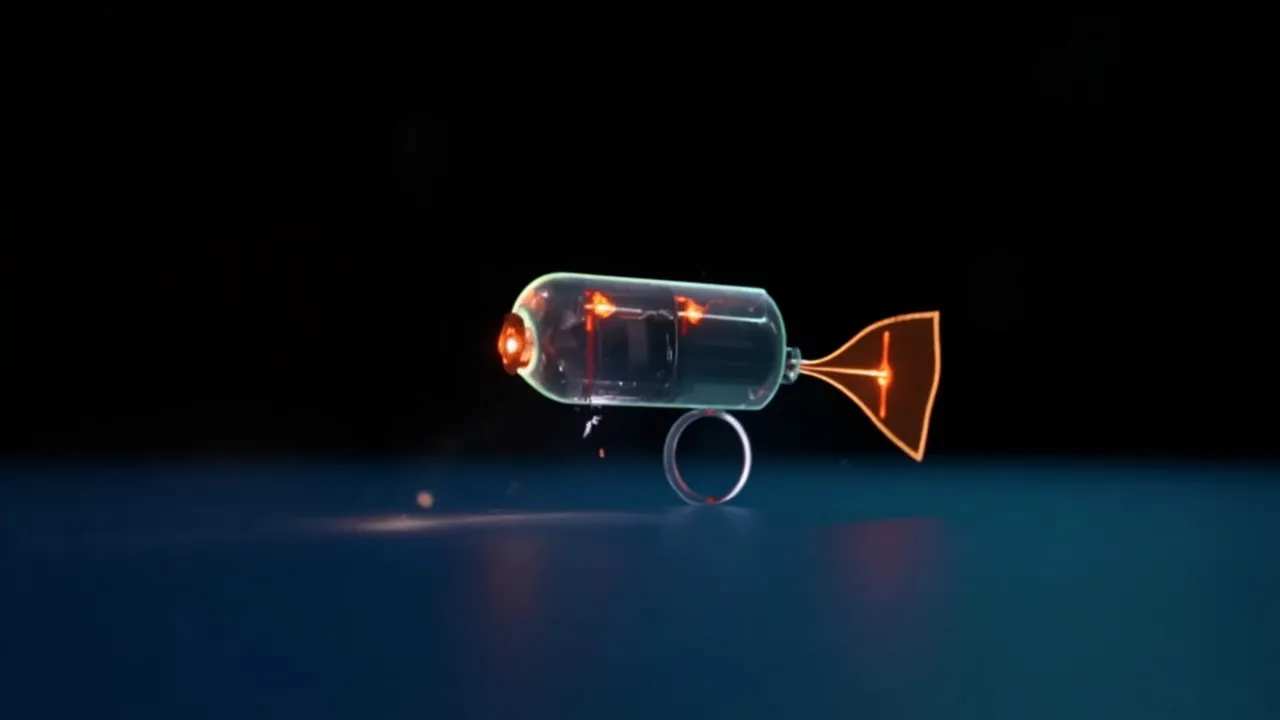
Imagine a robot that doesn't need a battery pack, a motherboard, or a clunky motor to move. Instead, it just needs a little bit of light and some actual, living muscle cells.
It sounds like something straight out of a sci-fi movie, but researchers at MIT have actually pulled it off. They’ve built a tiny, swimming robot that uses a thin layer of living muscle tissue to flap its fins and navigate through water.
How does a "muscle" robot work?
Here is the breakdown of the tech, simplified:
The robot is essentially a tiny, flexible gel framework—about the size of a stick of gum. On the two fins of this gel, the scientists have grown a layer of muscle cells that is thinner than a single human hair.
But here is the cool part: these cells have been genetically modified to react to light. By shining light on one fin or the other, the researchers can make the muscles contract. This contraction makes the fin flap, which pushes the robot forward. By playing with the light patterns, they can control exactly where the robot goes and how fast it gets there.
It’s not an Olympic swimmer (but it's getting there!)
In their tests, the little guy actually managed to navigate an underwater maze! Now, don't expect it to win any gold medals; it moves at a pace comparable to a cow shark cruising through the ocean.
While that might seem slow to us, moving through water is surprisingly difficult because water is much "heavier" and more resistant than air. For something so incredibly thin, the force these cells generate is actually quite impressive.
Why does this matter? (The "Biohybrid" Revolution)
You might be thinking, "Okay, a tiny swimming muscle-bot is cool, but why bother?"
Well, traditional robots are made of hard metal and plastic. They are rigid, they can break, and they are often too "clumsy" to explore delicate environments. This new approach is part of a field called biohybrid robotics.
The MIT team is pushing the boundaries of how thin and efficient these robots can be. Here’s why their new "thin-film" approach is a game-changer:
- Cost-Effective: Older versions of these robots used massive amounts of lab-grown muscle, which is expensive and hard to make. This new method uses much less material.
- Efficiency: Thinner designs can actually move more effectively.
- Self-Healing: Because they use living tissue, these robots could theoretically "heal" themselves if they get damaged—something a metal robot can only dream of!
- Delicate Exploration: Imagine a robot so soft and responsive that it can swim through fragile coral reefs or unpredictable environments without crushing anything.
The Road Ahead
This project builds on previous work where the same team created an "artificial iris" that mimicked the way a human eye reacts to light. They've spent a lot of time "tuning" the gel foundation—adjusting its stiffness and chemistry—to make sure the muscle cells have a strong enough base to push against.
We are looking at a future where robots aren't just machines we build, but biological entities we grow. It’s a wild, slightly strange, and incredibly exciting frontier of science!
SOURCE: https://www.sciencedaily.com/releases/2026/10/261022081308.htm