
The Algae That Changed Everything
If you had told me a few years ago that the key to unlocking the mysteries of the human brain was hidden inside a tiny, swimming green alga, I probably would have laughed. But science has a funny way of surprising us.
This year, the Nobel Prize in Physiology or Medicine went to three incredible scientists—Karl Deisseroth, Peter Hegemann, and Georg Nagel—for a breakthrough called optogenetics. It sounds like something out of a sci-fi novel, but it’s very real, and it’s absolutely fascinating.
It All Started with a Little Green Guy
The story doesn't start in a high-tech human brain lab; it starts with a single-celled organism called Chlamydomonas.
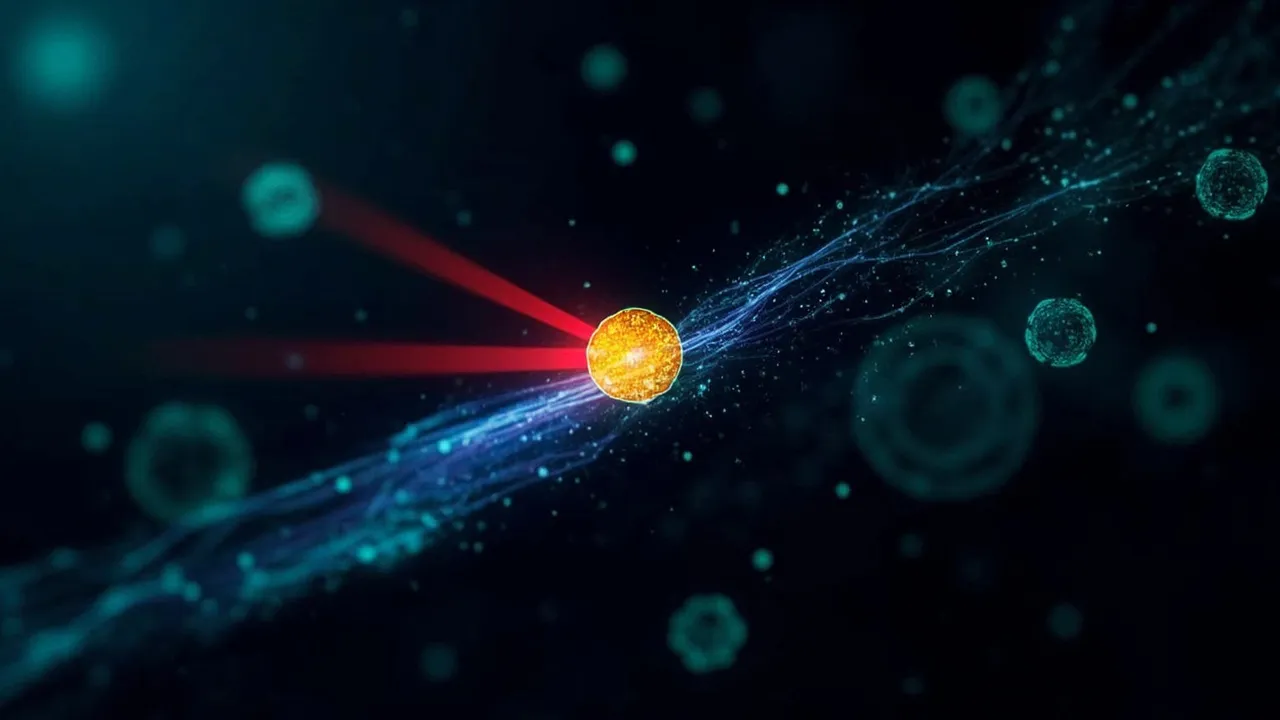
These little guys need to move toward light to survive, but they don't have eyes like we do. Instead, they have this specialized protein called channelrhodopsin. Think of it like a tiny, light-sensitive gate sitting on the cell's skin. When light hits this protein, the gate swings open, letting charged particles rush into the cell. That sudden rush of energy tells the alga, "Hey! Light is this way! Start swimming!"
Bringing the "Light Switch" to the Brain
Here is where it gets wild. Our own nerve cells work on a similar principle. They use electrical signals—which are basically just tiny movements of charged particles—to communicate.
The researchers realized something brilliant: What if we could put those "light gates" from the algae into human nerve cells?
By using a harmless virus to deliver the gene for channelrhodopsin into specific neurons, scientists can essentially turn those cells into light-sensitive switches. Once the cells are "upgraded," you can shine a tiny beam of light on them, and click—the cells turn on. Shine the light away, and they turn off.
Why Is This Such a Big Deal?
Before optogenetics, studying the brain was a bit like trying to understand a massive, crowded stadium by listening to the roar of the crowd from outside the walls. You knew something was happening, but you couldn't tell which specific group of people was cheering.
With optogenetics, scientists can be incredibly precise. They can target one specific group of neurons—the ones responsible for memory, or sleep, or even fear—and turn them on or off to see exactly what they do.
In one incredible experiment, scientists used this to "replay" a memory in mice. By shining light on the specific neurons that were active when a mouse received a tiny shock, they were able to make the mouse feel that memory all over again. The mouse froze in fear, even though nothing had actually happened in that moment!
The Future: Healing the Brain
While much of this is currently used in research, the "real world" applications are even more exciting.
We are already seeing early clinical trials where this tech is used to help people with vision loss. By putting these light-sensitive proteins into the remaining healthy cells of the retina, researchers are finding ways to help people "see" again.
Looking ahead, there is massive hope that this could eventually help treat complex conditions like Parkinson’s disease or epilepsy. We aren't just observing the brain anymore; we are learning how to communicate with it.
Isn't it amazing that a question as simple as "How does this tiny green speck swim?" could lead to a revolution in human medicine?