
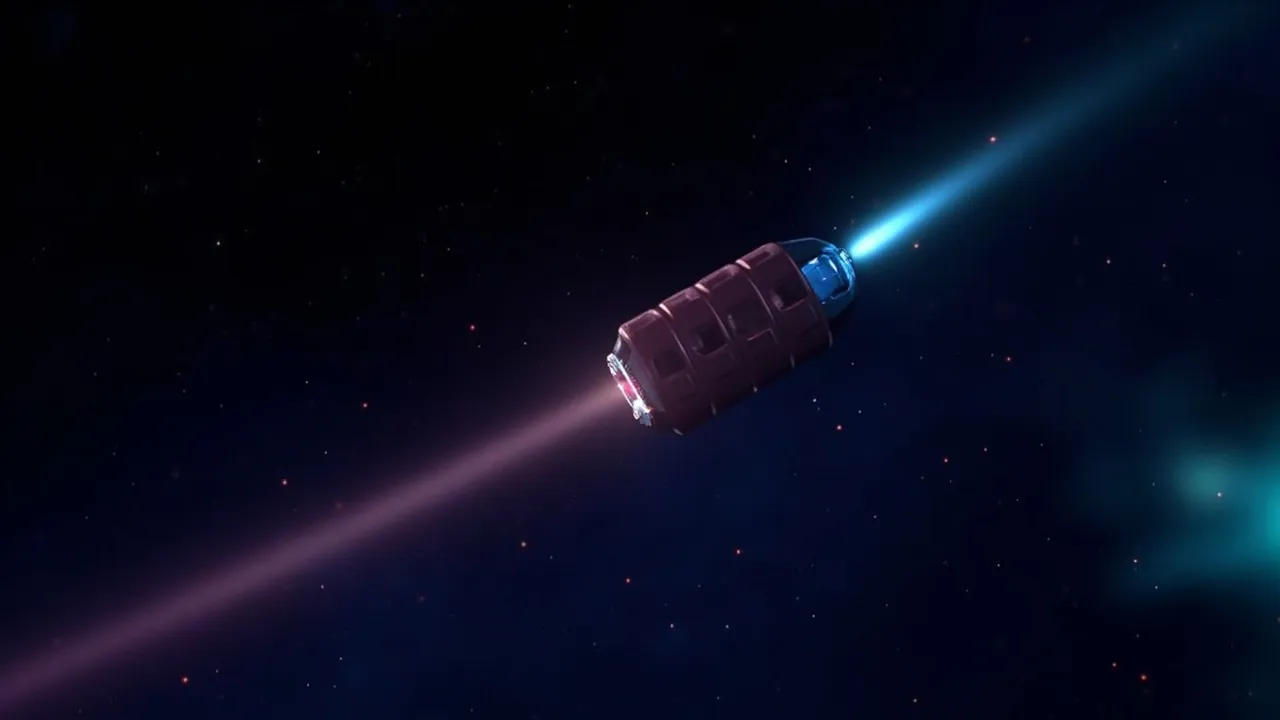
So here's something wild to wrap your head around: a spacecraft the size of a small car just used Earth as a giant cosmic slingshot.
I mean, how cool is that?!
The European Space Agency's Juice mission (that's Jupiter Icy Moons Explorer, because apparently space scientists aren't great at naming things) made its close pass by our home planet on September 28th, skimming just 8,640 kilometers above the Indian Ocean. For context, that's practically grazing us — geostationary satellites orbit at 35,000 km, so Juice was flying lower than most of our TV satellites.
But here's what really got me: this little maneuver completely reshaped Juice's path, bending its trajectory by 20 degrees and giving it a speed boost of 3.5 km/s. That's like finding a shortcut that not only saves you time but also hands you a free burst of energy. Except instead of a shortcut, it's using Earth's gravity as an invisible velvet rope to fling you toward the outer solar system.
What I find absolutely fascinating is how effortless this was. The mission team had set aside six different opportunities to correct Juice's course in the weeks leading up to the flyby. You know how many they actually needed? One. Just one tiny tweak, and everything else lined up perfectly. Angela Dietz, Juice's Spacecraft Operations Manager, put it beautifully: "Thanks to our very careful planning, we used only a small amount of the propellant reserved for this flyby."
And that, friends, is a huge deal.
Here's why: Juice is heading to Jupiter to study three of its moons — Ganymede, Callisto, and Europa — all of which might hide oceans of liquid water beneath their icy surfaces. When Juice arrives, it's going to need every drop of fuel it can save for those operations. The spacecraft is planned to execute a staggering 35 flybys of these moons! Some planning discussions for those Europa encounters started a decade ago and will continue until Juice finally passes by in the early 2030s.
So every bit of fuel saved now is like stashing away birthday presents for later.
But the flyby wasn't just about steering — it was also a dress rehearsal for the real show. The team spent months coordinating with specialists for Juice's ten scientific instruments, scheduling exactly when each one could operate. They treated Earth as a well-understood test target, essentially running diagnostics on equipment that will later be doing the most demanding science imaginable.
Juice even traveled through Earth's magnetotail — that long, sweeping extension of our planet's magnetic field that stretches away from the Sun. At the same time, the European-Chinese Smile mission was observing Earth's northern lights from much closer. Scientists are now hoping to combine measurements from both spacecraft, which could reveal fascinating connections between activity far out in Earth's magnetotail and events occurring near our planet's poles. How cool would it be to understand Earth's space weather better by using Juice as a distant sensor?
The team expects to release some beautiful images soon, including high-resolution shots of Earth and the Moon taken by Juice's JANUS camera. Once that data reaches Earth and scientists have had time to process it, we're in for a visual treat.
And here's the thing — this isn't even Juice's final goodbye to Earth. The spacecraft will swing by our planet one more time in January 2029 for a third and final gravity assist. That last encounter will lock in Juice's trajectory for the remaining journey to Jupiter.
So the next time you look up at the night sky and spot Jupiter shining brightly, remember: there's a little piece of human engineering out there, threading its way through the solar system using gravity like a cosmic pinball, getting ready to unlock the secrets of worlds that might just harbor life.
Space exploration, folks. It never stops being amazing.