
Wait, Diplodocus Wasn't Just American?
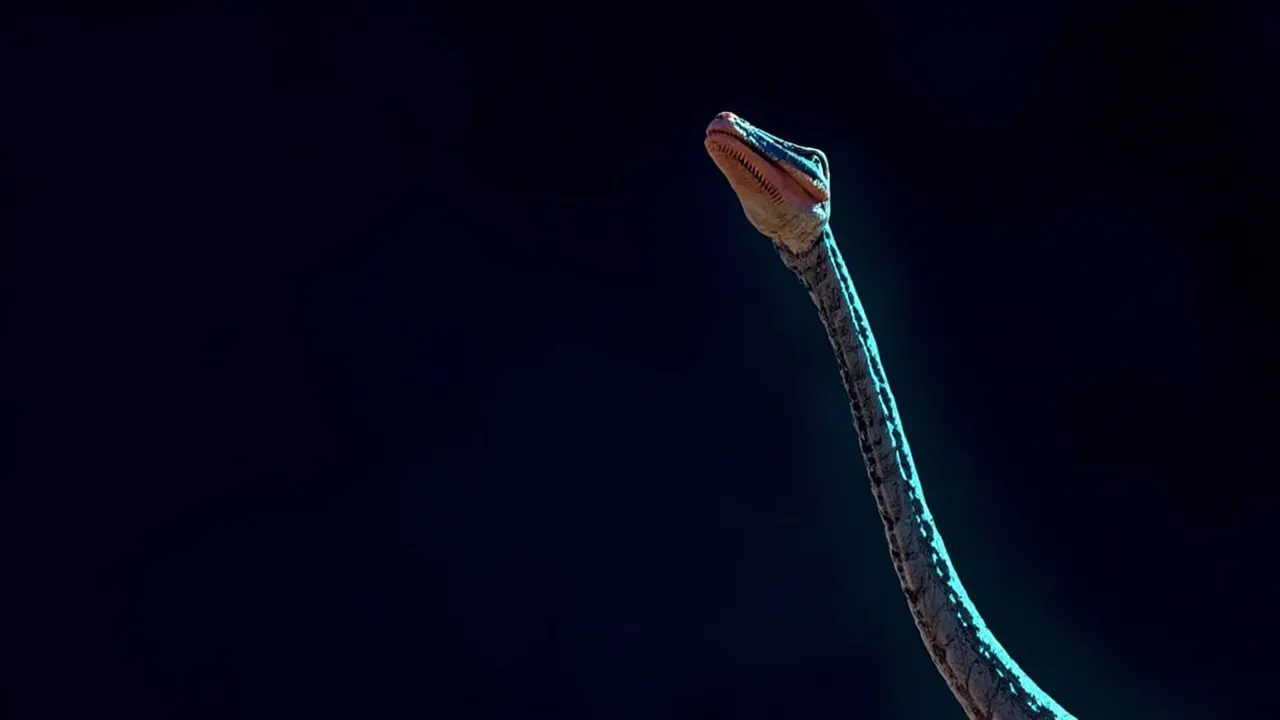
Okay, I have to admit—this news genuinely excited me when I read about it. You know Diplodocus, right? That impossibly long dinosaur with the tiny head and the whip-like tail that stretches forever? The one that always seemed to tower over everything in those museum displays?
Well, here's the thing: for over 145 years, every single confirmed Diplodocus fossil had been found in one place—North America. Specifically, the famous Morrison Formation out west in the United States. It was almost like these dinosaurs were exclusive to that continent, part of America's prehistoric heritage alongside T. rex and Triceratops.
But now? Scientists in Spain have gone and changed the whole story.
The Discovery That Changes Everything
A team from the Fundación Dinópolis in Spain recently published their findings about a remarkable set of fossils they uncovered at a site called La Tequería in the town of El Castellar. What they found was 14 beautifully preserved tail vertebrae—some of the most complete Diplodocus remains ever discovered in all of Europe.
When they started studying these bones, something wonderful happened: the more they looked, the more convinced they became that they were looking at a genuine, bonafide Diplodocus. Not a relative. Not a cousin. An actual Diplodocus, right there in Spain.
Isn't that incredible?
What's So Special About These Bones?
The researchers were able to identify some very specific features that marked this dinosaur as a true Diplodocus. The vertebrae had distinctive air-filled cavities inside them, there were deep grooves running along the underside of the tail bones, and the chevron bones (those little V-shaped bones you see along a dinosaur's tail) had a unique structure that matches nothing else but Diplodocus.
But here's where it gets really interesting: they didn't just stop at looking at the bones. The team ran advanced phylogenetic analyses—basically, computer-powered comparisons that figure out how animals are related to each other—and the results kept pointing to the same conclusion. This dinosaur belonged firmly within the Diplodocus genus.
The Spanish Diplodocus lived about 150 million years ago, near the end of the Jurassic Period, and would have been roughly 25 meters long. That's about as long as a school bus, except somehow even more impressive because, you know, it weighed many tons and ate plants all day.
A Bridge Between Continents
Now, here's what really makes me think: how in the world did a dinosaur that was supposedly exclusively North American end up in what is now Spain?
The answer lies in how different the world looked back then. During the Late Jurassic, the continents as we know them didn't exist yet. North America and Europe were separated by an early version of the Atlantic Ocean, but it wasn't always an impassable barrier. When sea levels dropped during certain periods, temporary land bridges may have emerged, allowing dinosaurs to wander back and forth between the continents.
This discovery is essentially fossil proof that these dinosaurs weren't as geographically restricted as we thought. They were explorers, crossing between landmasses just like countless other species have done throughout Earth's history.
The researchers put it beautifully when they said this gives us "strong paleontological evidence for episodes of dispersal and faunal exchange" between North America and Europe during the Jurassic. These weren't isolated populations living in separate worlds—they were connected, and the dinosaurs knew it.
Spain's Prehistoric Giants
What's particularly charming about this discovery is that the Spanish Diplodocus isn't even the only giant dinosaur from this region. The researchers point out that Teruel, where these fossils were found, is already famous for other enormous sauropods like Turiasaurus and Losillasaurus. These weren't Diplodocus relatives—they were quite different animals—but they shared the same ancient landscape.
So rather than being a lonely oddity, the Spanish Diplodocus was part of a diverse community of colossal plant-eaters wandering through what is now Spain. That actually makes a lot of sense, doesn't it? Ecosystems are rarely dominated by just one type of animal. There were probably many different giant dinosaurs sharing these Jurassic environments, each filling its own ecological niche.
Why This Matters
You might be wondering why a dinosaur discovery halfway across the world matters to you. Here's my take: it's discoveries like this that remind us how much we still have to learn about our planet's history.
For over a century, we thought we knew everything about where Diplodocus lived. We put their skeletons in museums, wrote about them in textbooks, and taught kids that they were North America's own prehistoric giants. And all of that was based on incomplete information. We simply hadn't found the right fossils yet.
This is the scientific process working exactly as it should. We make discoveries, form theories, and then keep digging—sometimes literally—until we find evidence that expands or challenges what we thought we knew. That's beautiful, isn't it? The humility required to say, "We were wrong, and now we know more."
See It For Yourself
Here's something really cool: the fossils from this discovery are now on display at the Museo Aragonés de Paleontología in Dinópolis, Teruel. So if you ever find yourself in eastern Spain, you can go see these incredible bones in person and say hello to the first Diplodocus ever found outside North America.
I think that's pretty special. Dinosaurs have a way of bringing out the kid in all of us, that sense of wonder about creatures that walked the Earth millions of years before us. And discovering that even our most familiar dinosaurs still have secrets to share? Well, that's the best reminder I can think of that the world is full of mysteries just waiting to be uncovered.
Maybe there's more evidence of Diplodocus waiting to be found elsewhere in Europe. Maybe other continents have their own stories to tell. That's the thing about paleontology—every dig site is a potential game-changer.
Source: https://www.sciencedaily.com/releases/2026/09/260918024807.htm