
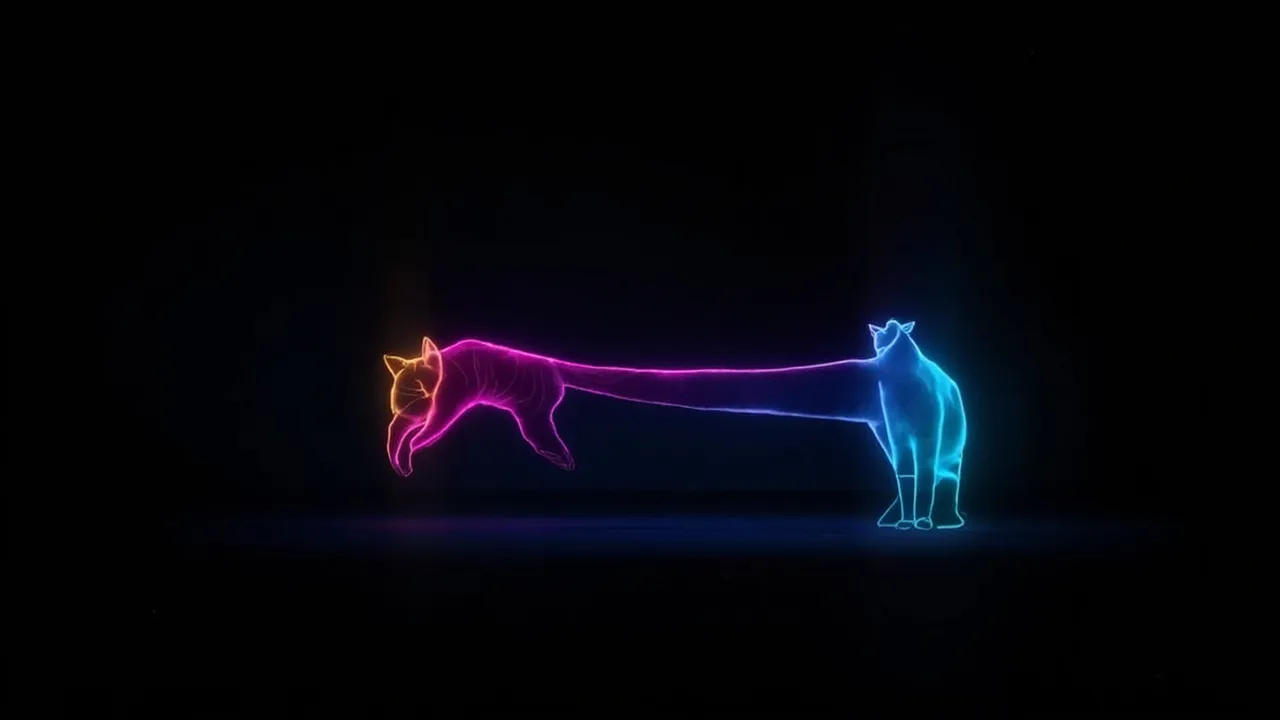
The Mystery of Cat Pee Identity
Okay, I know what you're thinking—"Megan, why are you writing about cat pee?"
But trust me on this one. What scientists just discovered is genuinely cool, and it might change how you think about your mysterious feline companion.
Here's the puzzle: Cats are basically walking scent machines. They leave little chemical messages everywhere—in their urine, on surfaces they rub against, in basically any spot they deem worthy of marking. These messages communicate information to other cats long after the original cat has strutted away.
But here's the head-scratcher. Most smell molecules evaporate, break down, or transform pretty quickly. So how in the world can another cat look at a days-old urine spot and think, "Oh yeah, that's definitely Mr. Whiskers from apartment 4B"?
Scientists from Japan, Germany, and Spain asked the same question. And holy moly, they found something fascinating.
The Chemical "Calling Card"
The researchers—led by the brilliant minds at Iwate University—discovered that cat urine contains something special: 13 branched-chain fatty acids (BFAs) that act like a fingerprint for each cat.
Think of it like this. You know how your fingerprint is uniquely yours? These fatty acids are kind of like a chemical fingerprint. Every cat has its own unique combination and ratio of these 13 compounds. It's not just about whether a cat has a particular fatty acid or not—it's about the pattern those acids create together.
What really blew my mind? These particular BFAs have never been reported in any other mammal's excretions or secretions. Cats are walking around with a completely unique chemical signature that we didn't even know existed until now.
And get this—cats from the same family tend to have similar BFA profiles. So there's apparently a genetic component to this urinary identity. Your tabby's pee might share some family resemblances with her mother's, but she's still got her own distinct chemical calling card.
Wait, Cats Can Actually Read This?
But here's where it gets really interesting. The researchers didn't just want to know what chemicals were in the urine—they wanted to know if cats could actually detect these differences.
So they did something clever. They took urine samples and swapped out just the BFA-containing portions while keeping everything else the same. When cats who had gotten bored of a sample suddenly encountered one with different fatty acids, they perked right back up and started sniffing again.
This tells us that cats aren't just leaving random chemical signatures behind—they're leaving information that other cats can actually read and understand.
The researchers also studied the flehmen response—that funny face cats make (usually with an open mouth and curled lip) when they're really investigating a scent. Cats showed this response way more when sniffing unfamiliar urine compared to their own. But the more they encountered the same sample, the less they flehm'd. Introduce a new cat's urine? Flehmen levels spiked again.
The Memory of a Cat
Here's another detail that kind of got buried in the technical parts of the study but absolutely deserves attention: cats remembered these urine scents for months.
When cats encountered the same urine sample repeatedly, they spent less and less time investigating it—a sign they'd recognized it as "already processed information." And even after long gaps, when the same familiar sample reappeared, cats still showed that reduced interest.
That's not just a quick sniff-and-move-on response. That's long-term memory at work. Your cat is apparently keeping a mental database of every cat whose urine they've ever encountered. (I'm both impressed and slightly horrified by this, to be honest.)
The Stability Factor
One reason these BFA signatures work so well? They're surprisingly resilient.
Many of the volatile compounds that give urine its immediate smell start degrading almost immediately after deposition. But these branched-chain fatty acids? They're semi-volatile, meaning they evaporate much more slowly.
In urine samples stored at room temperature (about 77°F), the distinctive BFA profiles remained stable for at least 24 hours. That's plenty of time for another cat to swing by and get the message.
A Kidney Surprise
As if all this wasn't enough, the researchers stumbled onto something unexpected. They found these BFAs concentrated in the kidneys—specifically in lipid droplets within the renal cortex. They didn't find them in other tissues they examined.
These kidney lipid droplets have actually puzzled scientists for over a century. We didn't really know what they were for. Now, here's a wild speculation: maybe these little kidney reservoirs are essentially chemical signature factories, producing the fatty acids that cats then distribute through their urine.
That's still speculative, but it's a fascinating thread for future research to pull on.
What This Means for Cat Lovers
So what should you take away from all this?
First, your cat is way more socially sophisticated than we probably gave them credit for. They're not just leaving random smell-marks—they're leaving identifiable, readable chemical messages with their own unique signature.
Second, cats have impressive scent-based memories. When your indoor cat perks up at the door after you've been to a friend's house where they have cats, there's a good chance they're detecting residual cat-scent on you and going, "Hmm, who else has your partner been touching?"
Third, there's still so much we don't know. This research opens up a whole new avenue for understanding how cats communicate and recognize each other in their invisible chemical world.
I don't know about you, but the next time my cat does that weird flehmen face at something, I'm going to have a lot more respect for what's happening. She's reading a chemical ID card left by another cat. And honestly? I kind of wish I could see what she sees.
Source: ScienceDaily