
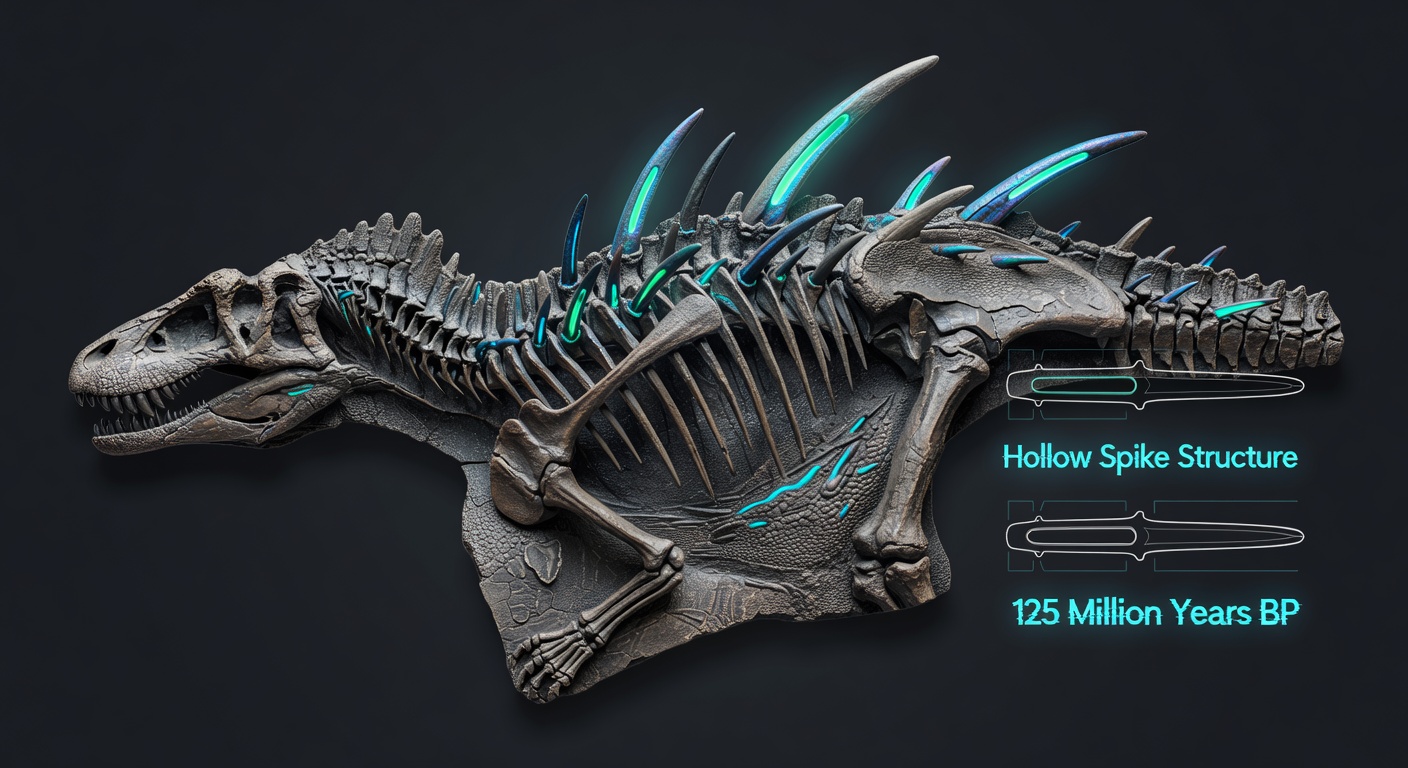
Hollow Spikes on a 125-Million-Year-Old Dino: A Game-Changing Fossil Find from China
Imagine stumbling upon a dinosaur fossil so well-preserved that you can see its skin cells under a microscope—cells that have survived for 125 million years. That's exactly what a team of scientists did in China, unearthing a young plant-eating dinosaur with a bizarre feature never seen before: hollow spikes protruding from its skin. This isn't just another fossil; it's rewriting what we know about dinosaur anatomy.
Meet Haolong dongi: The Spiky Newcomer
For over 200 years, paleontologists have been fascinated by iguanodontians—a group of herbivorous dinosaurs known for their beaked mouths (perfect for chomping plants) and powerful hind legs for galloping away from trouble. First identified in the early 1800s, these dinos were common during the Cretaceous period.
The star of this discovery is Haolong dongi, named after pioneering Chinese paleontologist Dong Zhiming. Found by researchers from CNRS and other institutions, this juvenile specimen is a remarkably intact skeleton wrapped in fossilized skin. Soft tissues like skin almost never fossilize, but here, even microscopic details held up against the ravages of time.
(Artist's reconstruction; actual fossil images show preserved skin with spikes)
Peering into Ancient Skin Cells
How do you study something this delicate? The team turned to cutting-edge tech:
- X-ray scanning to peer inside without damaging the fossil.
- High-resolution histological analysis, slicing ultra-thin tissue samples and examining them under powerful microscopes.
The result? They identified individual skin cells preserved from 125 million years ago. Buried within the skin were cutaneous spikes—hollow, tube-like structures originating purely from the skin, not bone. Unlike the solid horns of triceratops or armored plates of stegosaurus, these were lightweight and hollow, a total first in dinosaur history.
Porcupine Power: What Were These Spikes For?
Living in the Early Cretaceous, Haolong dongi shared its world with nimble carnivorous dinos. As a herbivore, it needed protection. These spikes might have worked like porcupine quills, deterring attackers by making the dinosaur a prickly no-go zone.
But the scientists think there could be more to it:
- Thermoregulation: The spikes increase surface area, helping the dino shed excess heat in the sun or retain it at night.
- Sensory function: Hollow structures could have picked up vibrations or air movements, like built-in radar.
Since this is a juvenile fossil, we don't know if adults kept the spikes or if they changed with growth. More digs needed!
Why This Matters: Dinosaurs Were Weirder Than We Thought
This find, published in Nature Ecology & Evolution on February 6, 2026, adds a whole new species to the iguanodontian family tree. More importantly, it shows dinosaur skin was far more inventive—hollow spines? Who knew?
It challenges our assumptions and opens doors to future discoveries. Maybe other dinos had wild skin features too. As paleontology marches on, fossils like this remind us: the prehistoric world still holds surprises.
What do you think these spikes were really for? Drop your theories in the comments!
Source: ScienceDaily