
The main blog post with markdown formatting
Okay, I need you to picture this with me. You're a tiny green tree ant just trying to do your ant thing, walking around the rainforest at night, maybe looking for some snacks. You stumble upon what looks like a weird silk cone dangling from a leaf. Being the curious little worker ant you are, you decide to bite it.
Big mistake.
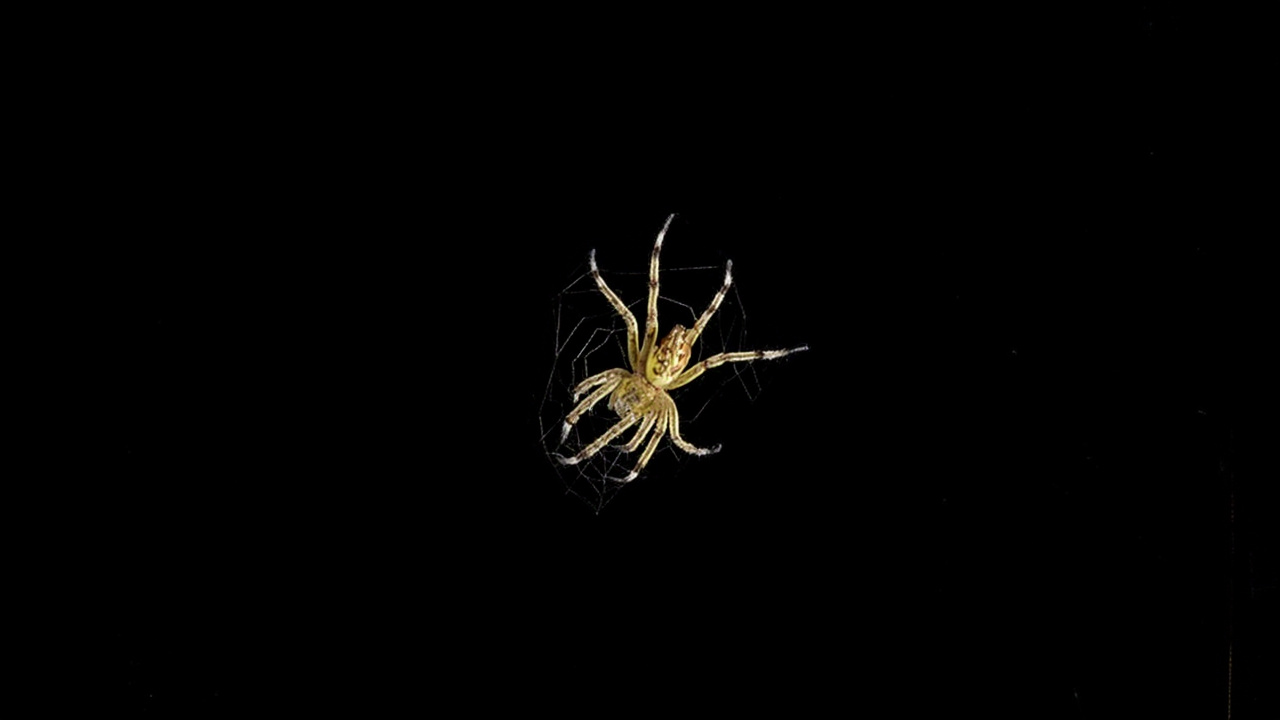
Within milliseconds, you're rocketed 30 centimeters into the air at acceleration forces that would make a fighter pilot pass out. You're tangled in a web before you even know what happened. And waiting for you at the top? A small, unassuming spider that just pulled off what might be the most over-engineered hunting technique in the entire animal kingdom.
This isn't science fiction, folks. This is the ballista spider, and it's absolutely wild.
A Spider That Only Eats One Thing
Now, here's what makes this discovery really fascinating to me. Spiders typically aren't ant-eaters. I know, I know—that surprises a lot of people. Ants are basically nature's tiny warriors. They've got chemical defenses, they've got painful bites, and here's the kicker: they can call for backup. We're talking hundreds, even thousands of their buddies rushing in to overwhelm whatever crazy predator was dumb enough to attack one of their own.
So most spiders look at ants and think, "Yeah, I'm gonna pass on that."
But not our friend the ballista spider. This little nocturnal arachnid (which hasn't even been formally named yet—it belongs to the genus Propostira) looked at those aggressive green tree ants and said, "You know what? I'm going to specialize in eating only you."
Only one particular ant species. That's it. That's the whole menu.
How do you even evolve into something that niche? Well, apparently you build yourself a biological catapult powered by silk.
Building the Ultimate Trap
Here's where it gets really cool. During the day, the ballista spider hides under a leaf, positioned above areas where those green tree ants are foraging. Patient little thing, right?
But after dark? Game time.
The spider descends more than half a meter (that's like 50 centimeters for my metric friends) and sets up an anchor point. Then comes the really impressive part: it spends up to four hours constructing what can only be described as a silk slingshot.
We're talking 15 to 60 individual silk strands all bundled together into a cone shape near the ground. The spider then wraps this cone with thinner silk and retreats upward to wait.
All that construction, all that careful building... and then it just sits there. Waiting.
The Trap Springs
What happens next is honestly something you'd expect to see in a nature documentary with dramatic orchestral music swelling in the background.
An ant wanders by. It sees this weird silk cone and, being the aggressive little warrior it is, bites it. That's all it takes. The moment the ant bites down and accidentally detaches the cone from its anchor point, BOOM—spring loaded.
The trap releases.
The ant is launched more than 30 centimeters upward into the spider's main web. The acceleration? Over 1,300 meters per second squared. That's insane. For reference, the human body can handle maybe 5-6 Gs before passing out, and we're talking about forces way beyond that.
The ant hits the web, gets tangled up, and only then—only after the prey is completely restrained—does the spider approach to finish the job.
The Engineering is Mind-Blowing
I talked to a spider silk expert, Dr. Jonas Wolff (well, okay, I read about him, but work with me here), and apparently this silk catapult has "incredible instantaneous power density—greater than any other specialized silk-based biological catapults."
Let that sink in. This isn't just impressive for a spider. This is impressive, period. We're talking about biological engineering that rivals (or exceeds) anything else nature has come up with.
And here's another thing that blows my mind: those green tree ants have adhesive pads on their feet. So when the trap launches, it has to overcome forces many times the ant's body weight just to lift the little beast off the ground.
Researchers think the spider might add a specific pheromone during the final construction stage that both attracts worker ants AND makes them aggressive enough to attack. Think about that—the spider is basically sending out a dinner invitation that makes its prey so angry they trigger their own capture.
Why Would Evolution Do This?
So here's my take on this, and I think it's what makes the discovery really thought-provoking.
Evolution isn't supposed to work this way, right? Specialization that extreme seems risky. What happens if the ant population crashes? What happens if something changes in the ecosystem?
But here's the thing: when your prey is basically a tiny soldier with chemical weapons and a social network that can summon reinforcements, maybe the only way to safely hunt them is to have an extremely specific solution. One ant at a time, launched far away from the nest and its backup army, safely tangled in silk before you even get close.
It's the ultimate "pick off one at a time" strategy.
The Bottom Line
Look, I've covered a lot of weird animal discoveries in my time, but this one genuinely made me stop and stare at my screen for a while. A spider that builds a silk catapult. That launches prey into the air. That has evolved specifically to eat one particular species of ant.
Nature is absolutely, positively unhinged in the best possible way.
We share our planet with creatures doing things we couldn't even imagine if we tried. And the best part? There are probably hundreds more discoveries like this waiting in rainforests around the world, with scientists just starting to understand the wild strategies life has come up with to survive.
The ballista spider might not have a formal name yet, but it's already earned a place in my "nature is incredible" hall of fame.
Now if you'll excuse me, I need to go lie down for a while and process the fact that somewhere in Australia, there's a tiny spider with a spring-loaded silk trap that would make a Roman engineer jealous.