
When Did Humans Really First Get to Australia? DNA Has the Answer
Here's a question that's been bugging archaeologists and geneticists for decades: when exactly did modern humans first arrive in Australia and New Guinea? You'd think we'd have nailed this down by now, but the truth is, experts have been arguing about it for years. Now, thanks to some clever detective work involving thousands of DNA samples, we finally have a pretty convincing answer.
The Great Chronology Debate
Let me back up a bit. Imagine the world during the last Ice Age—it was a very different place. Sea levels were dramatically lower, which meant that Australia and New Guinea weren't separate islands like they are today. Instead, they were connected as one massive landmass called Sahul. Picture it like an ancient supercontinent that's now been split apart by rising oceans.
Scientists have known for ages that people settled this region a really long time ago. But how long ago? That's where things got messy. Some researchers believed humans arrived around 60,000 years ago (the "long chronology" camp), while others insisted it was more recent—somewhere between 45,000 and 50,000 years ago (the "short chronology" team). It sounds like a small difference, but in archaeology, 15,000 years is huge.
How DNA Became the Ultimate Timekeeper
Here's where it gets cool. An international team of researchers from the University of Huddersfield and University of Southampton decided to settle this once and for all—using DNA. But not just any DNA. They focused on mitochondrial DNA (mtDNA), which is this special genetic material passed down only through mothers.
Why does this matter? Well, mtDNA is like a genetic record book. It accumulates tiny changes over generations, almost like a natural clock ticking away in our cells. By tracking these changes, scientists can figure out how long ago different groups of people shared a common ancestor.
The researchers weren't working with just a handful of samples either. They analyzed nearly 2,500 mtDNA genomes from Aboriginal Australians, New Guineans, and people living across Southeast Asia and the Pacific. That's a lot of genetic data.
What the DNA Actually Told Them
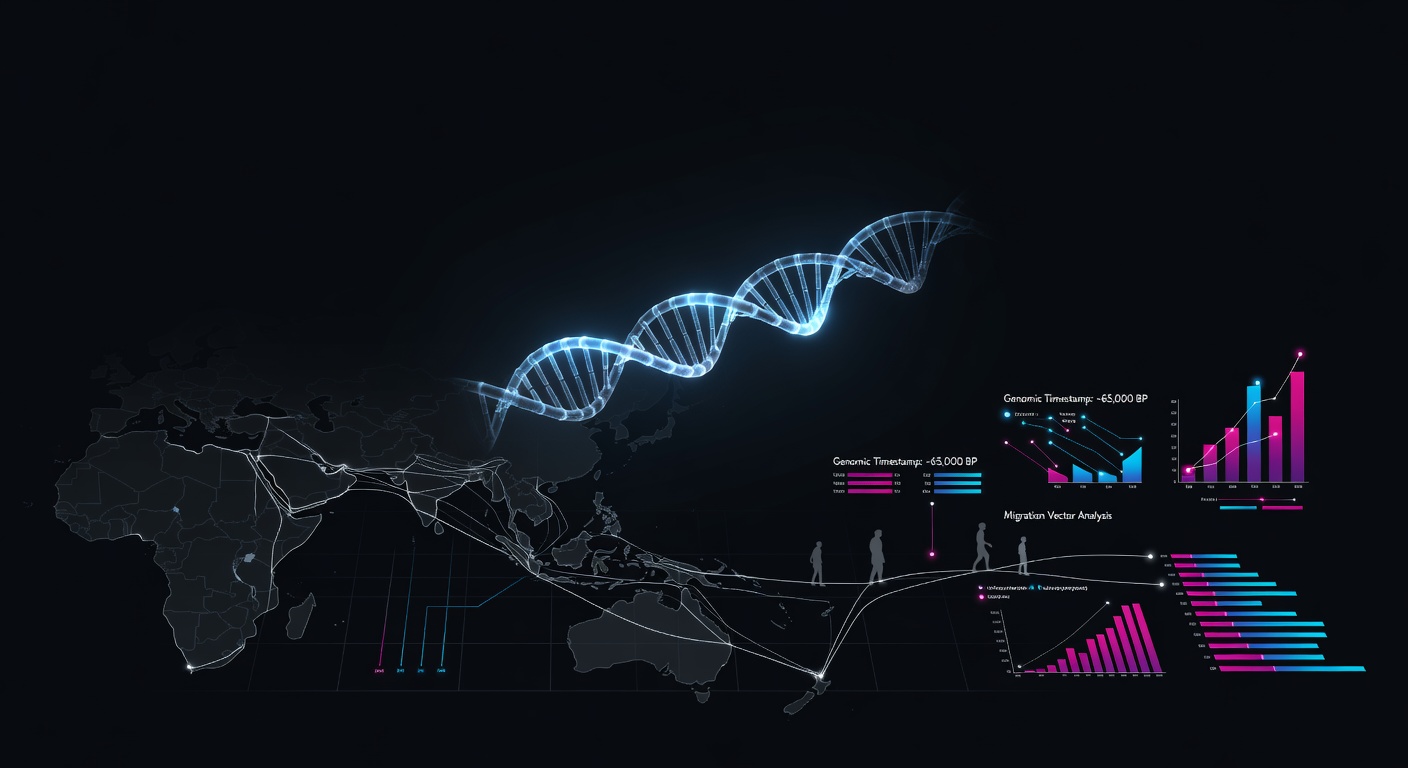
Using something called the "molecular clock"—basically counting up all those tiny genetic changes to estimate time—the team discovered that the oldest DNA lineages found exclusively in Aboriginal Australians and New Guineans dated back to about 60,000 years ago. Boom. Long chronology wins.
But here's what I found most fascinating: these early migrants didn't all come from the same place. The genetic evidence shows that people came from multiple areas across Southeast Asia—some from the northern regions like Indonesia and the Philippines, and others from southern areas like Malaysia and Indochina. This suggests there were at least two major migration routes happening around the same time, which honestly, is pretty impressive when you think about the navigation skills required.
Why This Matters (Beyond Just Settling a Debate)
Okay, so scientists got to say "I told you so" to their colleagues. But why should you care? Well, for one thing, this research shows us just how capable and skilled those early humans were. We're talking about seafaring voyages thousands of years ago with technology we can barely imagine. These weren't just random people wandering around—they were deliberate, intelligent navigators.
The findings also validate what Indigenous communities in the region have long known and maintained through oral traditions and cultural connections to the land. This research essentially says: yes, your heritage here goes back an incredibly long time. That's powerful stuff.
The Work Isn't Over Yet
Here's the thing about scientific breakthroughs—they usually just open new doors. Professor Martin Richards, who led the genetic analysis, is pretty honest about this. The mtDNA approach is compelling, but it only tells part of the story. They're now analyzing whole genome sequences (think 3 billion pieces of genetic code instead of just 16,000) to verify these results using many other genetic paths.
Plus, there's always the possibility that archaeologists might unearth ancient remains with DNA still intact, which could provide even more direct evidence. Science is a conversation that keeps evolving.
The Bigger Picture
What I love about this research is how it brings together so many different fields—genetics, archaeology, oceanography, earth science. Nobody solved this puzzle alone. It took maritime archaeologists, geneticists, and experts from all over the world working together to piece together a clearer picture of one of humanity's most remarkable journeys.
These early Australians and New Guineans didn't just randomly wash up on shore. They deliberately migrated across the ocean using knowledge of navigation, weather patterns, and survival skills that we're still trying to fully understand. That's genuinely awe-inspiring when you think about it.
So the next time someone asks you when humans reached Australia, you've got a solid answer backed by 2,500 DNA samples and some seriously clever science: about 60,000 years ago, arriving from multiple directions, with maritime skills that still impress us today.