
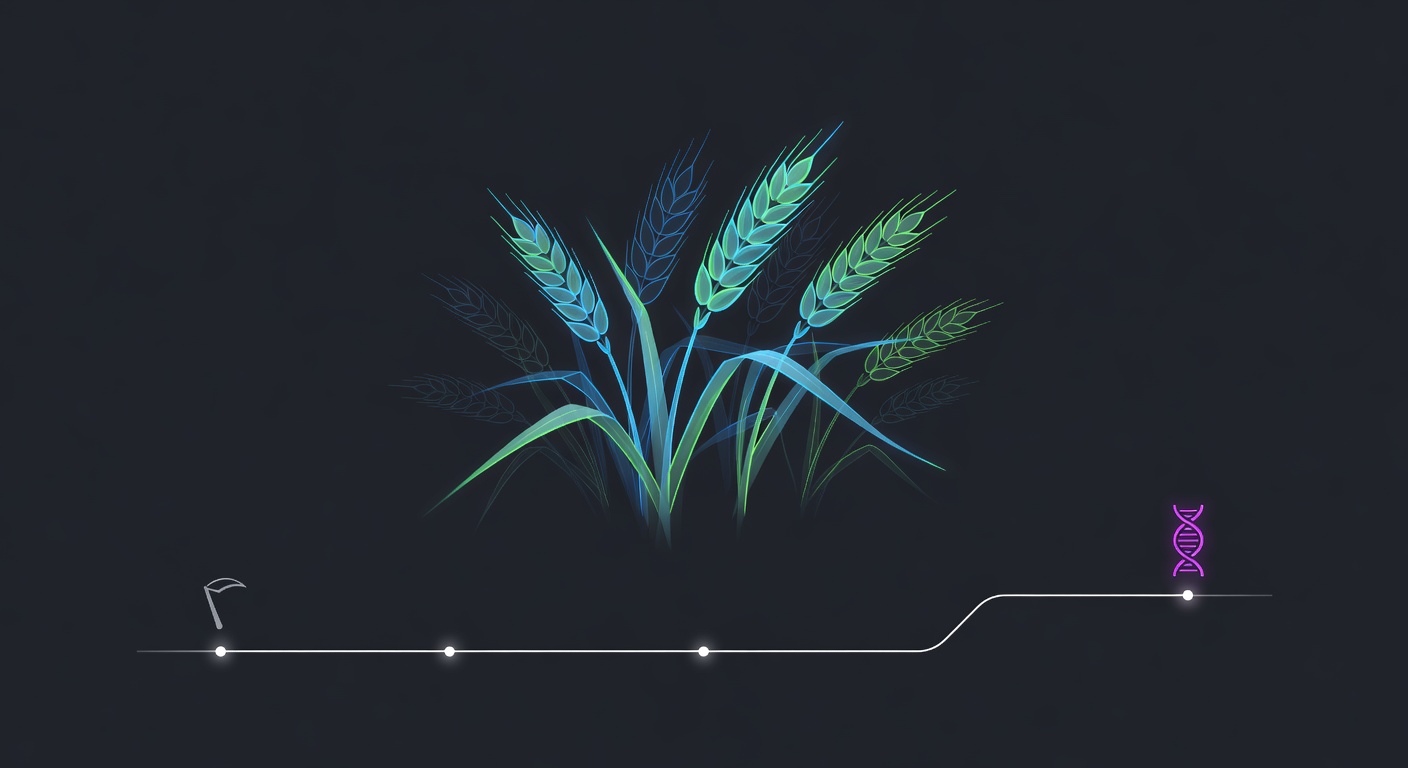
The Accidental Plant Arms Race Nobody Planned
Picture this: you're an ancient farmer around 10,000 years ago, and you've just had a brilliant idea. Instead of letting wheat grow wild and scattered, you're going to pack seeds densely into organized fields. Sounds efficient, right? Well, what you actually did was create the plant equivalent of a steel-cage wrestling match.
A new study from the University of Sheffield reveals something wild: when you cram plants together like that, Mother Nature rewards the bullies. Over just a thousand or two thousand years, the wheat plants that could grow faster, tower higher, and basically body-check their neighbors into darkness were the ones that survived and made babies. The researchers literally call them "warrior" wheat, and honestly? The name is perfect.
Meet the Aggressive Leaves That Started It All
So what made these ancient wheats such competitive jerks? It's actually pretty clever when you think about it. The winning plants developed some genuinely sneaky tricks:
Bigger, pointer leaves — These weren't just slightly larger. We're talking about leaves that could create serious shade for competitors below.
Super upright growth — Instead of sprawling out horizontally like their wild cousins, these plants shot straight up. It's like they were saying, "I'm gonna be taller than you, and there's nothing you can do about it."
Relentless growth — They literally kept expanding even when surrounded by other aggressive plants. No mercy. No sharing. Just growth.
The researchers used fancy computer models to figure out exactly how this worked, and it turns out leaf angle was the real MVP. Plants with steeper leaves could rise above their neighbors faster and steal the sunlight before the competition even knew what hit them. It's basically plant-level shade throwing.
The Plot Twist: Why Modern Wheat Is Weaker On Purpose
Here's where it gets really interesting. Fast forward to today, and modern farmers have a completely different problem. They don't want aggressive, competitive wheat anymore. They want the opposite.
Why? Because the game has completely changed. Modern agriculture doesn't rely on plants beating each other up for resources. We've got herbicides to kill weeds, synthetic fertilizers to feed crops, and irrigation systems to manage water. The farmer, not the plant, is in charge of resource distribution.
So what did breeders do? They essentially reverse-engineered all those warrior traits. Modern "elite" wheat varieties have smaller leaves and shorter stems — basically the anti-warrior. These plants put all their energy into making grain instead of wasting it on this pointless competitive arms race.
Professor Colin Osborne put it perfectly: evolution favored the strong competitors, but modern farming needs plants that cooperate, not compete. It's wild to think we spent millennia accidentally breeding the most aggressive wheat possible, only to spend the last century breeding the aggression back out.
What This Actually Means for Farming
This research is way more than just a cool historical fact. It tells us something important about how crops evolve and how we can breed better ones in the future.
Understanding this journey from wild to warrior to cooperative helps scientists and farmers make smarter choices about which traits matter. It shows that the "best" plant depends entirely on the farming system you're using. There's no universal "perfect wheat" — there's only wheat that's perfect for your specific situation.
As climate change pushes farming into new territory and we look for ways to grow food more sustainably, this kind of knowledge becomes crucial. Maybe we need plants with more of those old competitive instincts if we're going to reduce chemical inputs. Or maybe we need entirely new traits we haven't even thought of yet.
The story of wheat is basically the story of how humans reshape nature without even realizing it. We packed seeds together, and accidentally ran a 2,000-year plant selection experiment. The results? Pretty enlightening.