
A "Wow, I Can't Believe This Is Real" Moment
You know that feeling when you're doing your job and suddenly something completely extraordinary happens? That's exactly what happened to a team of researchers in Egypt recently. They were going about their work clearing debris and preventing flood damage near Luxor (you know, where all those famous temples are) when they stumbled upon something that literally made history textbooks need updating.
A previously unknown tomb, roughly 3,000 years old, sitting right there waiting to be discovered.
The lead archaeologist described that first moment of looking inside as "exciting and terrifying" — and honestly, I totally get it. You're standing there thinking, "Did I just accidentally find something that people have been searching for, for centuries? Or am I about to be disappointed by a collapsed, looted mess?"
Lucky for all of us, it was the former.
Who Was Paser?
Based on the initial analysis of the stunning wall paintings inside, researchers identified the tomb's owner as a man named Paser. He was what we'd call "high society" in ancient Egypt — an elite official during the Ramesside period (that's around 1292 to 1069 BC if you're curious, which puts us firmly in the era of those famous pharaohs with the big names like Ramesses II).
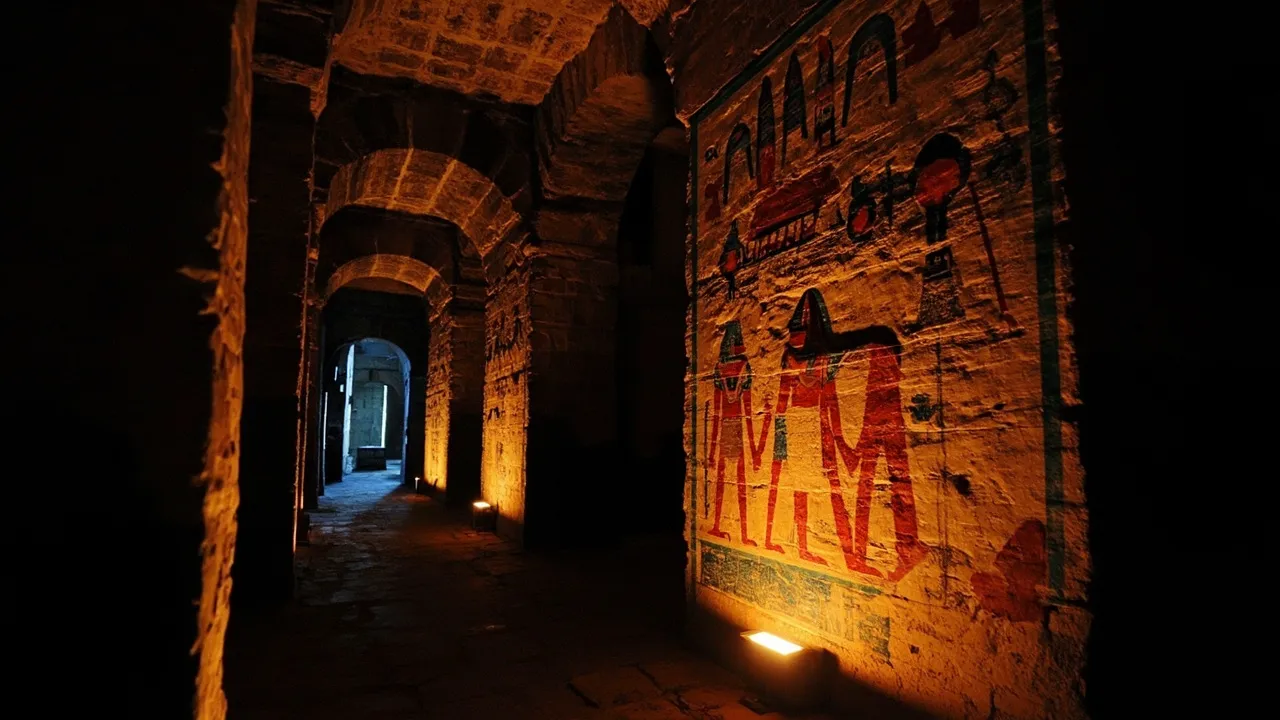
The tomb itself has that classic Theban necropolis layout: an outer courtyard, a rock-cut chapel, and chambers underground where the actual burial happened. But the real showstopper? The paintings.
Imagine walking into a room that's been sealed for three millennia and seeing walls covered in vivid colors — images of Paser himself adoring various Egyptian gods, plus scenes of him and his wife sitting together at a feast. I'm talking bread, beer, fruits, meat, and flowers laid out on a table. Basically, an ancient Egyptian dinner party frozen in time.
These aren't just pretty pictures, though. They're windows into daily life in ancient Egypt that researchers can study for years. What did they eat? How did they dress? What mattered most to them spiritually? All of that is written (or painted, rather) on these walls.
Here's Where It Gets Urgent
Now, here's what keeps me up at night about this story. The researchers found this tomb just in time — and I mean that literally.
The area where they're working, called Lower Sheikh Abd el-Qurna, sits at the foothills of a mountain. It's beautiful, but it's also a flood nightmare waiting to happen. And thanks to climate change, those intense rain bursts that cause flash flooding are only getting worse and more frequent.
Think about what that means for ancient tombs. Water seeping in doesn't just wash things away. It brings moisture that creates salt crystals, which eat away at paintings and decorations. It can weaken structures until they collapse entirely. We're talking about the potential loss of irreplaceable historical treasures.
So these archaeologists aren't just digging for fun — they're racing against time. Their main mission is implementing a conservation and risk management program. They're clearing debris, redirecting floodwater, and trying desperately to protect these sites before Mother Nature has her way with them.
Why Should You Care?
I know what some of you might be thinking: "Cool story, but why does a 3,000-year-old tomb matter to me?"
Here's why: This stuff is humanity's story. We're talking about a civilization that invented writing, created architectural marvels we still can't quite explain, and influenced every culture that came after them in the Mediterranean and beyond. Every tomb we lose, every painting we fail to protect, takes a piece of that story with it.
Plus, there's something genuinely magical about looking at paintings created when humanity was figuring out who we are. Paser wanted to be remembered. He had his life painted on these walls so that thousands of years later, strangers would see his face and know he existed. And now, thanks to this discovery, he will be.
The researchers still have a lot of cleaning and analysis ahead of them. Once those paintings are professionally cleaned, they expect to learn even more about Paser, his family, and possibly others who reused this tomb over the centuries.
It's a race against time, sure. But every day they gain is another day we get to keep a piece of our shared human heritage.
And honestly? That's pretty incredible.
Source: https://www.sciencedaily.com/releases/2026/09/260909231746.htm