
When Physics Meets Paleontology
Here's something wild: a physics student looking at dinosaur bones through a particle accelerator ended up discovering something that could reshape our entire understanding of how T. rex survived in the ancient world. This isn't your typical dinosaur story about teeth or claws—it's about the tiny structures inside the bones that scientists have never been able to examine before.
I know what you're probably thinking: "Why does this matter? We already know dinosaurs existed." But stick with me here, because this is actually pretty revolutionary.
The Problem With Dinosaurs: They're Not Very Talkative
Let's be honest—studying dinosaurs is incredibly frustrating. We'll probably never find dinosaur DNA (sorry, Jurassic Park fans). Bones and teeth can tell us a lot, but they're like reading a book where half the pages are missing.
What we really want to understand is the soft stuff: muscles, skin, feathers, and especially the biological systems that kept these animals alive. And one particular type of soft tissue is surprisingly good at sticking around—blood vessels. When they fossilize just right, they become like a biological time capsule.
Meet Scotty: The T. Rex With a Rough Life
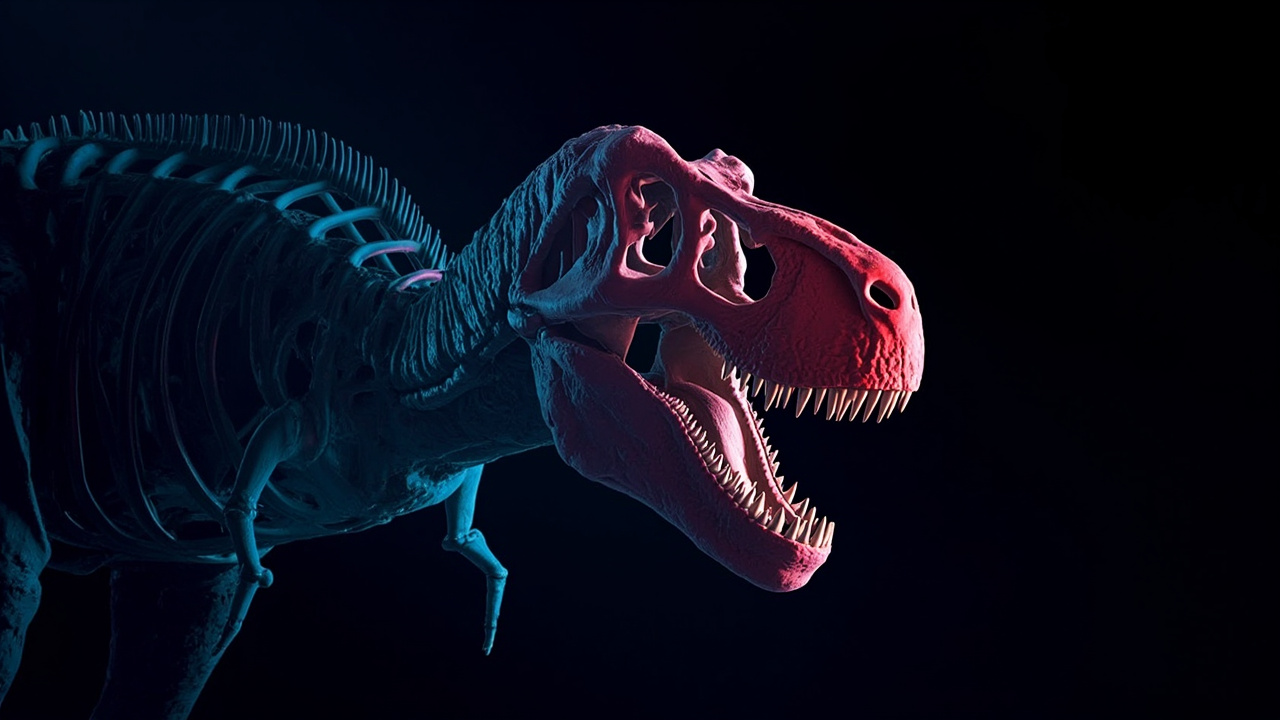
The specimen in question is called Scotty, and it's kind of a celebrity in the dinosaur world. It's the largest T. rex skeleton ever discovered, housed at the Royal Saskatchewan Museum in Canada. But here's what makes Scotty really interesting: this dinosaur didn't live an easy life.
Scotty's bones are basically a medical history written in stone. Multiple fractures and injuries suggest this rex got into some serious fights—maybe with other dinosaurs, maybe from disease. One rib, in particular, shows a massive break that never fully healed. And that damaged rib? It's what led to the discovery of those blood vessels.
The Clever Trick: Synchrotron Light
This is where the physics gets cool. When your bones are damaged, your body responds by increasing blood flow to help with healing. Scotty did the same thing, but instead of healing completely, those blood vessels got mineralized and locked in place for 66 million years.
The challenge was figuring out how to see inside a T. rex bone without destroying it. Regular CT scanners (the kind doctors use) can't penetrate fossilized bone because it's way too dense—minerals have basically turned it into rock.
So the research team did something smarter: they used synchrotron light, which is basically a mega-powered X-ray beam produced in a particle accelerator. Think of it like the difference between a regular flashlight and a laser pointer. This intense radiation can actually peer through dense fossil material and reveal tiny details.
What the Blood Vessels Actually Tell Us
The mineralized vessels they found weren't just randomly scattered. They formed these intricate, dense networks—basically the dinosaur equivalent of scar tissue. This shows us something profound: we can now study how a T. rex's body actively responded to injury.
This isn't just cool trivia. It opens up entirely new ways to think about dinosaur biology. How did they recover? How long did healing take? How tough were these animals, really? These are questions we've never been able to answer before.
Why This Matters Beyond the Cool Factor
This discovery is important for a couple of reasons. First, it proves that careful use of advanced technology can reveal things in fossils we thought were lost forever. Second, it gives us a roadmap for future discoveries—scientists now know that injured bones are more likely to preserve soft tissues, so they can be smarter about which fossils to investigate.
We can even compare how T. rex healed to how modern birds heal (birds are basically living dinosaurs, genetically speaking). That kind of comparison helps us understand the whole lineage of these animals.
The Real Takeaway
What I love about this story is that it shows how science isn't just about making bigger discoveries—sometimes it's about asking smarter questions and using the right tools. A physics student literally looked at an old problem from a completely different angle, and boom: new knowledge.
We'll probably never know what Scotty's life was actually like. But thanks to this research, we're moving from just looking at dinosaur skeletons to actually understanding what was happening inside their bodies. And that's genuinely exciting.