
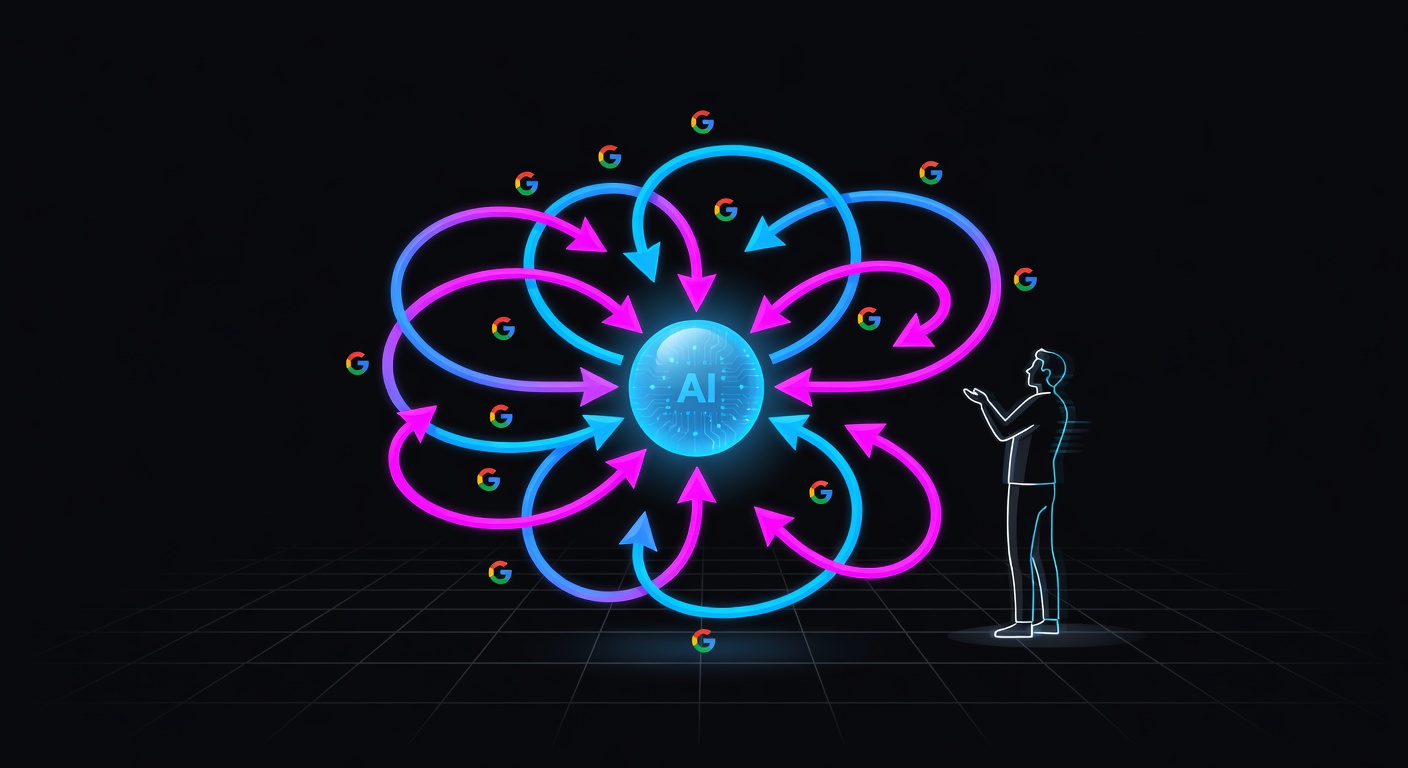
The Digital Ouroboros: When Google Eats Its Own Tail
Have you ever noticed something weird happening when you use Google's AI search features? I've been diving deep into this lately, and there's a peculiar pattern emerging that's both fascinating and a little concerning.
Picture this: you ask Google's AI a question, and instead of giving you a diverse range of sources from across the web, it keeps pointing you back to... well, Google. It's like being stuck in a digital hall of mirrors where every reflection shows you the same thing.
What's Really Going On Here?
Here's the thing that got me scratching my head – Google's AI search results have developed this interesting tendency to create what I like to call "reference loops." You search for something, the AI gives you an answer, but when you look at the sources, they often lead back to Google's own ecosystem of results and services.
Think about it from a practical standpoint. When was the last time you clicked through multiple layers of Google results only to find yourself looking at more Google results? It's happening more often than you might realize.
Why This Matters More Than You Think
As someone who spends way too much time analyzing how we interact with technology, this pattern raises some eyebrow-raising questions. Are we accidentally creating an information bubble where Google's AI primarily learns from and refers to content that Google has already deemed worthy?
It's not necessarily malicious – AI systems naturally tend to reinforce patterns they see in their training data. But when that data increasingly comes from Google's own curated results, we might be looking at an unintentional feedback loop that could narrow our information diet.
The Bigger Picture
Don't get me wrong – I'm not here to bash Google. Their AI search capabilities are genuinely impressive, and they've made finding information incredibly convenient. But as users, we should be aware of these patterns.
The internet was supposed to be this vast, diverse ecosystem of information. When AI search tools start creating closed loops that primarily reference themselves, we might be missing out on the rich variety of perspectives and sources that make the web so valuable.
What Can We Do About It?
Here's my take: awareness is the first step. Next time you use AI-powered search, take a moment to check where those answers are actually coming from. Are you getting a broad spectrum of sources, or are you caught in a Google-centric loop?
Maybe try mixing up your search strategies. Use different search engines occasionally, dive deeper into original sources, and remember that the most comprehensive understanding often comes from multiple perspectives – not just the ones that an algorithm thinks you should see.
The future of search is undoubtedly exciting, but let's make sure we're not accidentally trading diversity for convenience.
Source: https://www.wired.com/story/google-ai-searches-love-to-refer-you-back-to-google