
The Great Cosmic Question
Imagine trying to figure out where your house came from, but instead of looking at blueprints, you're analyzing stardust from 4.6 billion years ago. That's basically what planetary scientists have been wrestling with: did the stuff that makes up Earth come from nearby space rocks, or did it travel from the far reaches of our Solar System?
It sounds like an abstract question, but it's actually fundamental. The answer changes how we understand our entire planetary neighborhood.
Two Flavors of Cosmic Rubble
Here's where it gets interesting. When scientists study meteorites—the rocky leftovers from the early Solar System—they find two distinct types: carbonaceous meteorites (heavy in carbon and water, usually from the outer regions) and non-carbonaceous meteorites (lighter and more inner-Solar-System types).
Think of it like finding two different shipwrecks. One has tropical plants and coral, suggesting it came from warm waters. The other has arctic seals and ice, suggesting it came from the north. By looking at the "cargo" of each type, scientists can figure out where they originated.
The Isotope Detective Work
Researchers Paolo Sossi and Dan Bower at ETH Zurich decided to play cosmic detectives. They studied tiny variations in isotopes—different versions of the same elements—found in meteorites and planetary materials. These isotopic "fingerprints" act like a crime scene's DNA evidence; they tell you exactly where something came from.
When they analyzed Earth's composition and compared it to these meteorite types, the results were surprisingly clear: Earth is basically made exclusively from inner Solar System material. We're talking 99%+ homogeneous. It's like discovering your entire family tree comes from one small town rather than scattered across the continent.
Enter Jupiter: The Cosmic Bouncer
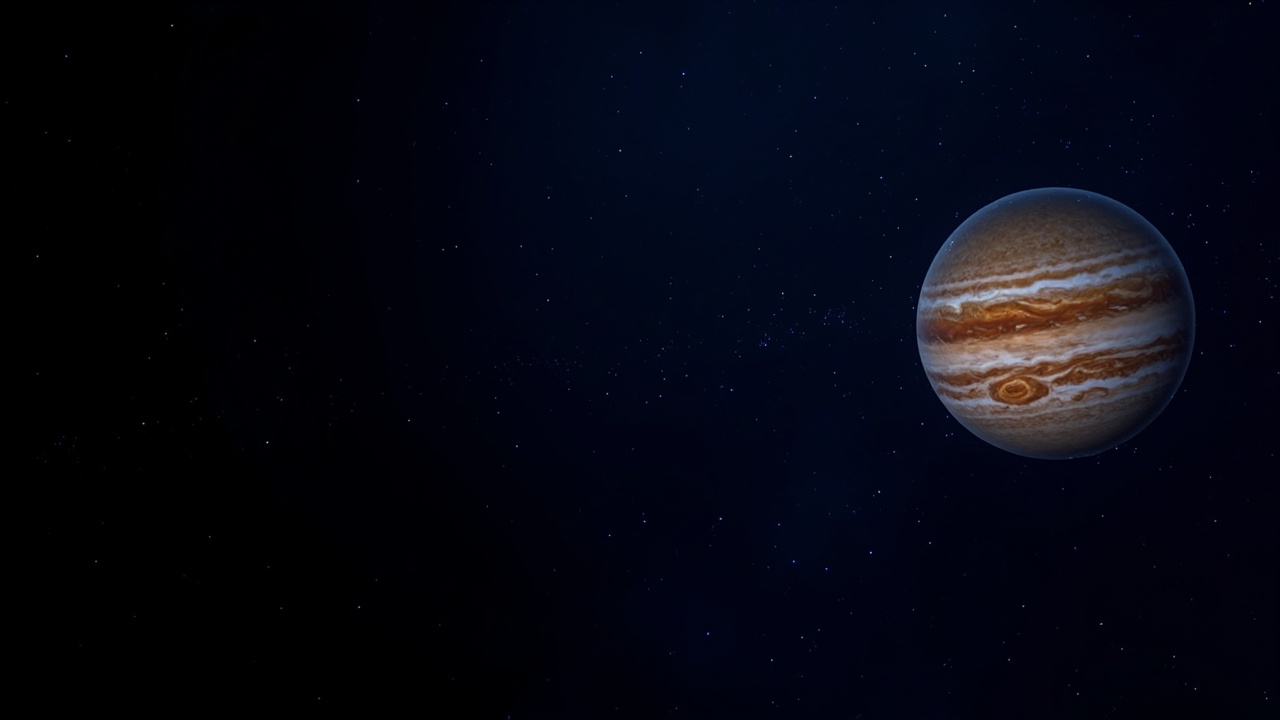
So why didn't Earth grab stuff from the outer Solar System? The answer is hilariously simple: Jupiter.
When Jupiter formed, it became absolutely massive—so massive that its gravity warped and tore apart the molecular cloud of gas and dust that surrounded the young Sun. This giant gas ball essentially acted as a bouncer at the Solar System's hottest club, blocking material from the outer regions from entering the inner regions.
It's not that it was impenetrable—a tiny bit probably snuck through. But Sossi and Bower's research shows that barely any outer Solar System material made it into Earth's construction. Jupiter's gravitational wall was that effective.
But Wait... What About Life?
Here's the plot twist that might be keeping you up at night: if Earth formed almost entirely from inner Solar System rocks, where did all the carbon and water that make life possible come from?
The leading theory is that these ingredients arrived later, delivered by cosmic hitchhikers. Late in Earth's formation or shortly after it was "done," asteroids and comets from the outer Solar System smashed into our young planet, dropping off water, carbon, and other organic goodies. Basically, Earth got constructed from boring inner Solar System materials, then got decorated with life-enabling elements from far-away cosmic visitors.
Why This Matters
This discovery isn't just academic navel-gazing. Understanding Earth's origins helps us understand how planets form everywhere. It tells us that Jupiter—our largest neighbor—fundamentally shaped what we are. Without Jupiter's gravitational gatekeeping, Earth might have assembled from completely different materials. Maybe we'd never have formed at all.
It also has implications for finding Earth-like planets around other stars. If we understand our formation story, we're better equipped to recognize similar planets elsewhere.
The Bottom Line
Earth is basically a homegrown product—built from nearby materials under the watchful eye of Jupiter's gravity. We're inner Solar System kids through and through, at least until the late-arriving cosmic delivery service brought the ingredients that would eventually become you and me.
Pretty wild that the biggest planet in our neighborhood essentially shaped our entire existence, right?