
When Biology Meets Gaming
Hold onto your controllers, folks, because science just got seriously sci-fi. Researchers have successfully taught human brain cells grown in a laboratory dish to play Doom – yes, the iconic 1990s first-person shooter that defined a generation of gamers. And here's the kicker: these cellular gamers mastered it in just seven days.
I'll be honest – when I first heard about this, my brain did a little somersault. We're talking about actual human neurons, cultivated outside the body, figuring out how to navigate virtual corridors and blast digital demons. It sounds like something straight out of a cyberpunk novel, but it's happening right now in labs around the world.
How Do You Teach Cells to Game?
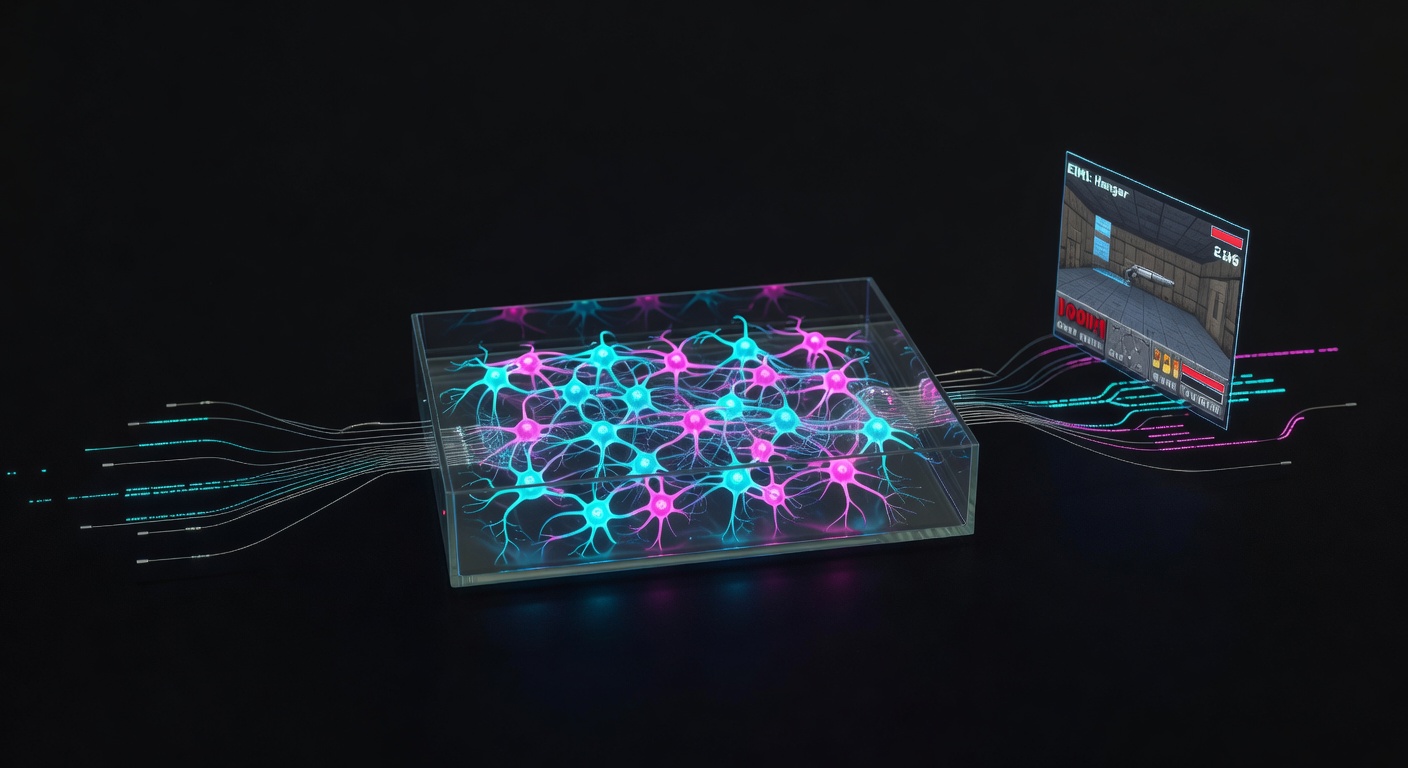
The process is fascinatingly elegant in its simplicity. Scientists grow these brain cells on a special chip that can both stimulate the neurons and read their electrical activity. Think of it as a two-way conversation between biology and technology.
The researchers connected this "brain-on-a-chip" to the Doom game engine, feeding visual information from the game directly to the neurons through electrical signals. When the cells fired back their own electrical patterns, those signals controlled the player's movement and actions in the game.
What blew me away is how quickly these cells adapted. Within a week, they weren't just randomly firing – they were actually learning the game mechanics, improving their performance, and developing what can only be described as gaming skills.
Why This Matters More Than High Scores
Sure, the novelty factor here is off the charts, but the implications go way beyond creating the world's most unusual gaming setup. This research is giving us unprecedented insights into how learning actually works at the cellular level.
Every time we pick up a new skill – whether it's playing guitar, learning a language, or yes, getting good at video games – our neurons are forming new connections and strengthening existing ones. By watching this process happen in real-time with these lab-grown cells, scientists can better understand neuroplasticity, learning disabilities, and potentially develop new treatments for brain injuries.
The Future Is Getting Weird (In the Best Way)
This breakthrough opens doors I didn't even know existed. Imagine biological computers that can adapt and learn like human brains, but without the limitations of our skull-sized processing units. We could be looking at the birth of truly intelligent machines that think more like us than like traditional computers.
The applications could be enormous – from more intuitive AI systems to new approaches in treating neurological conditions. These brain cells might help us understand autism, Alzheimer's, or depression in ways we never could before.
My Take: Embracing the Beautiful Strangeness
As someone who's spent countless hours both gaming and following tech developments, this feels like witnessing history. We're not just teaching cells to play games – we're fundamentally changing our relationship with biology and technology.
It's equal parts thrilling and slightly unnerving. Part of me wonders if these brain cells are having something resembling fun while playing. Do they experience satisfaction when they complete a level? It's probably too early to know, but these are the kinds of questions that keep me up at night in the best possible way.
What I do know is that we're living through a remarkable time where the boundaries between biology and technology are dissolving. And honestly? I can't wait to see what these brilliant scientists come up with next.
Source: https://www.newscientist.com/article/2517389-human-brain-cells-on-a-chip-learned-to-play-doom-in-a-week/