
The Oldest Story You've Never Heard
Let me introduce you to Ardi.
She's a female from the species Ardipithecus ramidus, and she's about 4.4 million years old. That's so old that I genuinely can't wrap my brain around it. We're talking about a time when our ancestors were still figuring out this whole "walking on two feet" thing.
Ardi was discovered in the Ethiopian desert back in 1994, but it's only recently that researchers have really started to understand what she's telling us. And honestly? What they've found challenges a lot of what we thought we knew about human evolution.
Wait, Humans Came From... Apes?
Here's where things get interesting. For a long time, scientists assumed our ancestors looked something like modern apes—chimps or gorillas, maybe. The thinking was that we all came from a generalized tree-climbing creature, and humans eventually evolved to walk upright while chimps stayed in the trees.
But Ardi suggests something completely different.
According to new research from Thomas Prang at Washington University in St. Louis, our common ancestor with chimpanzees probably looked more like an African ape than we previously thought. This isn't the "missing link" with a chimp-like body that gradually humanized over millions of years. Instead, something about our lineage went its own way pretty early on.
A Beautiful Mess of Features
What makes Ardi so fascinating is that she's a mashup of old and new—like finding a smartphone in a medieval castle.
On one hand, she still had grasping feet perfect for grabbing branches. Her big toe could really grip. She definitely wasn't ready to give up tree life entirely.
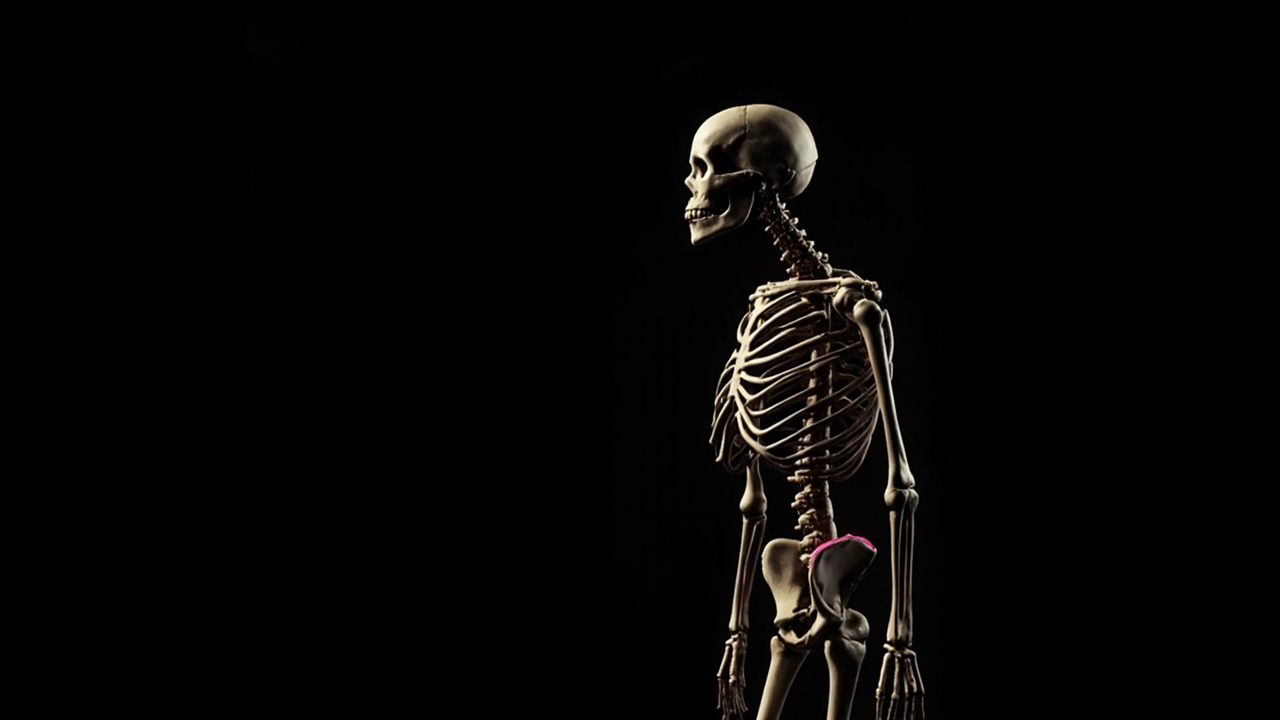
But other parts of her were already changing. Her pelvis, her skull base, and especially her feet showed signs of adaptation for walking on two legs. She wasn't swinging through the canopy anymore, but she wasn't exactly strutting around like us either. She was in transition, you know?
The Secret Life of the Talus Bone
Now here's where it gets really technical, but I promise it's cool.
There's this bone in your ankle called the talus. (Yes, you have one too!) It transfers your body weight between your leg and foot, and it plays a huge role in how animals move.
In apes that climb trees vertically, the talus has specific features that help them grip and balance on branches. But Ardi's talus shows something interesting: it's not entirely ape-like. Some of its features look more human.
This suggests that Ardipithecus had already started down the path toward bipedalism while still keeping some of its climbing equipment. It was hedging its bets, evolutionarily speaking.
What This Means for Us
Here's my take on why this matters so much.
For years, I've seen evolution depicted in those classic diagrams—monkey becomes ape becomes caveman becomes businessperson. Nice and linear, right? Well, Ardi is here to mess with that clean narrative.
The reality is messier. Our ancestors were experimenting with different body plans, mixing and matching features as they went. Some traits stuck around for millions of years before eventually disappearing. Others became the foundation for everything that came after.
Ardi represents one of the earliest experiments in becoming human. She didn't walk exactly like we do, and she couldn't swing through trees like a chimp. She was something entirely her own—a bridge between worlds.
Standing on the Shoulders of... Ardi?
I don't know about you, but thinking about Ardi gives me a weird sense of gratitude. This small female, living in Africa millions of years before any human ever existed, was part of a lineage that eventually led to you reading these words right now.
Her story reminds me that becoming human wasn't inevitable. It was one possible path out of many. Our ancestors took some wild detours along the way—developing features, losing others, constantly adapting to survive.
And somewhere in that messy, beautiful process, Ardi took her steps. Wobbly, probably. Not quite like us. But important.
Every time you go for a walk, you can thank her for that.