
So There Was This Lake...
Picture this: a giant lake covering much of what's now South America, and around its edges, some of the most bizarre and enormous animals you've ever imagined are just... hanging out. Giant ground sloths are munching leaves. Massive armadillo relatives called glyptodonts are lumbering about. Strange hoofed mammals called astrapotheres (nicknamed "lightning beasts" because, honestly, scientists just seem like they wanted a cool name) are roaming around, some tipping the scales at over 2,000 pounds.
It sounds like something out of a fever dream, right? But according to recent research published in the Journal of Vertebrate Paleontology, this was reality during the Miocene epoch, and the competition among predators was absolutely fierce.
The Predator Smörgåsbord
Now, let's talk about who was hunting whom. You'd think with all this prey walking around, everyone was eating like royalty. And you know what? They probably were. But here's the twist: researchers from the University of Helsinki discovered that despite all the competition—from saber-toothed mammals to the infamous "terror birds" (flightless carnivores that sound like they were designed by someone who really wanted to scare future paleontologists)—it was the crocodylians that dominated.
Postdoctoral researcher Oscar Wilson put it this way: "There was so much prey available that mammalian predators couldn't have eaten it all."
Can you imagine? So much food that the terror birds were probably getting full and taking naps.
Enter Purussaurus: The 23-Foot Problem
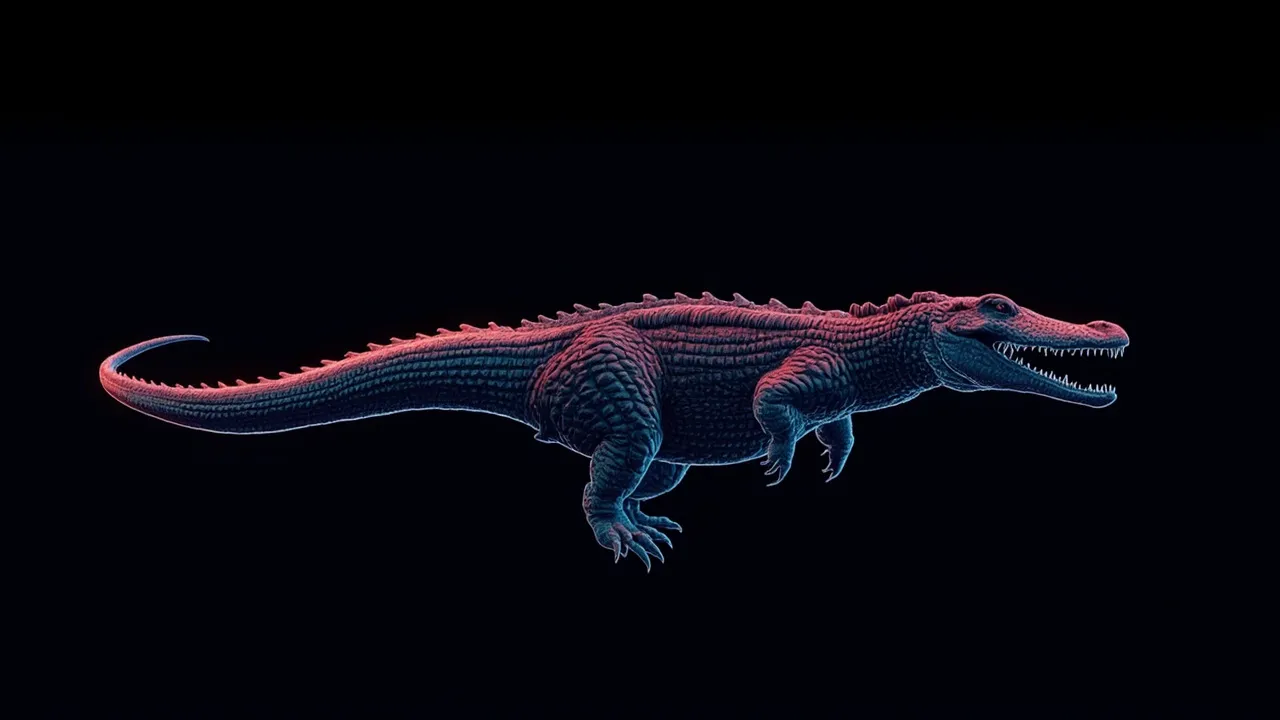
The star of this prehistoric nightmare? A crocodylian called Purussaurus neivensis, a relative of modern caimans that grew to about 23 feet long and weighed roughly 1,800 kilograms (that's almost 4,000 pounds, in case you weren't calculating).
This absolute unit wasn't just the biggest predator in the neighborhood—it was apparently the predator. Researchers examined fossilized bones from herbivores and found bite marks. Lots of them. And the frequency of marks that match Purussaurus's bite pattern suggests this giant was doing most of the heavy lifting when it came to keeping the herbivore population in check.
Why Does This Matter?
Here's what's really fascinating about this study: it suggests Purussaurus may have been what ecologists call a "keystone predator"—one of those animals whose impact on an ecosystem goes way beyond just eating. By constantly hunting large prey, Purussaurus might have literally shaped which animals thrived and which struggled.
Think about that. One species of crocodylian, influencing the body sizes of herbivores across an entire continent for millions of years. That's not just being a predator; that's being an ecosystem engineer.
I don't know about you, but when I read about this stuff, I find myself genuinely humbled. We're so used to thinking of crocodylians as "living fossils" that haven't changed much—which is true in some ways—but their ecological importance across millions of years is honestly kind of staggering.
The Takeaway
Next time you see a crocodylian at a zoo (assuming they're not trying to eat you), maybe take a moment to appreciate what these animals represented throughout Earth's history. They weren't just lurking in swamps waiting for fish. At least once, they were the undisputed kings of an entire continent.
And honestly? I'd love to see that ecosystem. Just... from a very safe distance.