
- Intro hook
- The basic facts
- The Greek mythology connection (fun)
- How it reproduces
- The problem with asexual reproduction (Muller's ratchet)
- The solution: gene conversion
- How the research was done
- The "sweet spot" finding
- Closing thoughts/why this matters
Okay, I need to tell you about this fish because it's absolutely blowing my mind.
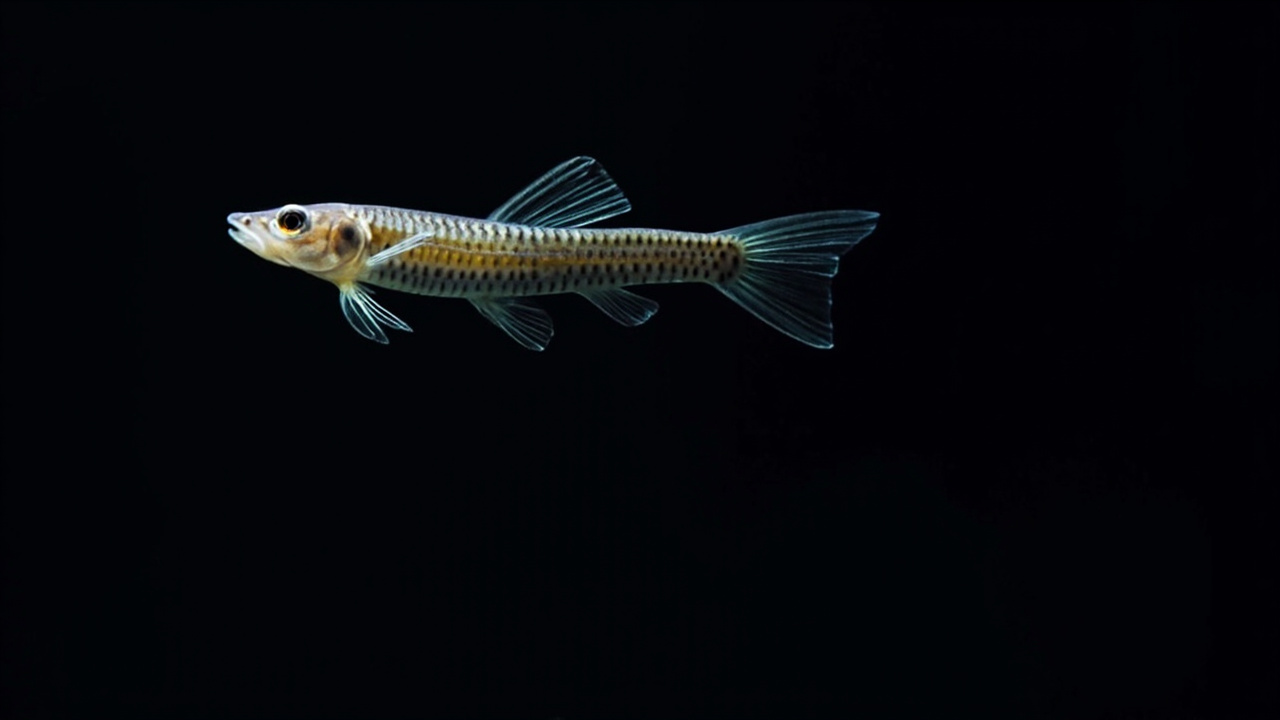
The Amazon molly (Poecilia formosa) is a small freshwater fish—think smaller than your index finger—that's been doing its thing in rivers across northeastern Mexico and southern Texas. Nothing special, right? Just another little swimmer.
Except here's the wild part: every single Amazon molly that has ever existed has been female. No males. Ever. This species has been cloning itself for roughly 100,000 years, which is absolutely bonkers when you consider that this should have been evolutionarily impossible.
Wait, Where Are the Men?
I know what you're thinking. How does a species reproduce without males? Let me explain, because this is genuinely fascinating.
The Amazon molly isn't completely alone in the reproduction department. It still needs a male from a related species (usually a Tamesi molly or Atlantic molly) to basically "kickstart" the egg development. Think of it like the male provides the spark, but none of his actual genetic material gets passed along. The eggs just... activate on their own and develop into genetically identical daughters.
So basically, these fish figured out how to get all the benefits of reproduction without actually letting any male DNA into the family line. Very efficient. Very extra. Very "I don't need you, I can do this myself."
The Ancient Greeks Knew Something
Here's a fun detail: scientists didn't just randomly name this fish the "Amazon molly." It's a deliberate nod to the Amazons of Greek mythology—those legendary warrior women who famously cut off their right breasts to become better archers and mated with neighboring tribes while sending the male babies away or killing them.
The comparison actually makes a lot of sense when you think about it. Both groups essentially said "thanks but no thanks" to keeping males around for reproduction purposes. The mythological Amazons got females through their encounters with other tribes, and the fish get... well, a male's services without his genetic contribution.
I love when scientists are nerdy enough to name something after mythology.
The Problem with Not Having Sex
Now here's where things get really interesting from a biological standpoint.
For decades, scientists had a theory called Muller's ratchet—named after the scientist who proposed it. The basic idea is that species reproducing asexually should only survive for about 10,000 years. Why? Because without sexual reproduction (which shuffles genes around and allows "bad" mutations to be weeded out), harmful mutations just keep building up over generations like genetic debt. Eventually, the species is so loaded with genetic problems that it can't function anymore and goes extinct.
Makes sense, right? Except there's one tiny problem with this theory: the Amazon molly has been thriving for 100,000 years.
That's ten times longer than the theoretical limit. Ten times! If this were a horror movie, the Amazon molly would be that character who just won't die no matter what the rules say should kill them.
So How Did They Do It?
This is the really cool part that a recent study published in Nature finally helped explain.
Researchers at the University of Missouri decided to figure out why the Amazon molly wasn't following the rules. They used a technique called long-read sequencing, which lets scientists examine entire genomes in long stretches rather than chopped-up fragments. This gave them a much clearer picture of what was actually happening genetically.
What they discovered is that the Amazon molly is a master of something called "gene conversion." Here's how it works:
Your genome (and mine, and the fish's) has two copies of most genes—one from each parent. Normally, if one copy has a harmful mutation, that mutation just... stays there. It's like having a typo in one half of your instruction manual. No big deal, until it becomes a big deal.
But gene conversion is different. It's a process where one copy of a gene essentially overwrites the other copy. The researchers found that the Amazon molly has somehow evolved to preferentially "fix" the most dangerous mutations—the ones that would cause the most biological harm—using this overwrite process.
In other words, they're not just randomly fixing mutations. They're playing genetic whack-a-mole, targeting the worst problems first.
The Sweet Spot
The really elegant part is that the Amazon molly found what the researchers called "the sweet spot" between too much and too little gene conversion.
If there was too much conversion, the fish would basically become genetically identical across the entire population—no diversity, which is actually bad when environments change and you need adaptability.
If there was too little conversion, well, that's the Muller's ratchet problem. Mutations pile up until the species collapses.
But the Amazon molly hits the perfect middle ground. It converts just enough to keep the most dangerous mutations in check, while preserving enough genetic diversity to remain flexible. As researcher Edward Ricemeyer put it to the BBC: "The kinds of mutations that you expect to be the worst, the most dangerous, the most deleterious—those are the exact places in the genome where we see gene conversion happening the most often."
It's like the fish figured out a hack that gives them all the genetic health benefits of sexual reproduction without actually needing to, you know, have sex.
What Does This Mean for Us?
Here's why this discovery matters beyond just "wow, cool fish."
For one thing, it challenges our assumptions about what evolution allows. We often think of sexual reproduction as essential for long-term species survival, and while that's generally true, the Amazon molly shows that exceptions exist when the right genetic mechanisms evolve.
It also gives us insight into how organisms repair and maintain their own genomes. Understanding gene conversion better could have implications for studying genetic diseases in humans and potentially even developing new therapeutic approaches.
And honestly? There's something kind of inspirational about this tiny, four-inch fish that just refused to go extinct according to the rules. 100,000 years of existence. Ten times longer than expected. All by being a genetic genius.
The Amazon molly isn't just surviving. It's thriving. And it's doing it its own way.
Sometimes the rules are just suggestions, right?