
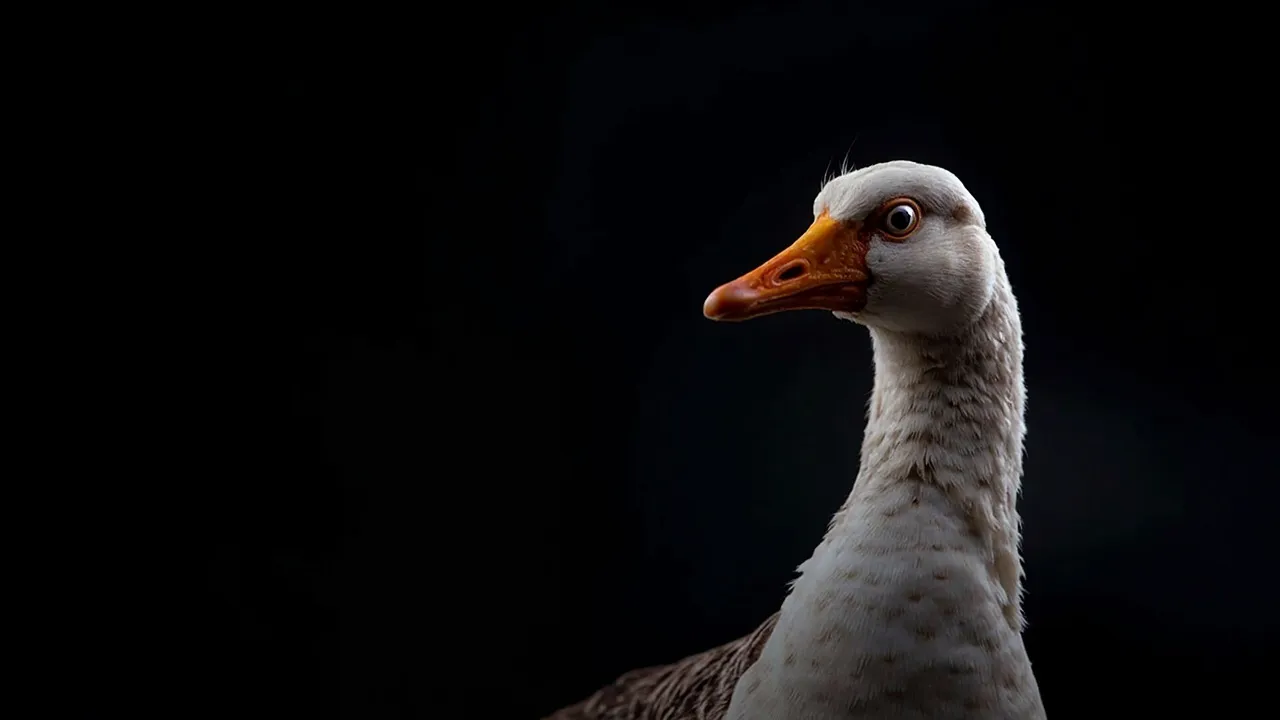
Have you ever thought about where New Zealand's weird and wonderful birds came from? Like, really thought about it? I know I haven't — until I stumbled across this incredible story about a fossil goose that just flipped everything we thought we knew about Aotearoa's bird evolution upside down. And honestly? The story is way cooler than I expected.
The Goose That Was Hiding in Plain Sight
So here's the thing — when most of us imagine paleontologists discovering new species, we picture someone out in the field, carefully brushing dirt off some ancient bone. But sometimes, the real discoveries happen in museum drawers.
A team of researchers from the University of Otago, Te Papa (New Zealand's national museum), and Cambridge University were doing exactly this when they found something remarkable hiding among thousands of bird fossils from a famous dig site in Central Otago.
The site is called St Bathans, and it's basically a goldmine for paleontologists — the remains of an ancient lake that's been giving up secrets for millions of years. They've found all kinds of fossils there, including tons of waterfowl bones. But goose fossils? Those were rare.
So the team did what good scientists do — they went back and re-examined every single bone that had ever been labeled as a goose. And that's when they realized something was very, very wrong.
A New Species Emerges From the Mud
Turns out, one of these "goose" bones wasn't quite what anyone thought. The bird was about the size of a small goose, but it didn't quite fit with any known species. Meet Metechen luti — the newly christened St Bathans goose.
The name is kind of delightful, actually. "Metechen" means "mother goose" in ancient Greek, chosen because, well, the whole Old Mother Goose nursery rhyme thing felt appropriate for an ancient bird emerging from fossil mud. And "luti" is Latin for "of the mud." So basically, this goose's name literally translates to "mother goose of the mud."
I don't know about you, but I think that's wonderful.
But Here's Where It Gets Really Interesting
Here's the thing that made me actually sit up and pay attention. For years, scientists had a nice, tidy theory: the St Bathans goose was the direct ancestor of those massive, flightless New Zealand geese (Cnemiornis) that went extinct not too long ago. If that was true, it meant this goose lineage had been hanging around New Zealand for at least 14 million years.
Simple. Clean. Made sense.
Except... DNA evidence started whispering a different story.
The genetic data suggested that the giant flightless geese actually arrived from Australia much more recently — maybe only seven million years ago. Some scientists dismissed this, saying the genetics must be wrong.
But here's the thing: when you combine the fossil evidence with the genetic evidence, a different picture emerges. And it's messier, but messier in a way that's way more interesting.
A More Dynamic Story
The St Bathans goose? It reached what was then the continent of Zealandia more than 14 million years ago. But its lineage eventually died out completely — no living descendants. It was an evolutionary dead end, at least in terms of leaving behind family members.
Meanwhile, the giant flightless geese? They showed up later, from Australia, and rapidly evolved into enormous flightless birds that stood about a meter tall and could weigh up to 18 kilograms. That's basically the size of a large dog — imagine a goose the size of a German Shepherd. These were the largest geese that ever existed on Earth.
That's the story of New Zealand bird evolution: not a straight line from ancient ancestors, but a complex web of arrivals, departures, extinctions, and rapid transformations.
As Professor Nic Rawlence from Otago's Palaeogenetics Laboratory put it, the story shows how quickly things can change on islands. Isolation plus time plus strange selective pressures equals some seriously weird evolution.
Why This Matters
Look, I know what you're thinking — it's just an old bird bone, why should I care?
Here's why: because understanding the past helps us understand the present, and maybe even protect the future.
New Zealand is famous for its weird birds. Kakapo. Takahe. Kiwi. Flightless birds everywhere you look, living in a land where mammals never really got a foothold. For a long time, we assumed this uniqueness had very deep roots — millions and millions of years of isolation.
But this research suggests the story is more complicated. Birds kept arriving. Birds kept going extinct. Evolution kept doing its chaotic, beautiful, unpredictable thing.
And that has implications for conservation, too. If bird lineages can appear, transform, and disappear relatively quickly under the right conditions, what does that mean for the species we're trying to protect right now?
The lesson might be this: nothing is guaranteed. The birds we love are here because of a million years of chance and adaptation. They're not inevitable. They're not permanent. They're remarkable survivors in a constantly changing world.
The Bottom Line
I love that science does this. You dig up some bones, put them in museum drawers, and then some curious researcher comes along decades later and says, "Hey, wait a minute... what if we looked at this differently?"
That's exactly what happened here. And now we know that ancient mother goose of the mud was never actually grandmother to New Zealand's giant geese after all. It was just a brief, fascinating branch on the evolutionary tree — one that lived, flourished, and vanished long before humans ever set foot in Aotearoa.
But thanks to the St Bathans fossils, we can still meet her. And honestly, I think that's pretty special.