
Sometimes the Best Discoveries Are Right Under Our Noses
Okay, story time. Imagine you're a scientist studying frogs in the beautiful forests of Ecuador. You've been hearing this distinctive "click-click-click" sound every single night for years. You've seen these frogs with your own eyes. You've probably stepped on one or two (sorry, little guys). You know they're common—super common, actually.
But here's the wild part: for over 100 years, nobody gave these frogs their own name. They were just... lumped in with a different species. A case of mistaken identity so longstanding that nobody thought to question it.
That's exactly what happened with Pristimantis milpe, now officially known as the Milpe Robber Frog. And honestly? This story has completely changed how I think about scientific discovery.
The Clicking Frog That Nobody Bothered to Name
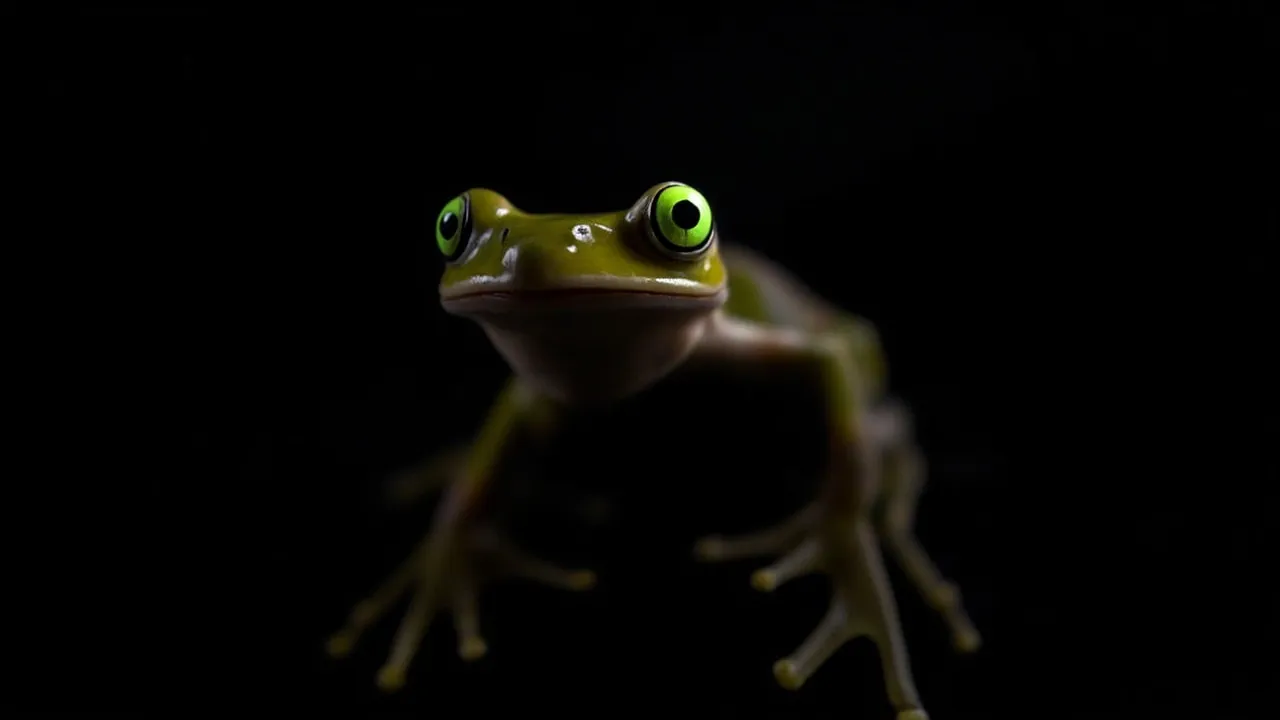
The Milpe Robber Frog is nocturnal, which means it comes out at night to do its thing. The males hang out on leaves several meters above the forest floor, belting out their loud clicking calls like they're trying to serenade the whole forest. And let me tell you, these guys are not shy. If you've ever walked through the Chocó forests of western Ecuador or southern Colombia, chances are you've heard them.
The females are honestly the more stylish ones—check out their coloration around the groin and thighs, featuring gorgeous orange or light blue tones alongside black spots. The males? Well, they're a bit more plain jane, keeping things more uniform and subtle.
These frogs live across more than 67,000 square kilometers. That's huge! We're talking from sea level all the way up to 1,200 meters in elevation. This isn't some rare creature hiding in a tiny pocket of forest. This is a frog that was quite literally everywhere.
How Do You Miss Something That Big?
Here's where it gets really interesting. Santiago Ron, a researcher at Pontificia Universidad Católica del Ecuador, traveled all the way to the Natural History Museum in London to figure out what was going on. He was looking at old specimens—these are called "types" in the scientific world—collected in Ecuador way back in the 19th century and preserved ever since.
By comparing those dusty old museum frogs with living populations from the Ecuadorian Chocó, the team discovered something fascinating: those historical specimens had been incorrectly linked to a different species. For over a century, scientists had been looking at these frogs, hearing their calls, documenting their existence—and just... assuming they already had a name.
I love what Jhael Ortega, a PhD student at Virginia Tech and one of the study authors, said about this: "That such a common species has gone unnoticed under the wrong name for decades highlights the importance of correctly connecting scientific names with living populations in nature."
Honestly? This quote has stuck with me. It reminds me that science isn't just about discovering new things in unexplored places. Sometimes it's about looking again at things we think we already understand.
Why Museum Collections Are Basically Time Machines
This whole discovery made me appreciate natural history museums in a whole new way. Those collections of preserved specimens? They're not just dusty old dead animals gathering cobwebs. They're time capsules.
Researchers can revisit old classifications, compare physical traits, and solve mysteries that baffled scientists decades or even centuries ago. In this case, combining 19th-century specimens with modern observations of living frog populations gave researchers the evidence they needed to confirm: this frog deserved its own name all along.
It's pretty humbling when you think about it. These frogs were making their clicking calls every night while scientists documented them under the wrong identity. The frogs had no idea, of course—but we humans were completely oblivious too.
There's Still So Much to Learn
Here's what really gets me about this story: if we can miss a common, widespread, LOUD frog for 100 years, what else is hiding in plain sight?
The Chocó forests where these frogs live are considered incredibly important for biodiversity conservation. This region is a treasure trove of unique species, and clearly, we haven't finished cataloging what's there.
The formal description of Pristimantis milpe was published in the journal ZooKeys, which focuses on biodiversity and taxonomy. And honestly, I hope this inspires more researchers to take another look at species we think we already know. Sometimes the most exciting discoveries aren't in undiscovered caves or remote mountaintops. They're right in our own backyard—or in this case, in our museums.
So next time you hear a frog calling outside your window at night, spare a thought for the Milpe Robber Frog. It took humanity 100 years to give this little clicker the attention it deserved. But hey—better late than never, right?
Source: ScienceDaily