
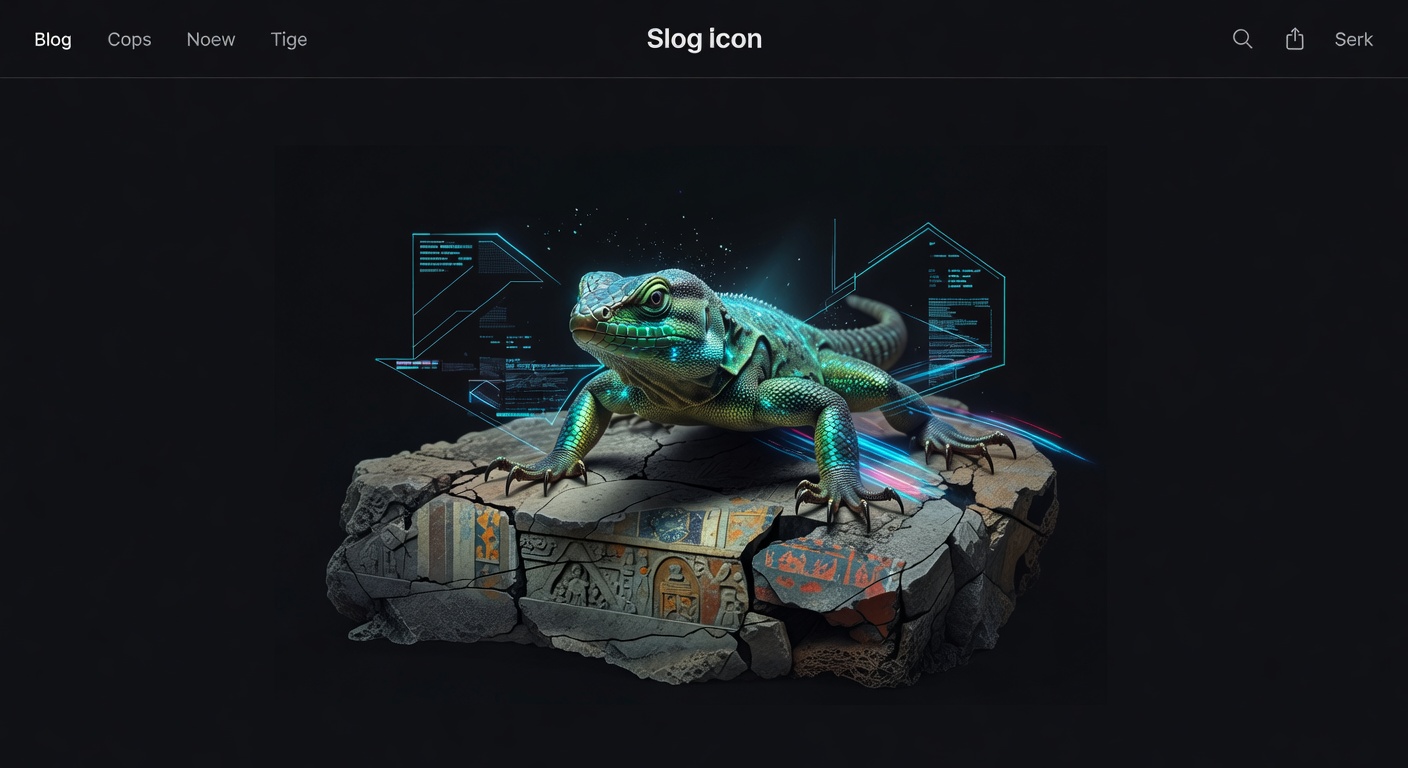
When Evolution Hits Rewind
Here's a mind-bending fact: there are these Mediterranean wall lizards that have been hanging out together in different color varieties for millions of years. I'm talking three distinct throat colors—white, yellow, and orange—all peacefully coexisting in the same populations. It's like nature's own color palette, each shade representing a different survival strategy.
But that peaceful arrangement? It's falling apart. And the culprit is basically the gym-rat of the lizard world.
The Rise of the Hulks
Researchers at Lund University just published findings that are genuinely fascinating (and honestly, kind of unsettling). They analyzed over 10,000 individual lizards across 240 different populations and found the same pattern everywhere: the "Hulk" lizards are taking over.
These aren't your average reptiles. They're bigger, more aggressive, and they've got a bold green look that apparently gives them a serious competitive edge. Think of them as the aggressive bullies who show up to the schoolyard and change the whole social dynamic.
The Color That Couldn't Survive
Here's where it gets concerning. As these dominant Hulk lizards spread into new territories, something remarkable is happening: the yellow and orange throat variants are just... disappearing. In many places, only the white morph survives alongside them.
Why? It's not because the yellow and orange lizards are less healthy or less fit in some basic way. It's because the entire social competition structure has changed. The Hulks are so aggressive and dominant that they're breaking the delicate system that allowed multiple survival strategies to work at the same time.
Evolution on Fast-Forward
This discovery challenges something we usually assume about evolution: that it's slow. Like, really slow. Millions of years of gradual change, right?
But this case shows something different. When conditions shift—in this case, when a new dominant trait suddenly becomes established—evolution can pivot way faster than we'd expect. A single behavioral change in one population can ripple through an entire species and erase genetic diversity that took eons to build.
Professor Tobias Uller puts it perfectly: you can have millions of years of stability, then in what amounts to a blink on the geological timescale, the whole system collapses.
What This Actually Means
I think what's most interesting here isn't just the lizard drama (though that's pretty cool). It's what this tells us about how fragile complex systems actually are. We often think of "balance in nature" as something solid and unchanging, but it turns out it's more like a Jenga tower—incredibly stable until one piece gets pulled out.
The yellow and orange morphs weren't bad at surviving. They had strategies that worked fine in the old system. They just couldn't adapt fast enough when the rules of competition completely changed.
The Bigger Picture
This research matters beyond just wall lizards (though I'll admit I find them endlessly fascinating now). It shows us that evolution isn't just about environmental pressures like climate or food availability. Social dynamics and behavioral traits can reshape entire populations with surprising speed.
It's a good reminder that nature is constantly shifting, and what seemed stable for millions of years can become obsolete pretty quickly. The Hulk lizards didn't intentionally wipe out their cousins—they just showed up, played by their own aggressive rules, and changed the game entirely.
And honestly? That's way more interesting than any superhero origin story.