
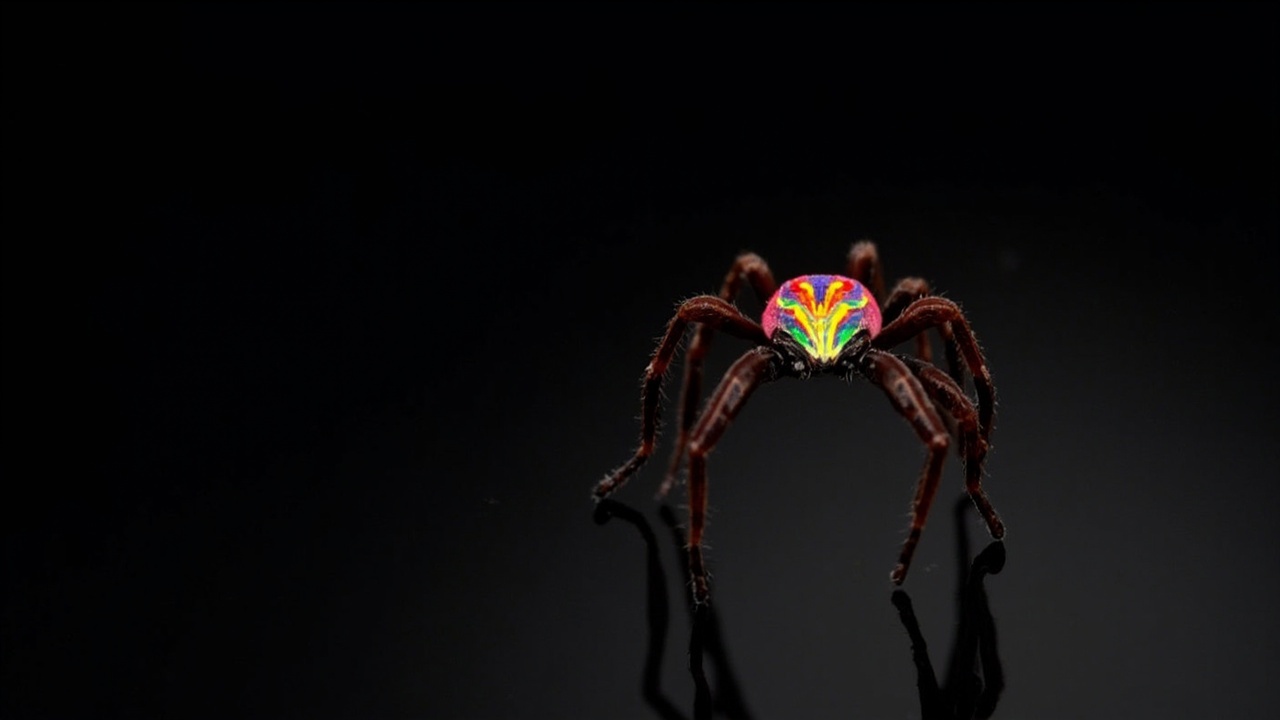
A Spider Named After The Wall
Imagine naming a newly discovered spider after one of the greatest rock bands of all time. That's exactly what happened when researchers in South America found Pikelinia floydmuraria, a tiny crevice weaver spider that's now making headlines for all the right reasons.
The name is actually pretty clever. "Pikelinia" is the genus (think of it as the spider's last name), while "floydmuraria" honors Pink Floyd and reflects the spider's favorite hangout spot. The "muraria" part literally means "wall" in Latin—a nod to both the band's iconic album "The Wall" and the fact that this spider basically lives in the cracks and crevices of building walls. Whoever named this deserves a round of applause.
Tiny Predator, Massive Appetite
Here's where things get wild: this spider is absolutely minuscule. We're talking 3 to 4 millimeters—basically the size of a pinhead. But don't let the size fool you. Scientists watched these little hunters take down ants that were six times bigger than their own bodies.
That's like a human successfully wrestling and defeating a creature as big as a large bear. Seriously impressive stuff.
Urban Pest Control You Didn't Know You Had
What makes the Pink Floyd spider even more interesting is what it eats. These spiders aren't picky—they go after flies, mosquitoes, beetles, and ants. They're basically living in your walls and hunting down the exact insects that annoy you most.
The researchers noticed something clever too: the spiders deliberately place their webs near light sources. Why? Because flies and mosquitoes are attracted to light (scientists call this "phototaxis," which just means being drawn to light). So these spiders have figured out that positioning their webs by a lamp or light fixture is like setting up a restaurant right next to where their customers naturally gather. It's pest control through pure evolutionary intelligence.
A Mystery Connecting Two Worlds
The study revealed something fascinating about spider evolution. There's a related spider species living in the Galapagos Islands called Pikelinia fasciata, discovered way back in 1902. The two species share nearly identical features, especially in their reproductive structures.
Here's the mind-bender: the Galapagos Islands are separated from Colombia by the entire Pacific Ocean. How did these spiders end up so similar? Scientists aren't sure yet. Either they descended from a common ancestor that somehow spread across the ocean (which seems unlikely), or they evolved similar traits independently because they faced similar environmental challenges. It's a genuine evolutionary mystery that could take more research to solve.
Why This Matters More Than You Think
You might be wondering: "Who cares about a spider smaller than a sesame seed?" Fair question. But here's the thing—urban spiders like this one could play a genuine role in keeping pest populations in check naturally. Instead of reaching for bug spray, maybe we should be grateful for these tiny hunters living rent-free in our walls.
The researchers are calling for more DNA studies to understand where this spider originally came from and to get a better handle on just how much pest control work it actually does. There's a lot we still don't know about Pikelinia floydmuraria, and that's what makes it so exciting.
The Bottom Line
This discovery reminds us that there are still amazing creatures we haven't identified yet, and they're hiding in the most ordinary places—literally in the walls of our homes. Next time you see a tiny spider, you might be looking at a natural pest controller with a rock and roll name and hunting skills that would make most predators jealous.
Plus, now whenever someone asks about the spiders in their house, you can tell them about the Pink Floyd spider. That's a conversation starter if I've ever heard one.