
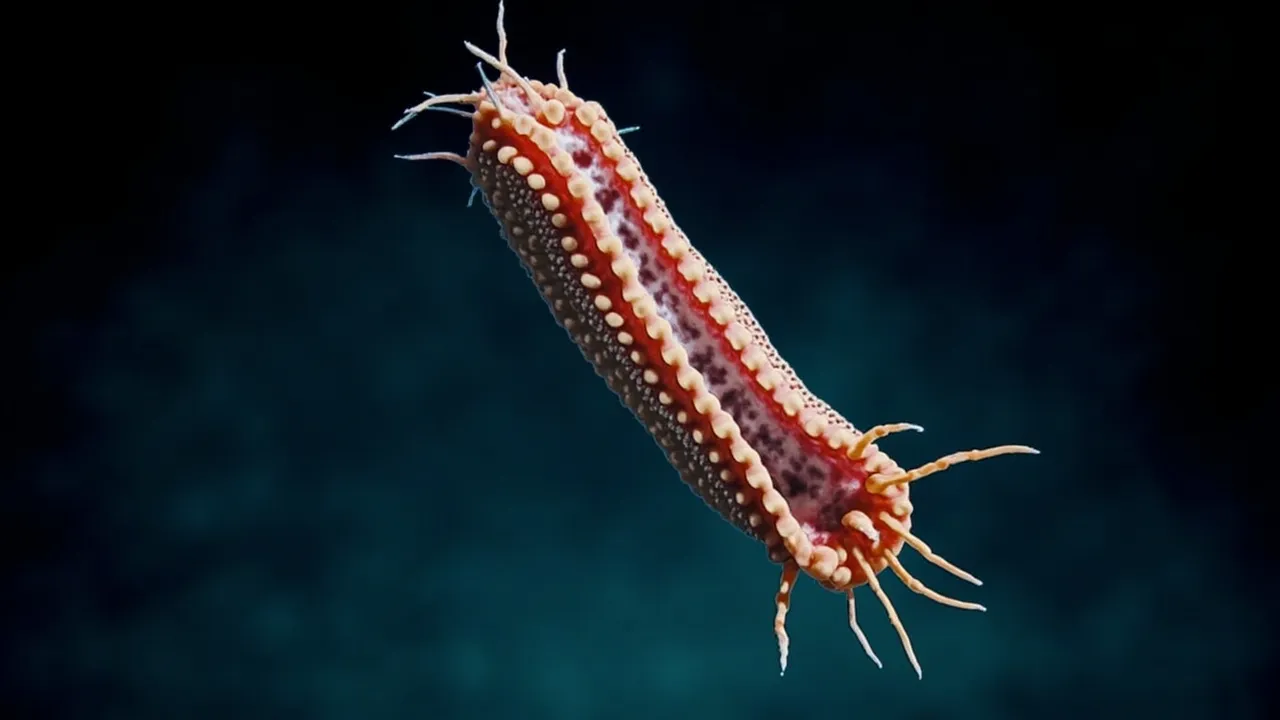
So there's this sea cucumber. Let me tell you about it.
Picture the most unremarkable creature you can imagine — it's basically a lumpy, tube-shaped blob that crawls along the ocean floor eating tiny particles of food. Nothing special, right? Well, hold that thought.
Researchers at Memorial University in Newfoundland were doing routine lab work when something genuinely strange happened. They removed a sea cucumber from its tank, and a couple of its little tube feet got left behind. No big deal. This probably happens all the time in research settings.
But here's where it gets weird: those feet didn't die. They didn't decompose. They just... kept on keeping on. For weeks. Just hanging out, fully intact.
Can you imagine? You're a foot. You used to be part of something. Now you're just... floating there. And you're totally fine with it.
The research team, led by PhD student Sara Jobson, decided this merited a closer look. They started studying small tissue pieces — called explants — and watched in something close to disbelief as the tissues persisted for over three years. Three years! That's not a temporary response. That's a whole lifestyle.
The team started asking questions that sound like the setup to a horror movie: Are these tissues actually healing? Is their immune system still working? Can they still function?
The answer to all of the above was yes.
Not only that, but the tissues were absorbing nutrients directly through their cell membranes — no digestive system needed, because they don't have one anymore. They're just... surviving. On their own. Indefinitely.
And get this — when researchers poked the tissues or messed with the water around them, the tissues would retract. They're responding to stimuli. They have some level of neural function still happening.
Jobson has jokingly called these persistent parts "lab zombies," and honestly? That's pretty accurate. They're not quite dead. They're not quite alive in the way we'd normally think about it. They're in this bizarre middle ground.
Here's the thing that really gets me: these tissues can't reproduce. They can't pass on genetic material. And traditionally, that's been considered pretty fundamental to the whole "being alive" definition. But they're definitely not dead either. They're just... existing in their own weird limbo.
One researcher — José García Arrarás from the University of Puerto Rico — doesn't think this redraws the line between life and death. He sees it more as simple tissue surviving for a long time, which isn't quite the same as an organism that can truly carry on.
But Jobson has a point when she calls it a "gray zone." These explants seem to almost reform into their own biological units. They're not functioning like sea cucumbers anymore, but they're not decomposing either. They just... persist.
And here's a wild thought: because the lab tanks used water straight from the bay — full of microorganisms and bacteria — there's probably a whole ecosystem of zombie sea cucumber parts living in natural habitats right now. Just hanging out. Surviving. Not dying.
I don't know about you, but I find this simultaneously fascinating and deeply unsettling. There's something almost philosophical about it. What does it mean to be alive if you can lose half of yourself and both halves keep going?
The sea cucumber doesn't seem to care about our definitions. It's too busy being a biological anomaly that makes us question everything we thought we knew about the boundaries of life.
Nature, it turns out, is way weirder than we give it credit for.
Source: Popular Mechanics - Scientists Discovered 'Zombies' With 'Immortal' Body Parts. This Could Redefine What We Think Life Is.