
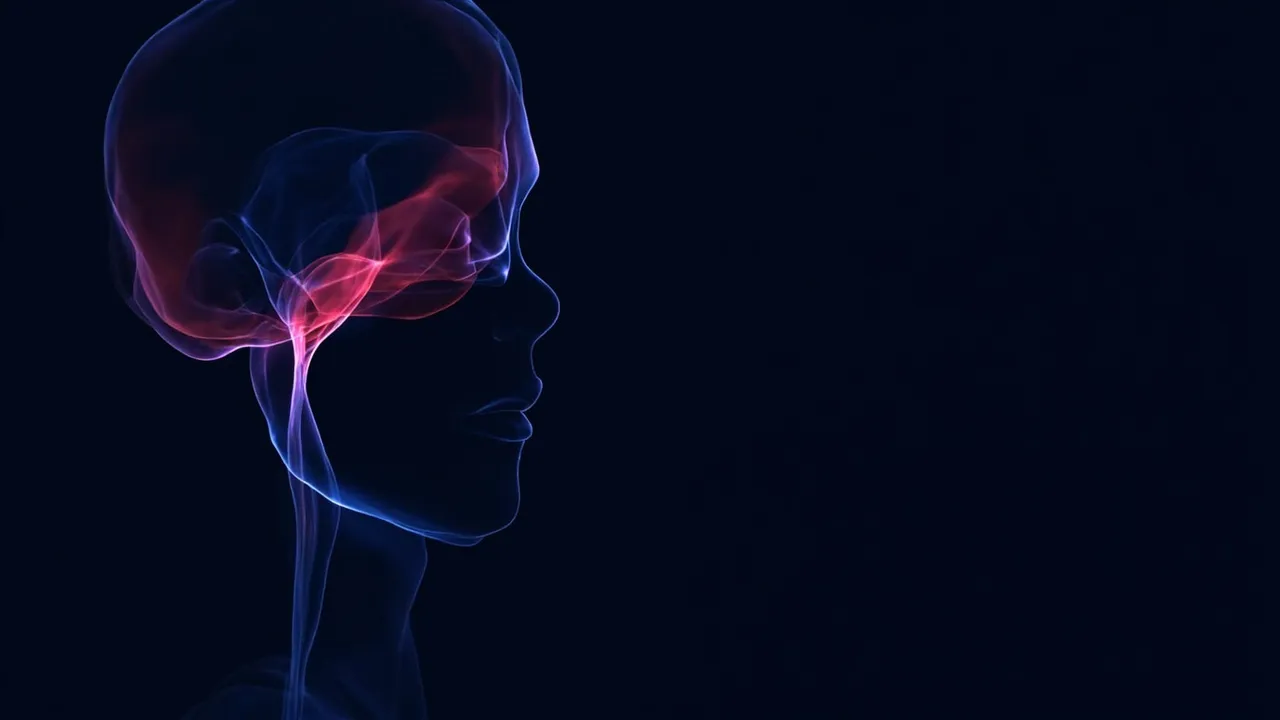
Here's something wild to think about: right now, inside your head, roughly 86 billion neurons are firing away, creating your thoughts, memories, and every experience you've ever had. But here's the part that really blows my mind—somewhere back before you were born, a handful of cells had to figure out how to build that entire intricate system from scratch. No instructions manual. No blueprint. Just cells making decisions.
Well, scientists at UCLA have been peering into this exact mystery, and what they've found is absolutely fascinating. It turns out that the brain's construction crew—special stem cells called radial glia—uses some surprisingly sophisticated decision-making strategies to determine what kinds of brain cells to create and when.
The Coolest Cells You've Never Heard Of
Let me introduce you to radial glia, because honestly, they deserve more fame. These remarkable cells are the master builders of the early brain, responsible for producing the neurons and support cells that eventually become your cerebral cortex—that wrinkled outer layer responsible for everything from reasoning to language to personality.
"These are the coolest cells that have ever existed," says Dr. Aparna Bhaduri, an assistant professor at UCLA's David Geffen School of Medicine. And honestly? She's not wrong. Radial glia essentially create the brain structures that make us uniquely human. They produce way more of those "upper-layer" neurons that give our cortex its impressive surface area compared to other species.
But here's the really interesting part: radial glia mostly disappear before we're born. They're like a construction crew that finishes the building and then vanishes. Except—and this is where things get eerie—very similar cells sometimes reappear later in life, specifically in brain cancers. Scientists still don't fully understand why this happens, which makes these cells even more intriguing to study.
Your Metabolism Is Basically Your Brain's Project Manager
In the first of two groundbreaking studies, Dr. Bhaduri's team discovered something that surprised even the researchers: metabolism isn't just passively fueling brain development—it's actively directing which cell types get made.
Think of metabolism as your cells' energy-processing system. Usually, we think of this as background housekeeping—cells taking in nutrients and converting them to usable energy. But this study, published in the journal Cell, shows that metabolism is much more like a foreman on a construction site, actually making decisions about the project.
The team created what they call a "metabolic atlas" of the developing human cortex—a detailed map showing how different cells process nutrients at different stages. They found that radial glia rely heavily on something called the pentose phosphate pathway, which helps rapidly dividing cells get the raw materials they need.
When the researchers interfered with this metabolic pathway or reduced available glucose, something remarkable happened: the stem cells completely changed their production plans. They started generating more inhibitory neurons and other cell types that wouldn't normally appear until much later in development.
It's like if a factory making sedans suddenly switched to manufacturing sports cars because someone changed the supplier of a particular bolt. The cell's environment directly shaped what it built.
This finding has huge implications, by the way. It suggests that maternal nutrition, metabolic disorders, and other environmental factors could directly influence how a baby's brain develops—not just through general health effects, but through these specific metabolic conversations happening at the cellular level.
The Brain's Early Bird Signal
But metabolism isn't the only thing radial glia are listening to. In a second study published in Science, the UCLA team discovered something equally fascinating coming from an unexpected direction: signals from the thalamus.
The thalamus is this little structure buried deep in your brain that acts like a relay station, helping pass information around your nervous system. Scientists already knew that thalamic neurons send long projections up toward the cortex, eventually forming the connections that let different brain regions talk to each other.
Here's the mystery: in humans, these projections reach the cortex long before their final connections are established. Like, way early in development. Which raises an obvious question—why would they arrive so soon if they're not connecting right away?
Using human stem cell-derived brain "assembloids" (which are basically mini-brains grown in the lab—how cool is that?), the researchers found part of the answer. Those thalamic projections aren't just waiting passively. They're physically touching the radial glia while the brain is still under construction.
And that contact changes everything.
When the projections touch the stem cells, it triggers them to produce more excitatory neurons—the signal-carrying workhorses of the cortex. This effect was especially strong for those upper-layer neurons that are so expanded in human brains compared to other species.
"We already knew that these projections influence how the cortex develops," Dr. Bhaduri explained. "What we specifically found is that this influence comes through an actual physical connection between the projections and the radial glia—a point of contact that just hasn't been identified before, and one that very likely does not exist in rodents."
Let that sink in for a moment. There are physical connections between brain regions that help direct development, and these connections might be unique to us. This could literally be part of what makes human brain development different from, say, a mouse's brain development.
What This Means for Understanding Ourselves
So why does any of this matter? Well, for starters, radial glia sit at the center of many neurodevelopmental disorders, neuropsychiatric conditions, and cancers. Understanding how they make decisions—their metabolic conversations, their physical connections, their timing—is one of the first steps toward understanding what goes wrong when things go wrong.
The research also opens up fascinating questions about what makes the human brain special. We're not just talking about minor variations in the same basic plan. It appears that humans have unique developmental mechanisms—physical connections and metabolic pathways that might not exist in other species in the same way.
Every brain cell in your head had to be made by these tiny construction crews making countless decisions about what to build and where. And now we're starting to understand the instruction manual they were following. How cool is that?
I don't know about you, but I think that's worth a moment of wonder.
Source: ScienceDaily