
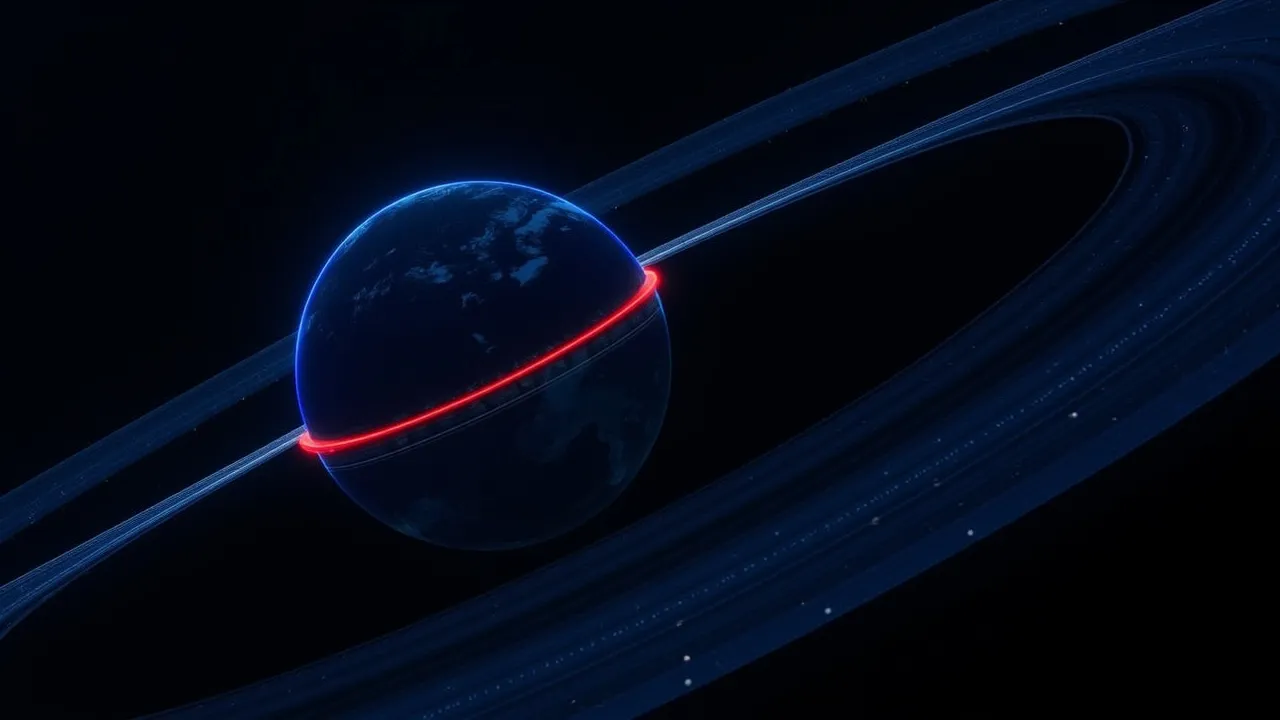
The Earth Is Totally Wobbly (And That's Normal)
Okay, I need to tell you something that kind of blew my mind. Earth—the big beautiful blue marble we call home—isn't sitting perfectly centered on itself. Shocking, right?
Here's what's happening: as water, ice, and air move around our planet with the seasons, they essentially push and pull on Earth's balance point. Think of it like when you're on a wooden raft and everyone scoots to one side to get a better look at dolphins. The raft tilts, right? Earth does the same thing, just on a much smaller, more technical scale.
Scientists have known about this wobble for a while, but here's the exciting part—researchers at NASA's Jet Propulsion Laboratory just got way better at measuring exactly how much our planet shifts. And honestly? The results are pretty surprising.
Why This Matters More Than You'd Think
You might be thinking, "Cool science fact, but who cares if Earth wobbles a tiny bit?" Fair question! But here's the thing—these minute shifts actually matter a lot for modern technology.
According to the research team, our modern world depends on incredibly precise positioning measurements. I'm talking about things like GPS navigation in your car, global shipping logistics that keep stores stocked, and even precision agriculture where farmers use GPS-guided tractors to plant crops with stunning accuracy.
Felix Landerer, one of the study's coauthors, put it perfectly: "By unraveling and understanding the mechanisms that change reference systems, we can build better reference systems that ultimately benefit mapping and navigation—from global shipping logistics to precision agriculture."
So yeah, understanding Earth's wobble helps everyone from Amazon delivery drivers to the farmer growing your morning cereal.
The Old Estimates Were Way Off
Here's where it gets really interesting. Previous estimates from 2017 and 2023 disagreed with each other by about 7 millimeters—roughly the height of three nickels stacked together. And get this: that disagreement was almost as big as the actual movement scientists were trying to measure. That's like trying to measure someone's height and getting answers that vary by several inches!
To fix this, JPL geoscientist Donald Argus and his team developed a new approach that combines laser measurements from special satellites with GPS tracking data. They're using information from multiple satellites in low Earth orbit, which gives them a much clearer picture of what's happening.
The wild part? Their findings suggest that Earth's seasonal mass shifts are about half of what we believed just eight years ago. "Our findings suggest that the mass of Earth's water and air moving between the hemispheres is smaller than previously thought," said Argus.
What's Actually Making Earth Wobble?
The scientists traced Earth's center of mass movement to three major culprits:
Snow and Ice: When snow piles up across North America and Eurasia in winter (reaching maximum accumulation around March), it adds enough mass to shift Earth's center about 3 millimeters toward the North Pole. That's like the planet doing a very subtle head tilt toward winter sports territory.
Amazon Rainfall: In April, the Amazon River basin holds roughly 2,400 gigatons of rainwater. That's an almost incomprehensible amount of water, and it pulls Earth's center about 2.2 millimeters toward South America. Basically, the Amazon acts like a cosmic anchor during certain times of year.
Monsoon Season: Later in the year, monsoon rains in Southeast Asia contribute their own gravitational tug-of-war.
The crazy thing is all these movements are happening simultaneously, creating a complex dance of mass redistribution that scientists are only now starting to map with precision.
How Do You Even Measure This?
The team used satellites specifically designed for this kind of work. The Laser Geodynamics Satellites (LAGEOS 1 and 2) look like giant disco balls covered in reflective prisms—about 900 pounds each. Scientists fire lasers at them from stations around the world and measure the returning signals with incredible precision.
But here's the tricky part: those tracking stations aren't evenly distributed across Earth, which can skew measurements. The new technique accounts for this by combining multiple data sources and even considering how the changing weight of water and ice bends Earth's crust itself, causing ground stations to move slightly.
It's like trying to measure a moving target while standing on another moving target. Space science is wild, people.
The Bottom Line
While we're not talking about dramatic shifts here—we're dealing with millimeter-scale movements—this research represents a significant step forward in our understanding of our home planet. Every improvement in measurement precision helps make our technological systems more reliable.
And honestly, I just love that there's still so much to learn about Earth itself. We've mapped the ocean floors, sent robots to Mars, and photographed black holes, yet we're still discovering new things about how our own planet works. That's pretty amazing if you ask me.
Next time you use your phone's GPS or watch a perfectly timed delivery arrive, remember: there's a wobbly Earth at the center of it all, and scientists are getting better at understanding every tiny shift.
Source: https://www.sciencedaily.com/releases/2026/10/261005071520.htm