
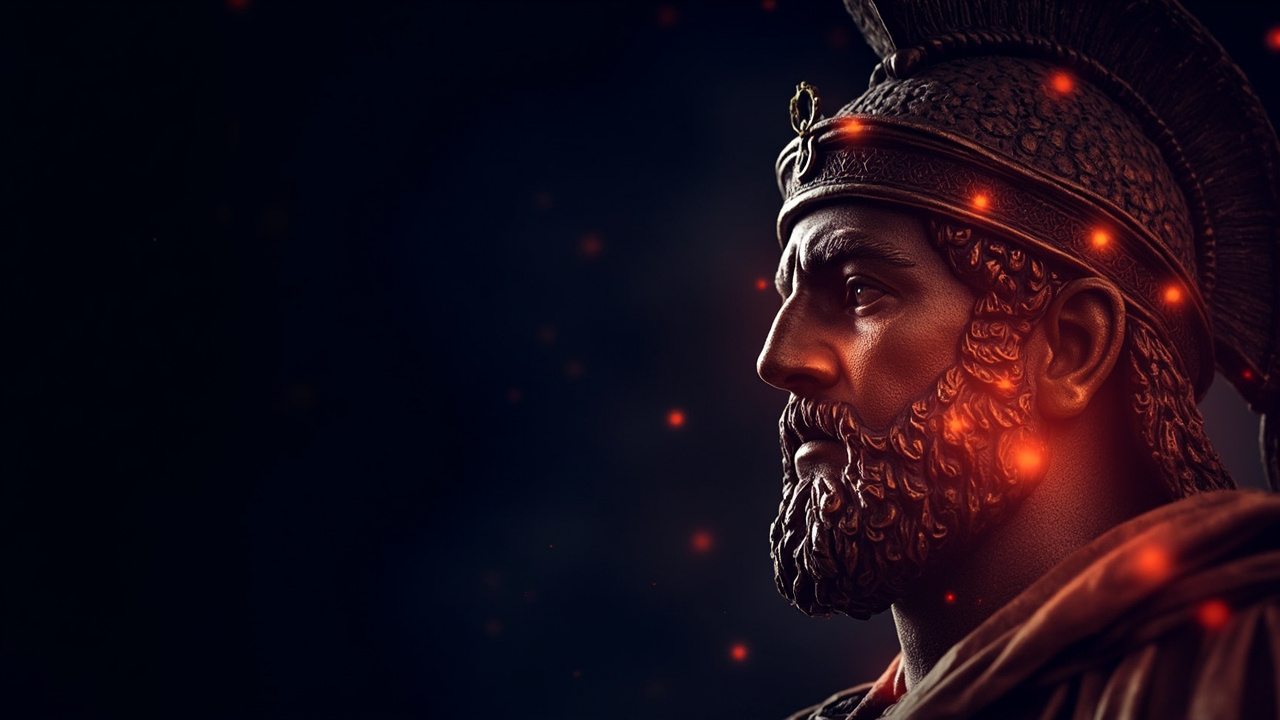
When Dad Was Just as Legendary as His Famous Son
Let's be honest: we all know Alexander the Great. The guy conquered half the known world before he turned 30. But here's what most people don't realize—his dad was kind of a big deal too.
Philip II basically invented the Macedonian military machine that his son would later use to, well, conquer half the known world. Without Philip's groundwork, Alexander would've been just another entitled royal kid with big dreams. Instead, he got a world-class education from Aristotle and an actual army to command. Talk about a good head start.
The Real Mystery: Which Tomb Is Which?
Back in 1977, a Greek archaeologist named Manolis Andronikos found something incredible in a place called Aigai (modern-day Vergina, Greece)—the final resting place of Philip II. This was huge news. The site eventually became a UNESCO World Heritage location, and archaeology teams descended like bees to a flower.
But here's where things got messy. There weren't just one or two tombs—there were three. And nobody could agree on which royal skeleton belonged where. It's like finding three identical boxes in a medieval storage unit with no labels. Archaeologists had their theories, but theories aren't proof.
Bringing in the Forensic Dream Team
Fast forward to 2024. An international team of archaeologists from the United States, Spain, and Greece said, "You know what? Let's actually solve this thing." And they got serious about it.
They didn't just dust off bones and guess. They used:
- Detailed bone analysis (osteological examination—fancy word for "looking really closely at skeletons")
- X-rays to peer inside bone structure
- Multiple scientific methods most of us have never heard of
- Historical records and ancient sources
It's basically archaeology meets detective work meets CSI: Ancient Greece.
The Results: A Royal Family Portrait
So what did they find?
Tomb I contains Philip II himself, along with his wife Cleopatra (and yes, there was another Cleopatra before the famous Egyptian one) and their infant son. The tragic part? They were all killed after Philip's assassination in 336 BCE. Mom and baby didn't survive long after losing him.
Tomb II turned out to be home to Philip's half-son, Arrhidaeus (Alexander's half-brother), and his warrior wife, Adea Eurydice. This tomb had been the subject of major debate—many scholars thought Philip might be here instead. So clearing this up was a big deal.
Tomb III belongs to Alexander IV, Alexander the Great's teenage son. Which means Alexander himself had a kid, and that kid got a royal burial fit for his heritage.
Why This Actually Matters
I get it—it's tempting to think, "Cool, we found some old bones. Next story?" But this is genuinely important stuff.
First, it solves a 2,350-year-old mystery that archaeologists have been arguing about for decades. That's satisfying in a very human way.
Second, it shows us how ancient history gets written. These weren't just random people—they were the architects of one of history's most transformative empires. Understanding what happened to them helps us understand the era better.
Third, it's a masterclass in how modern science can answer ancient questions. DNA analysis, forensic anthropology, and international collaboration solved a puzzle that had stumped experts for generations. That's pretty cool, honestly.
The Bigger Picture
What strikes me most is that Philip II kind of got robbed by history. Everyone knows Alexander the Great, but his dad—the guy who actually built the military system that made it all possible—is a footnote. Now, nearly 2,400 years after his death, archaeologists are finally giving him his due.
It's a reminder that history isn't always fair when it comes to giving credit. The flashy conqueror gets the glory while the strategic organizer fades into the background. But the bones don't lie. Philip II is finally getting recognized for what he was: the foundation upon which one of history's greatest legends was built.
Plus, now we know exactly where this incredible family rested their heads. And that's the kind of closure that makes history feel a little less distant and a little more real.