
How to Travel Through Space Without Actually Paying for Gas
Imagine if you could somehow borrow speed from a planet just by flying past it. That's basically what NASA just did with its Psyche spacecraft, and honestly? It's one of the coolest things about deep space exploration that doesn't get nearly enough attention.
On May 15th, the Psyche spacecraft zoomed within 2,864 miles of Mars—that's closer than the distance between New York and London—and something amazing happened. The planet's gravity grabbed the spacecraft and gave it a 1,000 mile-per-hour speed boost, redirecting it perfectly toward its real destination: a mysterious metal asteroid way out in the asteroid belt.
This is what scientists call a "gravitational assist," and it's basically free fuel. Instead of firing up the engines and burning through precious resources, NASA used Mars itself as a launch platform. It's like jumping off a moving train to go faster.
The Cosmic Physics Hack That Actually Works
Here's what blows my mind about this: NASA had to calculate the exact trajectory months (okay, probably years) in advance. One tiny miscalculation and Psyche could have missed Mars entirely or, worse, crashed into it. But when the radio signals came back to Earth showing exactly where Psyche was, engineers confirmed it was right on target.
"We've confirmed that Mars gave the spacecraft a 1,000 mile-per-hour boost and shifted its orbital plane by about 1 degree relative to the Sun," said Don Han, the navigation lead at NASA's Jet Propulsion Laboratory. And the mission? Now officially locked in for arrival at asteroid Psyche in August 2029.
That's some serious confidence in the math, folks.
A Surprise Photo Shoot
But here's where things get really cool—while Psyche was doing its cosmic flyby, the mission team decided to test all the spacecraft's cameras and sensors. Why wait until you reach your destination to see if your gear works?
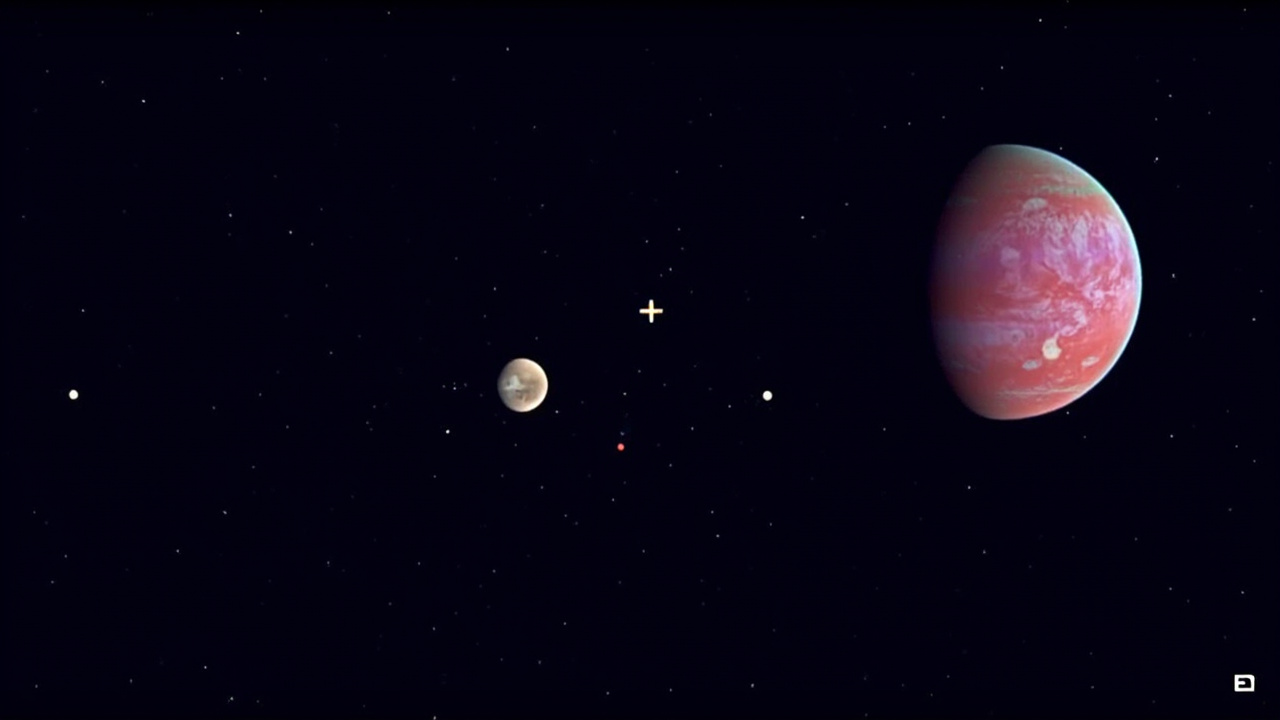
As the spacecraft approached Mars, something unexpected showed up in the images: Mars appeared as an incredibly thin crescent, stretching further around the planet than scientists initially expected. The dusty Martian atmosphere was scattering sunlight in ways that surprised everyone. Then, as Psyche zoomed past Mars from darkness into daylight, it snapped thousands of photos of the surface.
It's like Psyche accidentally became a tourist, snapping pictures out the window as it sped by.
These images are valuable because they're letting scientists calibrate their instruments before the real work begins. Jim Bell, the imager lead at Arizona State University, explained that these test photos help them refine their image processing tools—essentially, they're making sure everything works perfectly before the spacecraft reaches the asteroid.
Peeling Back the Layers of a Mystery
So what is this asteroid Psyche that everyone's so excited about? Scientists think it might be the leftover core of an ancient planetesimal—basically, one of the planetary building blocks that formed our solar system billions of years ago. This thing is massive, stretching about 173 miles across, and it appears to be made of metal.
Here's the wild part: if this asteroid really is the exposed core of an ancient proto-planet, it would give us a window into something we can normally never see—the metallic interior of rocky planets like Earth. We live on a planet with a metal core, but we can't exactly drill down 4,000 miles to study it. Asteroid Psyche might be nature's way of showing us what that looks like.
The spacecraft will spend time in orbit around Psyche, mapping it from different altitudes and collecting data about its composition and structure. It's like getting a geological x-ray of what early solar system objects looked like.
Why This Matters (Beyond Just Being Cool)
I get why this mission excites me, and hopefully it excites you too. We're living in an era where we can navigate a spacecraft across the solar system with enough precision to use a planet's gravity as a steering mechanism. We can test instruments near Mars just to make sure they're ready for an asteroid millions of miles away.
This is humanity getting really good at exploring. We're not just visiting space—we're getting clever about it.
And honestly, that feels pretty special.
Source: https://www.sciencedaily.com/releases/2026/05/260525040421.htm