
When a Spacecraft Says "Thanks for the Boost, Mars!"
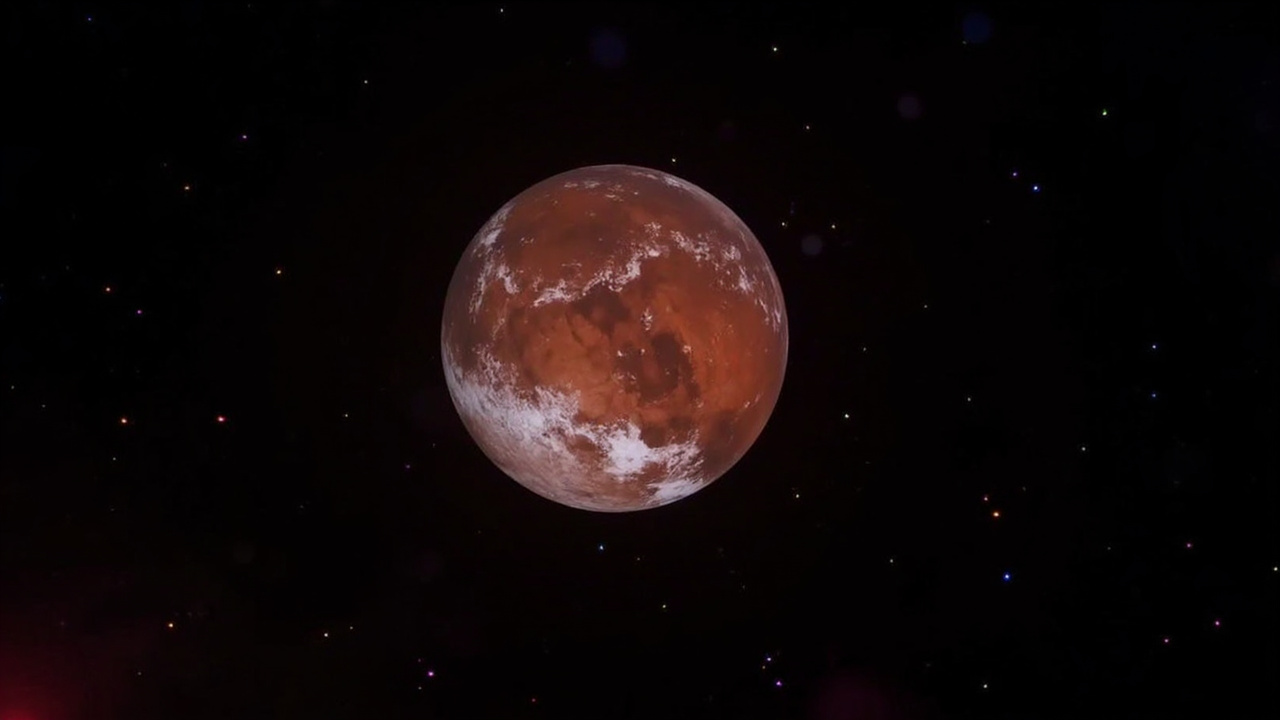
Imagine you're driving down the highway and someone gives you a push to help you speed up without using your own gas. That's basically what happened when NASA's Psyche spacecraft flew within 2,864 miles of Mars on May 15. The spacecraft wasn't there to study Mars itself—it was just passing through and decided to grab some stunning photos along the way.
One of the coolest images shows a crater called Huygens with its distinctive double rings, surrounded by all these ancient impact craters. The pictures are beautiful, but they're also kind of a bonus. The real magic was happening behind the scenes.
The Gravity Assist: Space Travel's Best-Kept Fuel-Saving Hack
Here's where it gets smart: NASA used Mars' gravity like a cosmic slingshot. Instead of firing up thrusters and burning precious fuel to speed up and change direction, the spacecraft just let Mars' gravity pull it and redirect its trajectory. It's the same principle as swinging a bucket of water around in a circle—the bucket doesn't stop moving just because you're steering it differently.
This gravity assist technique saved the mission a ton of fuel. In space exploration, fuel is literally liquid gold. Every pound you save on fuel is a pound you could have used for science equipment, or it extends how long your mission can last. It's efficient, elegant, and honestly, pretty clever.
The Real Prize: A Metallic Asteroid That Might Blow Our Minds
Now here's the part that gets scientists genuinely excited: Psyche is heading toward an asteroid that might be something we've never seen before. The asteroid Psyche (yes, they named the spacecraft after its destination—cute) might actually be the exposed metallic core of an old planetesimal.
Think about that for a second. Earth has a metal core, but it's buried thousands of miles underground under all that rock and magma. We've never been able to actually visit and study it directly. But this asteroid might be like a gift—an ancient planetary building block that got stripped down to its metal core, just sitting out there in space waiting for us to examine it.
If researchers are right about this, the Psyche mission could give us an unprecedented look at what's hiding deep inside rocky planets. That kind of data could completely change how we understand planetary formation and the history of our solar system.
Count Down to August 2029
The spacecraft won't arrive at the asteroid until August 2029, so there's still a long journey ahead. But when it gets there, Psyche will slip into orbit and start mapping the surface, collecting data about composition, density, and structure. It's going to be like opening a time capsule from the early solar system.
This mission is a perfect example of why I love space exploration. NASA took what could have been just a routine navigation maneuver and turned it into an opportunity for beautiful science photography. Then they're using that fuel-efficient gravity assist to set up one of the most scientifically intriguing missions in a generation.
The next few years will be interesting to follow. When those first detailed images of asteroid Psyche start coming back, we might be looking at something that challenges everything we thought we knew about how planets form.