
The Problem With Our Current Germ-Fighting Arsenal
Let's be honest: we're tired of disinfectants. Between the endless spraying, the chemical smell that makes your eyes water, and the nagging guilt about what we're pouring down the drain, our current approach to fighting viruses feels... well, exhausting and a little gross.
There's also a bigger problem lurking in the background. When we use antimicrobial products constantly, germs gradually develop resistance to them—kind of like how bacteria learned to laugh at penicillin decades ago. We're basically training viruses and bacteria to become tougher opponents.
So what if I told you scientists found a completely different way to fight back? No chemicals. No spraying. Just... evil spike traps at the microscopic level.
Stealing Nature's Playbook
The team at RMIT University in Australia looked at something completely unexpected for inspiration: dragonfly and cicada wings.
Here's the wild part—these wings don't just repel water. They're actually naturally antimicrobial. Scientists figured out it wasn't the chemistry of the wings doing the work; it was the texture. The wing surfaces are covered with millions of tiny, tightly-packed structures that basically make life impossible for bacteria.
"What if we could copy that?" researchers wondered. And honestly, that's kind of genius.
Building Your Microscopic Nightmare Landscape
So they created a plastic film covered in thousands of impossibly tiny pillars called nanopillars. We're talking structures that are only 60 nanometers apart. To give you perspective, a human hair is about 80,000 to 100,000 nanometers wide—so these pillars are ridiculously small.
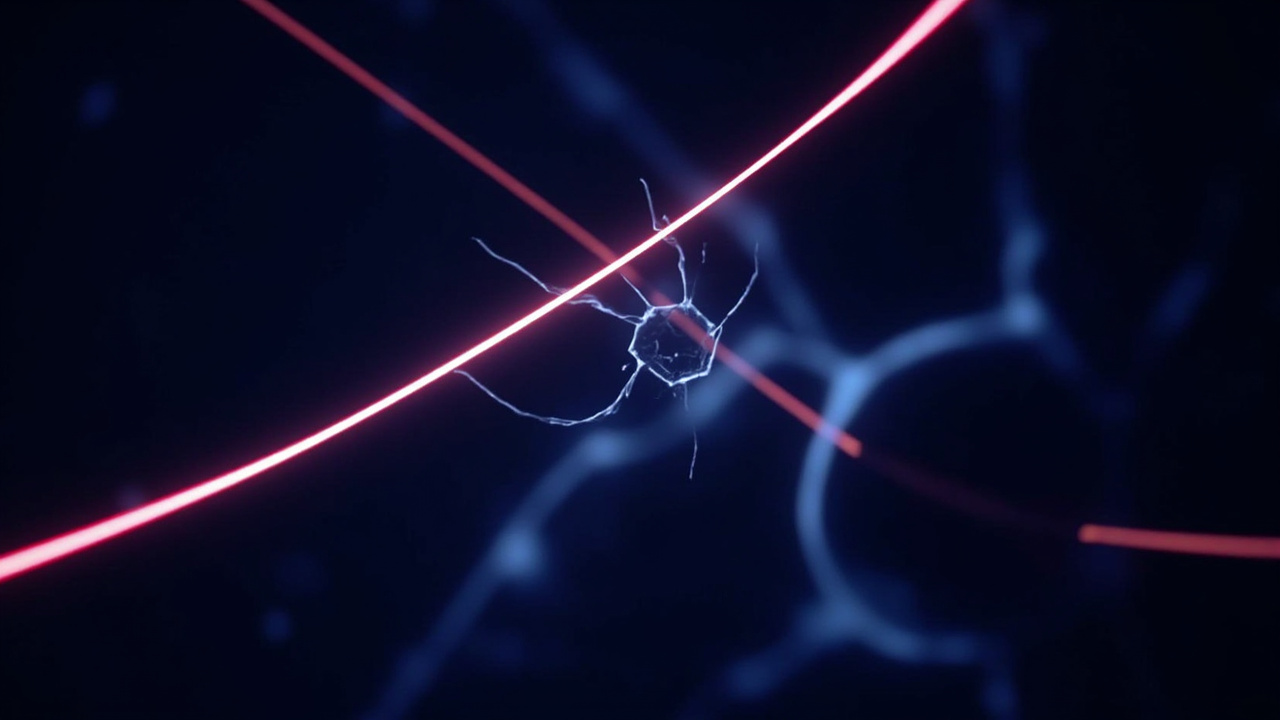
When a virus lands on this surface, something brutal happens: multiple pillars press against the virus's outer shell simultaneously, stretching it until it literally tears open. It's like the virus wandered into a spike-covered trap with no escape route.
In their tests against a common respiratory virus (human parainfluenza), they achieved a 94% kill rate in just one hour. And unlike a disinfectant that stops working the moment it dries, this film keeps working indefinitely.
The Goldilocks Problem (And Why It Matters)
Here's where it gets interesting: the spacing of these pillars is everything. Too far apart, and viruses slip through unharmed. At 200 nanometers apart, the film's killing power basically disappeared. But 60 nanometers? That's the sweet spot.
This actually taught researchers something important—it's not about how tall the pillars are; it's about how densely packed they are. More pillars attacking the same virus simultaneously = dead virus.
But Wait, There's a Catch (Or Several)
Before you start imagining hospitals wrapped in this miraculous plastic, we need to talk about the limitations.
First, the material doesn't work well on curved surfaces. Geometry has a cruel sense of humor—when you bend the film, those perfectly-spaced pillars stretch apart and lose their effectiveness. That's a problem if you want to coat a doorknob or a curved phone screen.
Second, while the film is durable, it does eventually degrade. So it's not literally forever-protection.
Third, and maybe most importantly, they've only tested it against one type of virus so far. There are thousands of viruses out there, and some are built differently. They need to test against the smaller ones that don't have that fatty outer membrane that makes them vulnerable to this stretching attack.
So... When Can We Buy This Stuff?
Here's the good news: it's actually cheap to manufacture. The researchers used acrylic—the same material in tons of everyday products. It feels smooth to your hand at normal scale, but at the viral level, it becomes a hostile, spike-covered wasteland.
The team is actively looking for manufacturing partners to scale this up for real-world use. Could we see this on hospital equipment in a few years? Maybe on your phone screen as a protective film? It's looking promising.
Why This Actually Matters
What I love about this approach is that it sidesteps so many problems at once. No chemical resistance buildup (bacteria can't evolve spikes to counteract physical damage). No environmental contamination. No need to reapply. No toxic fumes.
It's not a magic cure-all yet—more testing is definitely needed. But it's a genuinely clever example of biomimicry done right. Sometimes the best solutions come from looking at how nature already solved the problem millions of years ago.
Nature saw that problem with germs and just... added spikes. Simple. Elegant. Effective.
Pretty fitting that our solution to modern viral pandemics might come from looking at a dragonfly's wing.