
The Moment Everything Changed
Picture this: A seven-year-old girl who's never heard her mother's voice suddenly can. Not gradually, not maybe—actually can. Within four months of a single injection into her inner ear, she went from profound deafness to having everyday conversations. If that doesn't give you goosebumps, I don't know what will.
This isn't science fiction anymore. Researchers at Karolinska Institutet in Sweden, working with hospitals across China, just pulled off something that seemed impossible not long ago. They took ten people born deaf or profoundly hard of hearing and gave them back their sense of sound—in most cases, within just weeks.
So What's the Magic?
Here's where it gets really cool (but don't worry, I'll explain it in plain English).
Some types of deafness are caused by a faulty gene called OTOF. Think of genes like instruction manuals—when the OTOF manual has a typo, your body can't make enough of a crucial protein called otoferlin. Without it, your inner ear can't send sound signals up to your brain. You can have perfectly good ears, but the wiring between them and your brain just... doesn't work.
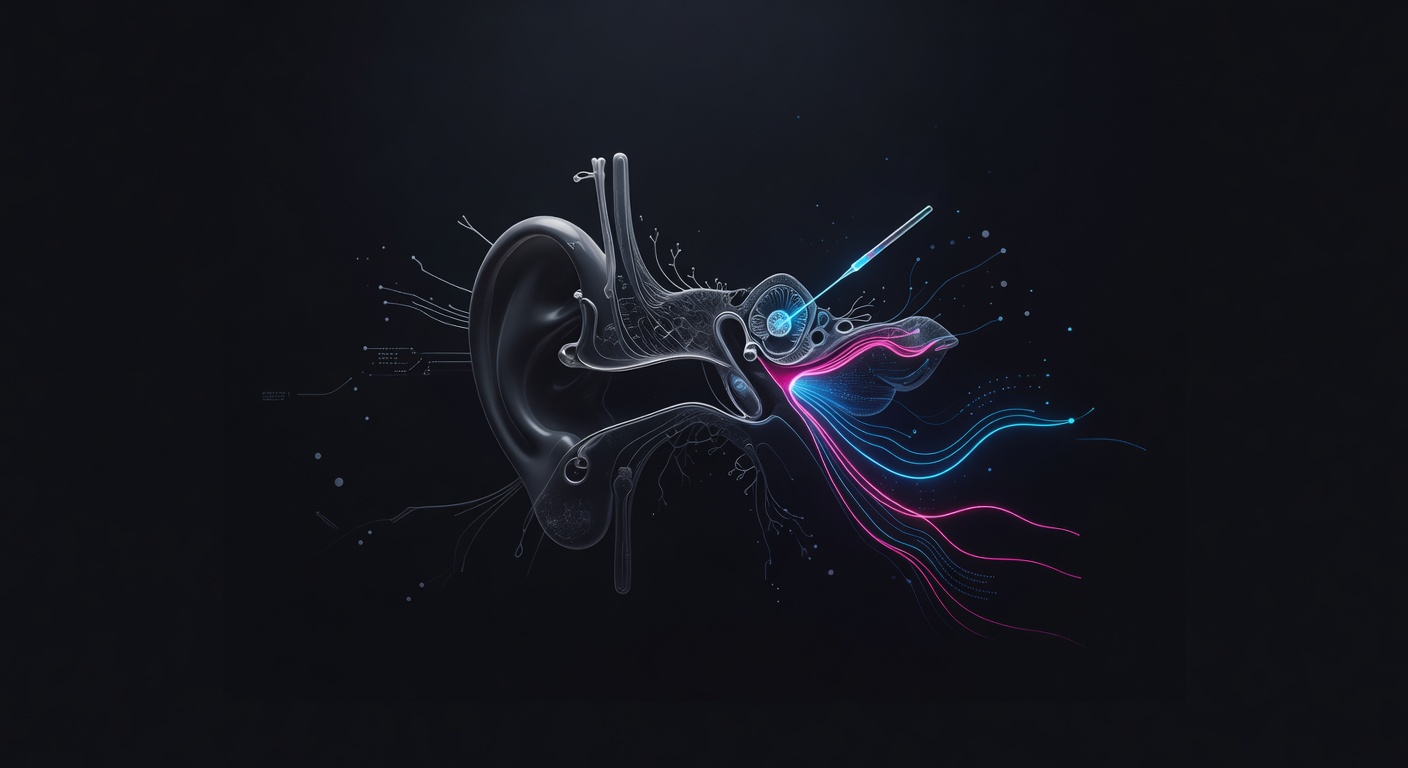
The fix? Scientists created a tiny biological delivery truck—a modified virus—loaded it up with a corrected version of the OTOF gene, and injected it straight into the inner ear through a tiny opening called the round window. It's like rewriting the instruction manual directly at the source.
The Results Were Stunning
I know headlines can feel exaggerated sometimes, but these numbers are genuinely remarkable:
- Every single patient improved. 100% success rate. Not "most," not "many"—all of them.
- It happened fast. We're talking weeks, not years. By one month, most people noticed better hearing.
- The improvement was massive. On average, patients went from being able to hear only the loudest sounds (106 decibels—that's like a chainsaw) down to 52 decibels (normal conversation level).
- Kids responded the best. Children ages five to eight showed the most dramatic improvements, which makes sense because their brains are still developing and building stronger connections.
Hold On—Is It Safe?
This is the part where I usually get worried with brand-new medical treatments, but honestly? The safety profile looks solid. The most common side effect was a temporary dip in a type of white blood cell. That's it. No serious problems showed up during the 6-12 month follow-up period.
Of course, they're still watching these patients long-term to make sure the hearing improvements stick around, because this is relatively new territory. But so far, so good.
This Is Just the Beginning
Here's what really excites me about this: OTOF mutations cause deafness in maybe 2-4% of people with genetic hearing loss. It's significant, but there are other genes out there responsible for more cases—genes like GJB2 and TMC1.
The research team is already working on treating those too. They're saying it'll be more complicated, but animal studies look promising. This means in the coming years, we're probably going to see treatments for different types of genetic deafness rolling out.
The Real Impact
I think we often gloss over what hearing loss actually means for people. It's not just about sound—it's about connection, communication, education, opportunity. A child who can't hear has a completely different path through school and life. When you give someone their hearing back, you're not just giving them sound. You're potentially changing the trajectory of their entire existence.
That's why this research feels so important to me. It's not flashy or controversial. It's quiet (no pun intended) progress that could genuinely transform millions of lives.
The catch? This treatment works specifically for OTOF mutations, so it's not a universal fix for all deafness. But it's a proof of concept—it shows us that gene therapy for hearing is real, it works, and it's safe enough to move forward with confidence.
In a world where we're constantly chasing the next big tech breakthrough, sometimes the most important innovation is one that helps someone hear their loved one's voice for the very first time.