
So, What Exactly Went Down?
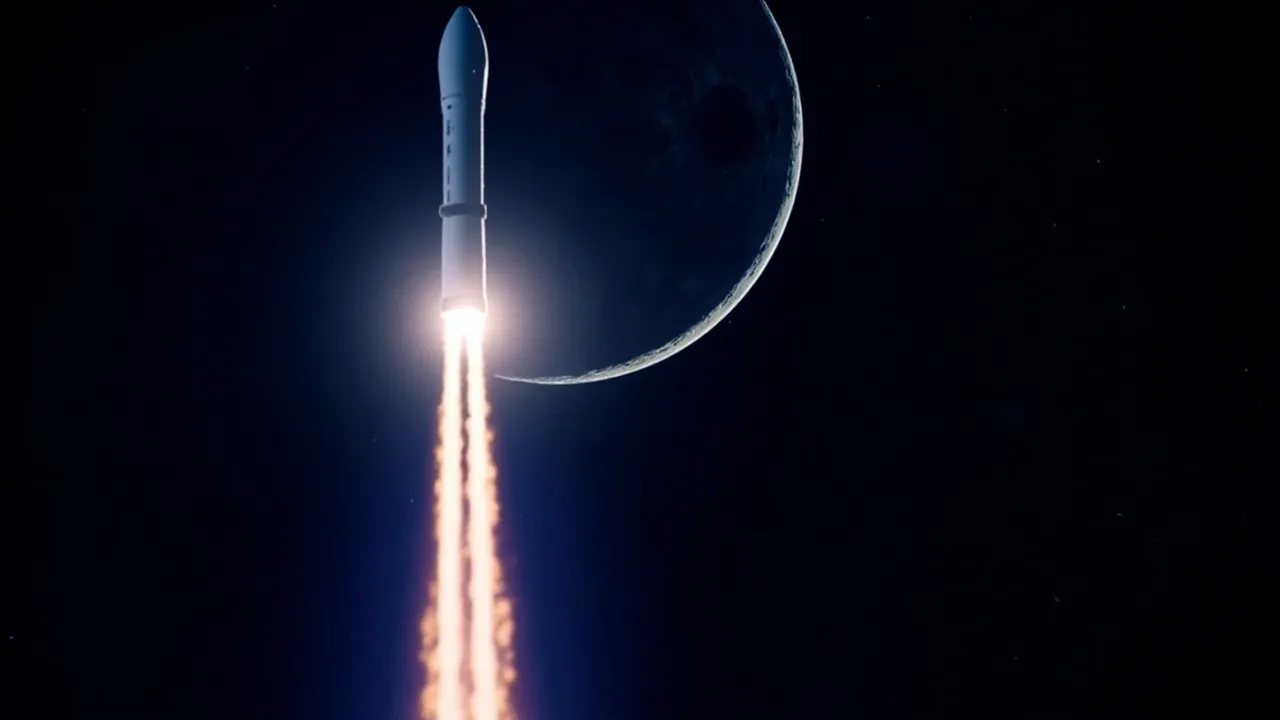
Okay, let me paint you a picture. It's January 15, 2025, and SpaceX's Falcon 9 rocket is lifting off toward the Moon carrying two commercial landers — one from a U.S. company called Firefly Aerospace and another from Japan. The mission? Deliver these little robotic explorers to the Moon's surface. Cool, right? The Blue Ghost lander even pulled off a picture-perfect touchdown on March 2 at Mare Crisium. Nice work, team!
But here's where things get awkward. The Japanese lander? Lost contact right before landing and crashed. Ouch.
Now, fast forward to August 5, 2026 — early morning, around 2:35 a.m. Eastern time. At that exact moment, humanity did something it's never done before: we officially exported our space junk problem to another celestial body. A five-story-tall, four-ton piece of that Falcon 9 rocket — the upper stage — smashed into the Moon at roughly 5,400 miles per hour.
Yeah. The Moon just got hit with space trash. From Earth. On purpose? Well, not on purpose, but you get what I mean.
How Did We Even Get Here?
Here's the thing about most rocket launches — when they're done, the leftover bits typically either burn up in Earth's atmosphere or splash into the ocean. Nice and tidy. But this particular mission needed more thrust than usual because it was going to the Moon, not just to orbit around Earth.
So instead of that upper stage gracefully exiting the picture, it just... stayed up there. Drifting. Completely uncontrollable because it had dumped all its fuel. Bill Gray, an astronomer who's basically become the detective of this whole situation, figured out back in April 2026 exactly when and where this thing would eventually slam into the Moon.
"What has happened is essentially a mixture of solar activity and gravity forces have put it on a path toward the Moon," Julianna Scheiman, SpaceX's director of NASA science and Dragon spacecraft programs, explained.
So solar activity and gravity teamed up to turn a piece of space junk into the universe's most unfortunate lunar dart. Cool.
Did We Learn Anything Cool?
Here's where it gets interesting. Scientists actually wanted this crash to happen. I know, I know — it sounds chaotic, but hear me out. Back in 2009, NASA intentionally crashed a rocket into the Moon's South Pole and discovered water in the dust plume. Pretty useful information! So this time, researchers figured, why not use this unintentional impact as a little scientific experiment?
They trained their telescopes — including the Lowell Discovery Telescope in Arizona and the Very Large Telescope in Chile — on the expected impact zone near Einstein Crater. They were hoping to see a nice dusty plume they could analyze.
The results? Underwhelming, honestly. No big flash, no obvious dust cloud. Scientists think the rocket might have "belly-flopped" into the surface rather than hitting vertically, which would explain the muted show. However, the Paranal Observatory did report some changes in emission lines — potential evidence of an impact. It's not nothing, but it's not the dramatic lunar explosion we might have hoped for.
The Bigger Picture (And Why This Matters)
Look, I'm not here to dunk on SpaceX. They're doing amazing things in space. But this whole situation really highlights something important: we have a space junk problem, and it's not just an Earth orbit issue anymore.
The European Space Agency estimates there are about 1.2 million pieces of debris floating around in Earth's near orbit. That's dead satellites, discarded rocket stages, random shrapnel — the cosmic equivalent of littering. And now, apparently, we're leaving our mark on the Moon too.
"It's carelessness about how leftover space hardware is disposed of," Bill Gray told The Guardian. He added that while this particular crash isn't dangerous to anyone, it does make you think about the bigger picture.
And you know what? He's right. As we push further into space — establishing lunar bases, sending more missions — we really need to think about being better neighbors. Not just to each other, but to the celestial bodies we're visiting.
The Moon has no atmosphere, no weather, no erosion. Anything we leave there stays there. Forever. So maybe, just maybe, we should figure out how to clean up after ourselves before we turn the Moon into Earth's dumping ground.
What Now?
Well, scientists aren't giving up. South Korea's Danuri lunar orbiter is going to snap before-and-after photos of the impact zone, and NASA's Lunar Reconnaissance Orbiter will pass over the site soon. We might learn something from this whole mess.
But honestly? I think the real lesson here is simpler: space is big, it's beautiful, and it's fragile in its own way. We've spent centuries figuring out how to explore it. Maybe it's time we also figured out how to explore it responsibly.
The next time you look up at the Moon, remember: there's a little bit of SpaceX there now. And that's probably not the legacy anyone intended.