
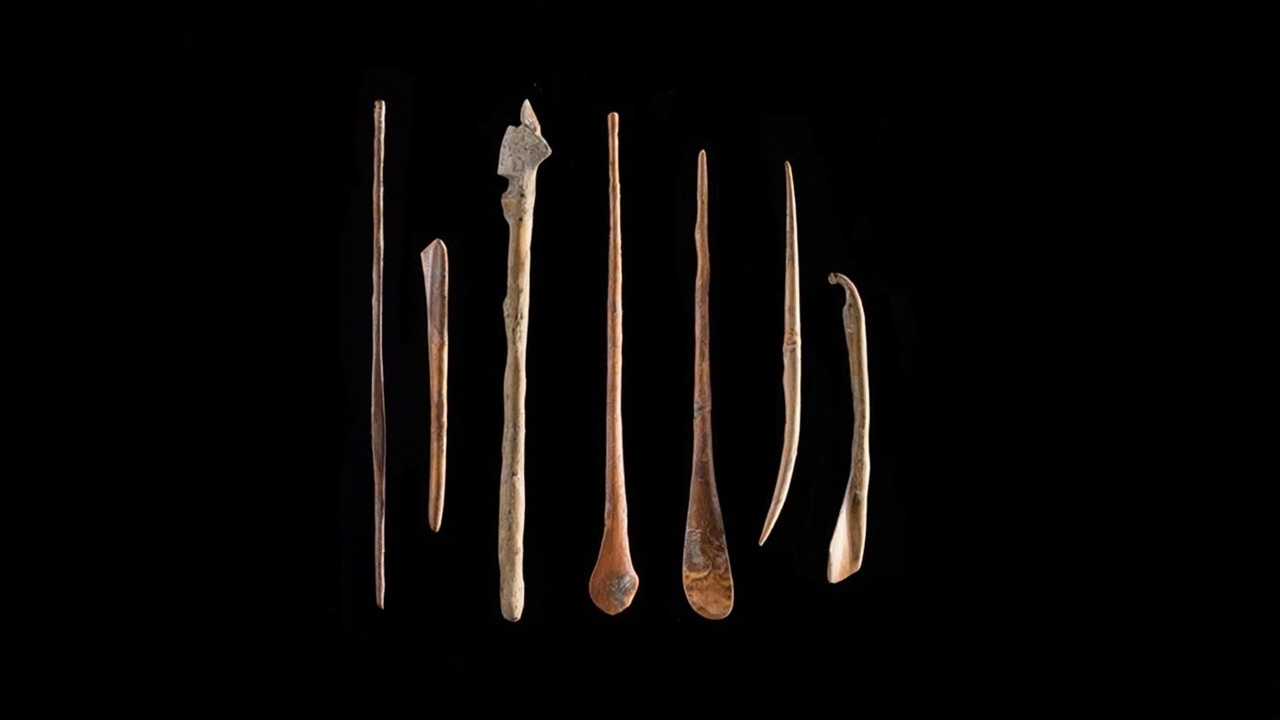
When Ancient Humans First Picked Up a Chisel
Here's something that'll make you reconsider how "primitive" our ancestors really were: scientists just discovered wooden tools that are roughly 430,000 years old. Not spears. Not rough sticks. Carefully shaped and used tools.
This isn't some obscure finding either. A team of international researchers published this in PNAS, one of the most prestigious scientific journals out there. And honestly? It's going to force us to rewrite some of our assumptions about early human behavior.
Wait, They Could Work Wood? Really?
I know what you're thinking—of course ancient humans used wood. But here's the catch: wood rots. Unlike stone tools that basically last forever, wooden artifacts almost never survive long enough for us to find them. Finding intact, clearly worked wood from 430,000 years ago is like finding a lottery ticket in your couch that actually won.
The discovery happened at a site called Marathousa 1 in Greece, and the conditions there were apparently perfect for preservation. Researchers found two distinct wooden objects—one made from alder wood, another from willow or poplar. And when they examined them under microscopes, they could see unmistakable chopping and carving marks.
These Weren't Accidents
What fascinates me most is that these tools show intentional design. The alder piece displays clear signs of shaping and wear, suggesting it was used for digging in soft ground near an ancient lakeside or maybe stripping bark. This isn't someone randomly breaking a branch. Someone thought, "I need a tool for this job," and deliberately crafted one.
The researchers are pretty careful about making bold claims (as good scientists should be), but they're essentially saying: our ancestors didn't just survive—they engineered solutions to their problems.
A Dangerous Neighborhood
Here's a creepy detail that adds flavor to the story: researchers also found wood with deep grooves carved into it, but these weren't made by humans. They were made by a large carnivore—possibly a bear. Imagine working on your tools and crafting projects while massive predators were prowling around, literally leaving claw marks on the wood near your workspace.
The site also contained elephant bones and other animal remains, suggesting this was a hunting and butchering area. So these ancient people weren't just hanging out peacefully—they were competing with apex predators for resources in a genuinely hostile environment.
Breaking Our Timeline
What really gets me is how this pushes back our understanding of when humans developed these skills. Previously, the oldest known wooden tools were around 40,000 years younger than these finds. And the only older evidence of human wood use comes from a different site in Zambia—but that was structural material (like building supports), not intentional tools.
This matters because the Middle Pleistocene period (when these tools were made) was apparently when humans were developing increasingly sophisticated behavior. We weren't just surviving by instinct; we were thinking ahead, planning, and creating specialized tools for specific tasks.
Southeast Europe Has Secrets
Another cool aspect of this discovery: this is the first evidence of this kind of wooden tool sophistication from southeastern Europe. It suggests that the technology and skills were more widespread than we realized. Early humans weren't confined to one region perfecting their craft—they were independently developing clever solutions across the globe.
What This Really Means
When I read about discoveries like this, I find myself feeling oddly humbled. These people—our distant ancestors—weren't dumb brutes struggling to survive. They were problem-solvers with keen observations and the manual dexterity to turn those observations into practical tools. They understood materials, recognized what different woods could do, and had the patience to carefully shape them.
We often think of progress as this recent thing tied to civilization and technology. But this find reminds us that human ingenuity goes back deep. Way deeper than we can even measure in most cases. The people making these tools never invented writing, never built cities, never left written records—yet they were sophisticated enough to deserve our respect.
Pretty wild when you think about it, right?