
A Looming Health Crisis: The Rise of Antibiotic Resistance
Imagine a world where common infections become untreatable, and routine surgeries turn deadly due to unstoppable bacteria. This isn’t science fiction—it’s the reality of antibiotic resistance (AR), a crisis that’s escalating at an alarming rate. Bacteria, often dubbed "superbugs," are evolving to outsmart the drugs we’ve relied on for decades. According to projections, by 2050, these resistant microbes could claim over 10 million lives each year worldwide. They lurk in hospitals, wastewater plants, livestock farms, and even fish ponds, making this a problem that touches every corner of our lives.
But there’s hope on the horizon. Scientists at the University of California San Diego (UCSD) are harnessing the power of cutting-edge genetic technology to fight back. Their weapon of choice? A revolutionary CRISPR system that could turn the tide against antibiotic resistance.
CRISPR: A Game-Changer in the Fight Against Superbugs
You’ve probably heard of CRISPR, the gene-editing tool that’s been making waves in science for its precision in tweaking DNA. Now, Professors Ethan Bier and Justin Meyer at UCSD have taken this technology to a new level with a system called pPro-MobV. Think of it as a genetic ninja, sneaking into bacterial communities and disabling the very genes that make them resistant to antibiotics.
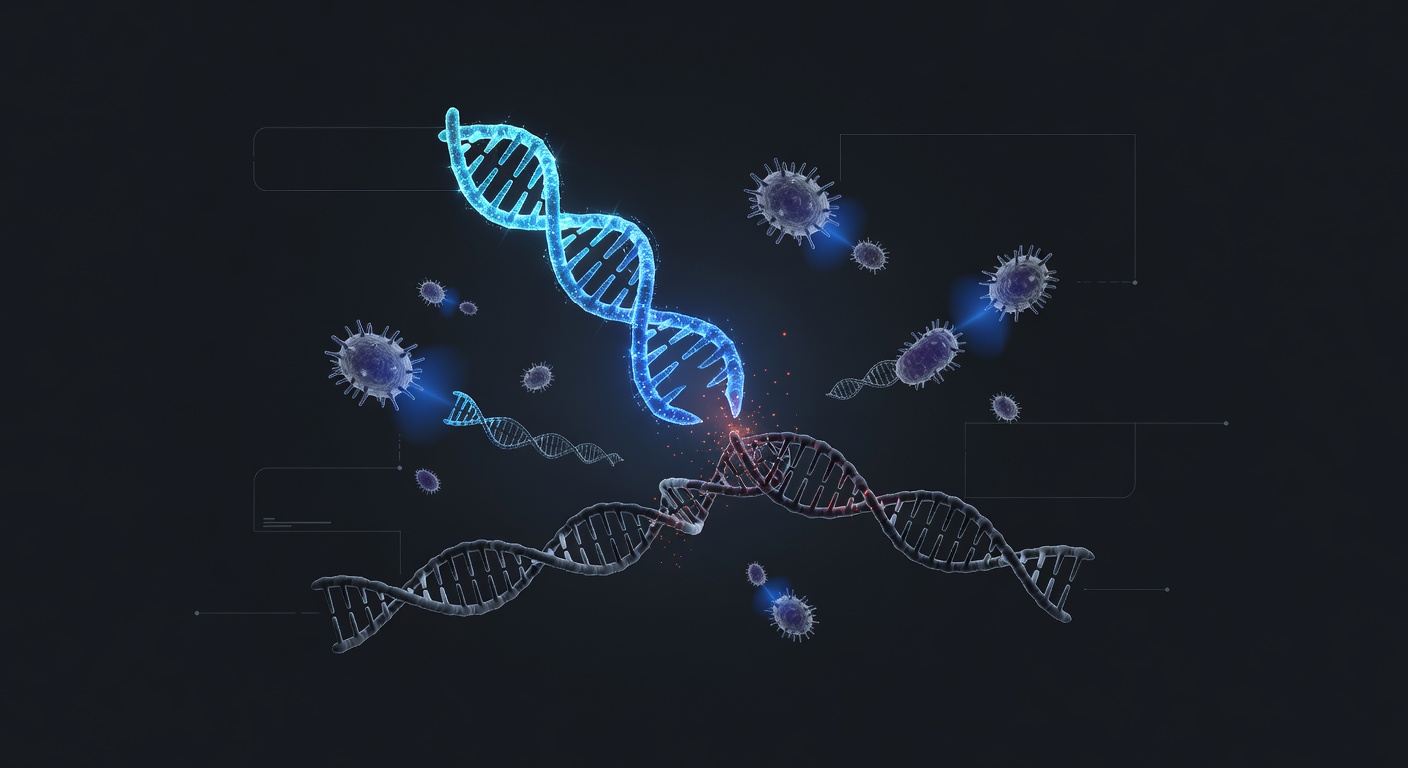
Inspired by “gene drives” used in insects to curb diseases like malaria, pPro-MobV works by spreading through bacterial populations. It’s like a viral idea on social media—starting with just a few cells, it rapidly multiplies its impact across a vast network. “With this new CRISPR-based technology, we can take a few cells and let them go to neutralize AR in a large target population,” explains Bier, a faculty member in the Department of Cell and Developmental Biology.
How It Works: Rewriting Bacterial DNA
The magic of pPro-MobV lies in its ability to target resistance genes often carried on plasmids—tiny loops of DNA inside bacteria that replicate independently. Building on earlier work from 2019 with the Pro-Active Genetics (Pro-AG) system, the researchers designed a genetic “cassette” that inserts itself into these plasmids. Once inside, it disrupts the resistance genes, making the bacteria vulnerable to antibiotics once again.
What’s even more impressive is how this system spreads. Using a process called conjugal transfer—essentially bacterial “mating”—pPro-MobV moves its CRISPR components from one cell to another through natural channels. This means it can infiltrate even the toughest bacterial strongholds, like biofilms. Biofilms are slimy, dense microbial communities that stick to surfaces and shield bacteria from drugs, making them a nightmare in hospitals and industrial settings. Cracking this barrier could be a game-changer.
Why Biofilms Matter: Targeting the Toughest Infections
Biofilms aren’t just a minor annoyance—they’re behind most serious infections and are notoriously hard to eliminate. They form protective barriers that antibiotics struggle to penetrate, whether they’re coating medical equipment, clogging wastewater systems, or thriving in aquaculture ponds. “The biofilm context for combating antibiotic resistance is particularly important since this is one of the most challenging forms of bacterial growth to overcome,” notes Bier.
By tackling biofilms, pPro-MobV opens up possibilities for cleaner hospitals, safer environmental systems, and healthier microbiomes. It’s estimated that about half of antibiotic resistance originates from environmental sources, like animal farms. Reducing this spread from animals to humans could have a massive impact on the crisis.
Teaming Up with Viruses: A Dual Attack on Resistance
Here’s where things get even cooler. The UCSD team found that parts of their system can hitch a ride on bacteriophages—viruses that naturally infect bacteria. Phages are already being engineered as weapons against resistant bacteria, sneaking past their defenses to deliver genetic payloads. Pairing pPro-MobV with these phages could amplify its effectiveness, creating a powerful one-two punch.
As a bonus, the system includes a safety feature called homology-based deletion. This allows scientists to remove the genetic cassette if needed, ensuring control over the technology. It’s a thoughtful addition to a tool that’s already brimming with potential.
A New Hope: Reversing the Spread of Resistance
Unlike most strategies that merely slow down antibiotic resistance, pPro-MobV actively reverses it. “This technology is one of the few ways that I’m aware of that can actively reverse the spread of antibiotic-resistant genes, rather than just slowing or coping with their spread,” says Meyer, a professor studying bacterial evolution.
While this research is still in its early stages, the implications are staggering. From sterilizing hospital environments to cleaning up contaminated water systems, this CRISPR breakthrough could redefine how we protect ourselves from superbugs. It’s a reminder that even in the face of a daunting global challenge, human ingenuity can light the way forward.
If you’re as excited as I am about this development, keep an eye on the science world. The fight against antibiotic resistance is far from over, but with tools like pPro-MobV, we’re finally starting to fight back smarter.
Source: ScienceDaily