
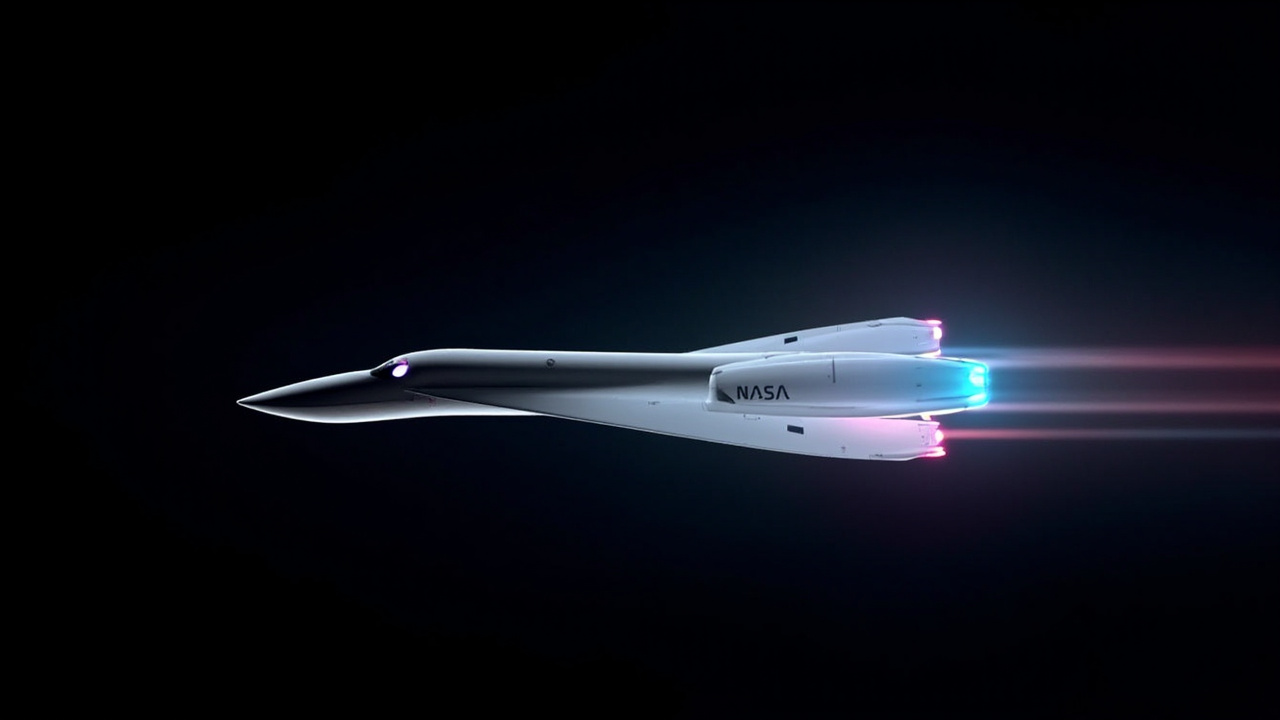
Okay, I've been following the X-59 story for a while now, and let me tell you—things are about to get exciting. NASA has announced that their quiet supersonic research aircraft is just weeks away from its first supersonic flight. Yeah, you heard that right. We're talking about an airplane designed to cruise past Mach 1 without making the neighbors reach for their earplugs.
So What's the Big Deal?
Here's the thing about breaking the sound barrier—it's historically been a loud experience. Think about those old videos of fighter jets zooming across the sky and that unmistakable sonic boom crack echoing across the landscape. It was dramatic, sure, but it also meant that supersonic flight over land was essentially a no-go. Towns and cities complained. Regulations got put in place. And that was pretty much the end of commercial supersonic travel over populated areas.
But NASA has been working on something different with the X-59. This experimental plane has been specifically engineered to essentially "soften" that sonic boom into something that sounds more like a distant thump rather than an explosion. The goal isn't to eliminate the sound entirely—it's to transform it into something that doesn't rattle windows or make dogs bark three counties over.
What We're About to Witness
The team expects the X-59 to hit supersonic speeds for the first time sometime in early June, flying at around 630 mph at roughly 43,000 feet. That's already impressive, but they have even bigger plans after that initial run. There's something called a "mission conditions" flight coming up where the aircraft will push to Mach 1.4 (about 925 mph) at 55,000 feet. That's the sweet spot NASA needs for their Quesst mission data collection.
Here's an interesting tidbit though—the first supersonic flights won't actually demonstrate the quiet boom technology. A chase aircraft will be accompanying the X-59, and since that plane produces conventional sonic booms, it'll mask the X-59's potentially gentler thump. Scientists will be using specialized shock-sensing probes on that chase plane to gather the first real measurements of the X-59's shock waves, which honestly sounds like something out of a sci-fi movie.
What They've Accomplished So Far
The X-59 has already been keeping busy since its maiden flight back in October. Since returning to testing in March, the team has completed 14 additional flights and hit some pretty cool milestones. The aircraft has reached altitudes up to 43,000 feet and speeds approaching Mach 0.95, which is basically skimming the edge of supersonic territory.
They're also testing some pretty futuristic tech. The eXternal Vision System, for instance, replaces a traditional windshield with camera feeds displayed to the pilot. Talk about flying blind in a whole new way! Engineers have been carefully monitoring how the airframe handles various stresses and strains through the testing process, making sure everything holds together at these increasingly challenging speeds and altitudes.
Why This Matters for the Future of Flight
Here's where I get genuinely excited. If NASA can prove that a properly designed aircraft can produce a quiet enough sonic signature, it could reopen the skies to supersonic commercial travel. We're talking about flights that cut travel times in half while not annoying everyone below. The regulations currently ban loud sonic booms over land for good reason—but what if we could change the equation entirely?
The team still has work to do even after breaking the sound barrier. They'll continue mixing subsonic flights with the high-speed runs to fully understand the aircraft's behavior across different conditions. But this represents a crucial step toward validating the technology that could eventually change how we think about fast air travel.
Flying at supersonic speeds is a major milestone for any aircraft program, and it's clear the X-59 team has been building toward this moment for years. Every test flight brings us closer to understanding whether quiet supersonic flight is really possible—and if it works, the implications are massive. The future of supersonic travel might not be about screaming through the sky anymore. It might be about gliding quietly above the clouds, nearly invisible to those below.
I'm keeping my fingers crossed that everything goes smoothly. This is the kind of aerospace achievement that reminds us why we bother building incredible machines in the first place.