
So, What Did They Actually Build?
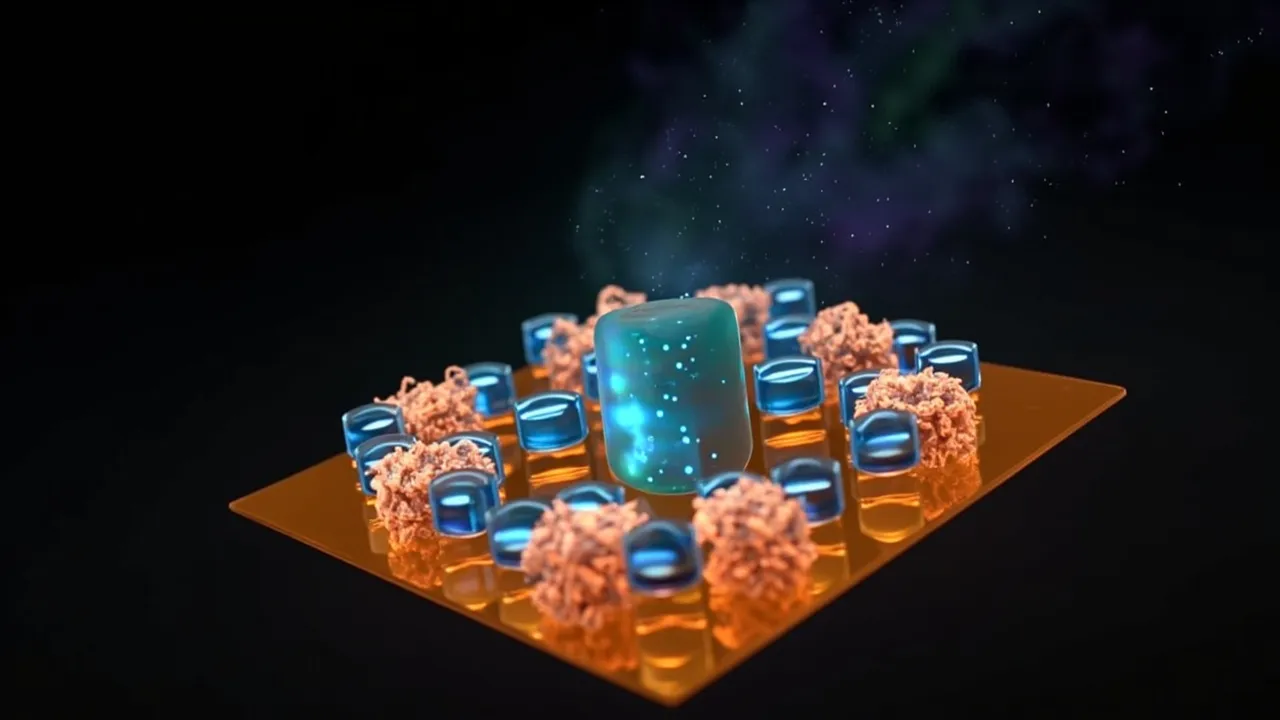
Picture this: a microscopic hollow sphere, smaller than you can imagine, with a shell made of something inspired by how mussels stick to rocks. Inside this tiny structure, scientists have created what they're calling a nanoreactor — basically a pocket-sized chemical workshop that borrows tricks from nature.
The research team, led by Prof. Li Can at the Dalian Institute of Chemical Physics, recently published their findings in the Journal of the American Chemical Society. And I have to say, what they've accomplished is pretty remarkable.
Why Are Scientists So Excited About Mimicking Cells?
Here's the thing about living cells: they're absolutely incredible chemical factories. Within a single cell, thousands of reactions happen simultaneously, with precise timing and efficiency that our best laboratories can barely approach. The secret? Everything is organized in tiny compartments, with molecules moving exactly where they need to go.
Scientists have been trying to recreate this kind of molecular organization in synthetic materials for years. Why? Because if we could build artificial systems that work like cells, we could potentially do all sorts of chemistry more efficiently — including producing useful chemicals using nothing but light energy from the sun.
The Two Clever Tricks This Nanoreactor Uses
The research team gave their creation two features that make it work like a cell.
First trick: A proton relay system. The shell of this nanoreactor contains a special chemical pair that can grab and release protons (those positively charged particles) over and over again. Think of it like a molecular shuttle service — it helps move protons around quickly, which speeds up the whole reaction. In living cells, similar systems help manage energy transfer, and now scientists have built a synthetic version.
Second trick: Compartmentalization. The nanoreactor isn't just a solid particle — it's hollow inside, with a porous shell surrounding that empty space. This creates a little pocket where molecules can gather, interact, and react. It's like how a cell keeps different processes separate in different organelles. That confinement makes the reactions happen more efficiently.
Turning Sunlight Into Hydrogen Peroxide
Now for the practical part: what does this nanoreactor actually do?
It makes hydrogen peroxide — that same chemical you probably have in a brown bottle under your bathroom sink. But hydrogen peroxide is actually incredibly useful. It's used in everything from bleaching paper to treating wastewater to acting as a disinfectant. The problem is, making it usually requires expensive equipment and lots of energy.
This nanoreactor? It produces hydrogen peroxide using just sunlight and water. No fossil fuels, no big energy inputs, just good old sunlight doing the heavy lifting.
The performance numbers are pretty impressive for this kind of research. Under visible light, the system produced hydrogen peroxide at a rate of 3.24 millimoles per gram per hour, with a solar-to-chemical conversion efficiency of 1.2%. Those might sound like small numbers, but for this type of photocatalytic system, they're actually quite good.
Making It Practical for the Real World
Here's what I really like about this research: the scientists didn't just create a cool lab experiment. They went a step further and embedded their nanoreactors in a sodium alginate hydrogel matrix — essentially a jelly-like material that's environmentally friendly.
This turns the system into a solid, recyclable photocatalyst that can continuously produce hydrogen peroxide using actual natural sunlight. It's the kind of thing that could eventually be scaled up for real applications, whether that's producing chemicals for industry or cleaning up pollutants in water.
What Does This All Mean?
Prof. Li put it well when they said this work "opens new opportunities in artificial photosynthesis, energy catalysis, and synthetic chemistry." And I think they're right to be excited.
We're not going to see hydrogen peroxide factories powered by these nanoreactors next year. But this research represents an important step forward in our ability to build artificial systems that work like nature does — efficiently, sustainably, and with remarkable precision.
Sometimes the most inspiring science isn't about replacing nature, but learning from it. And in this case, scientists took two pages from biology's playbook and created something genuinely new.
Pretty cool, right? The idea that we can build microscopic factories that work like cells — using sunlight to make useful chemicals — feels like we're living in the future.