
The main blog post with markdown formatting Okay, I need to talk to you about something that's been living rent-free in my brain since I first read about it.
Scientists have basically created a way for AI to peek inside your head. Not in a woo-woo psychic sense, but in an actual, verified, peer-reviewed way. And honestly, the implications are both thrilling and a little unsettling.
So What's the Big Deal?
For years, researchers have been training AI to analyze fMRI brain scans—that's the brain imaging technique where you lie in a giant clunky machine looking at pictures while it measures blood flow in your brain. Scientists have known for a while that different parts of your brain "light up" when you see different things. But actually reconstructing what someone is seeing from those scans? That's been a tough nut to crack.
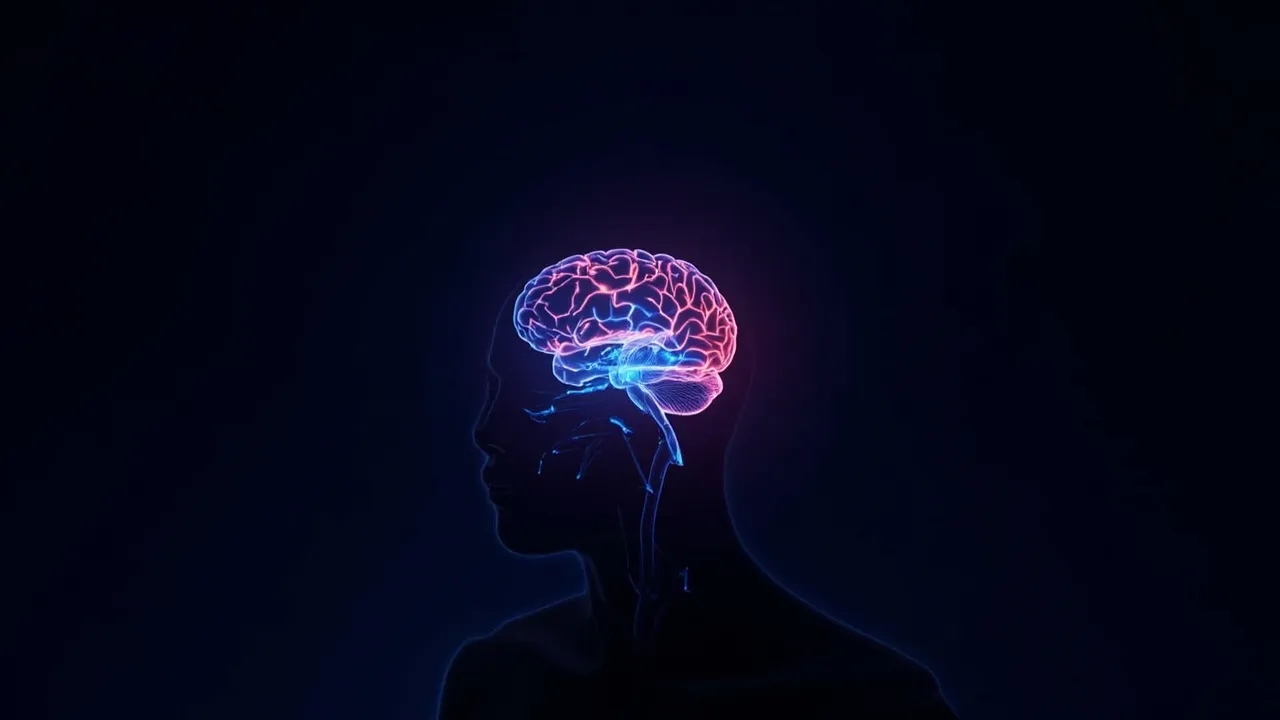
Well, the folks at the Weizmann Institute of Science in Israel just cracked it. Their new system, called Brain-IT, can look at your brain scan and recreate what you were looking at with some seriously impressive accuracy. We're talking images that actually look like what the person saw—not just blurry shapes or abstract blobs.
The Secret Sauce: Teaching the AI to Talk Back to Itself
Here's the thing that really caught my attention: AI typically needs enormous amounts of data to learn anything useful. Like, ungodly amounts. But getting fMRI data is... complicated. People have to actually lie in scanners for hours, watching thousands of images while scientists take notes. It's tedious, expensive, and frankly, probably not the most thrilling way to spend an afternoon.
So the research team got clever. They developed a system where the AI doesn't just learn to decode brain scans into images—it also learns to predict what a brain scan would look like if someone viewed a specific image. By bouncing back and forth between "brain scan → image" and "image → brain scan," the AI essentially teaches itself using made-up examples. Think of it like practicing with imaginary flashcards until you actually understand the material.
What Does This Actually Mean?
First and foremost, this could be a game-changer for people with severe paralysis who can't speak. Imagine being able to communicate just by thinking about images. The technology isn't there yet, but the foundation is being built.
The researchers also discovered 128 different brain regions involved in processing visual information—some that neurologists had never formally identified before. That's huge for our understanding of how the brain works.
And here's where my brain started doing somersaults: if they can reconstruct what you're looking at, could they eventually reconstruct what you're dreaming about?
The Slightly Uncomfortable Question
Look, I'm the first person to geek out over cool science, but I also found myself pausing when I really thought about this.
We spend a lot of time worrying about AI invading our privacy through our texts, our searches, our location data. But our thoughts? That felt like the one truly private space left. Now we're building technology that could potentially change that.
The researchers themselves acknowledge that recording dreams is still science fiction territory—we're probably decades away, if it ever becomes possible at all. And there are plenty of technical hurdles between here and there. But still. The door is cracked open, even if just a sliver.
My Take
I oscillate between "wow, this is incredible for medical science" and "wow, this is the plot of several dystopian novels I've read."
But honestly? Every major scientific advancement has felt this way. Photography was considered magical (and creepy) when it first emerged. The internet connected humanity in unprecedented ways while also creating whole new categories of privacy concerns.
I think the key is that we have these conversations now, while the technology is still developing, rather than after it's already everywhere. The fact that researchers are publishing this work openly, discussing the ethical implications, and thinking about applications that help people—that gives me hope.
This isn't about building a mind-reading machine for sinister purposes (not that some folks won't try). This is about understanding the most complex object in the known universe: the human brain.
And personally, I'd rather we understand it from a place of curiosity and compassion than from fear.
What do you think? Is this the coolest thing you've heard this week, or does it make you want to crawl under a blanket? (Both reactions are valid, honestly.)
Source: Popular Mechanics