
Okay, I need you to picture this with me.
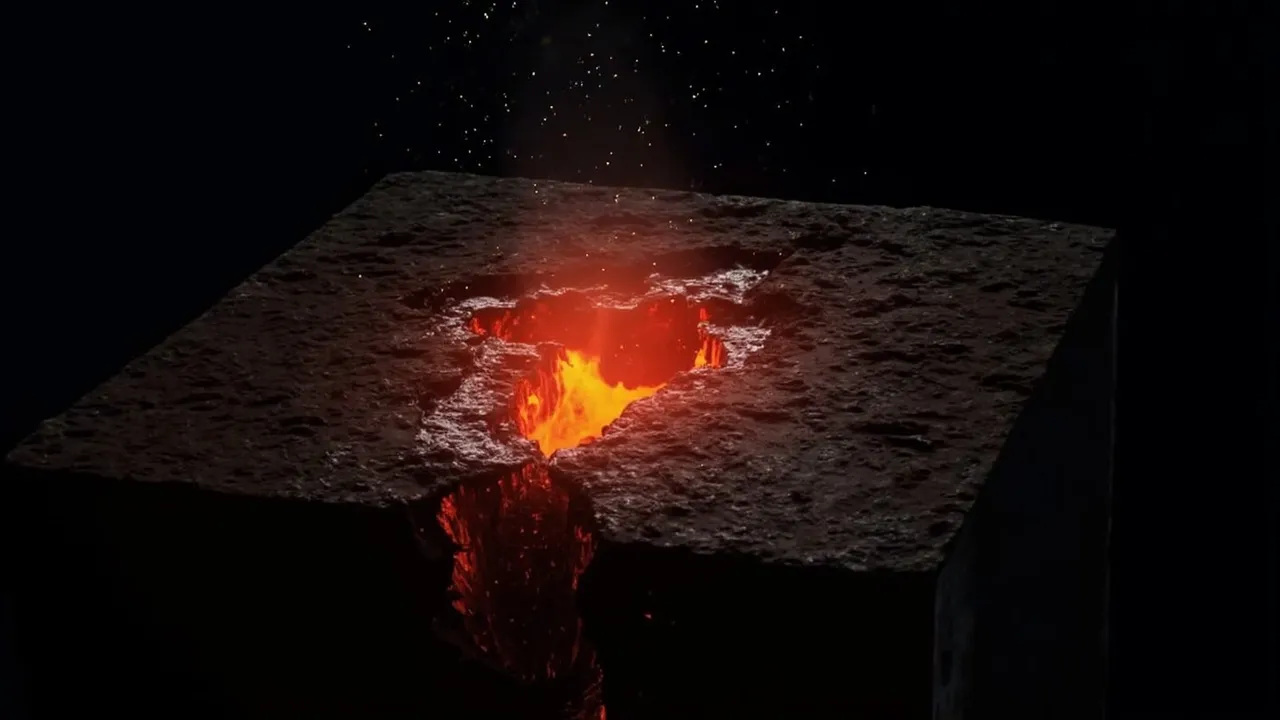
You're floating somewhere in the dark, cold depths of the ocean — we're talking miles below the surface, in complete blackness. And then, suddenly, the seafloor starts to rip itself apart. Not gradually over millions of years. I'm talking now. Cracks race outward. Magma comes gushing up from below like the Earth is bleeding molten rock. And here's the wild part: there's almost no earthquake. No shaking. No rumbling. Just... quiet destruction.
That's essentially what happened recently in a spot between Antarctica and Australia, and scientists actually got to watch it happen in real-time. I don't know about you, but I find this absolutely terrifying and fascinating in equal measure.
The Planet's Biggest (and Most Overlooked) Makeover Zone
Here's something that kind of blew my mind while researching this: most of Earth's surface is actually underwater. Like, way more than I usually think about. And most of the action — the cracking, rebuilding, and general geological drama — happens down there where we can't see it.
Think about it. We spend so much time worrying about earthquakes on land, volcanic eruptions that darken skies, all that visible stuff. But underneath our oceans, tectonic plates are constantly pulling apart, magma is constantly pushing up, and new crust is constantly forming. The planet is literally constantly renewing its skin down there, and we've been mostly blind to it.
That's exactly why marine geophysicist Jean-Yves Royer and his team from the French National Center for Scientific Research decided to do something ambitious: they wanted to watch this process happen live.
They Built a Deep-Sea Watchtower
The team developed something called OHA-GEODAMS (which I'm just going to call "the underwater watchdog" because that's a mouthful). This thing is essentially a heavily-equipped tripod with five sensitive hydrophones that can monitor the seafloor in an area known for volcanic temper tantrums.
The target? The Southeast Indian Ridge, specifically a spot near the Saint Paul-Amsterdam volcanic plateau. This is one of those places where tectonic plates are slowly drifting away from each other, and where magma regularly tries to push up through the cracks.
But here's the thing — nobody actually knew if their fancy equipment would work. I love that scientists just... try things sometimes. They lowered the observatory into the deep, dark ocean and basically crossed their fingers.
And then they waited.
The Moment It All Went Down
In late April 2024, the waiting paid off. Big time.
The observatory picked up something incredible: enormous sheets of magma coming up from below, filling cracks in the seafloor with about 150 million cubic meters of molten rock. For reference, that's roughly 60,000 Olympic-sized swimming pools. All at once. Poured into the space between splitting tectonic plates.
But here's the really strange part: this massive intrusion of magma wasn't triggering many earthquakes at first. Usually, when something that big moves underground, we expect shaking. Lots of it. But the seismographs were mostly quiet.
This actually explains a long-standing mystery in geology. Scientists had previously studied this area and wondered why they weren't picking up earthquake data that matched what they expected to see during seafloor spreading. Now we know: sometimes the movements are "aseismic," meaning they happen without generating the seismic waves we normally look for.
Instead of shaking, the magma was doing something sneakier — it was slowly forcing its way into cracks, lubricating fault lines, causing slow slips that don't produce the rumbling we associate with earthquakes.
The Floor Collapsed — Then the Earthquakes Started
So what happened next is honestly the part that got me.
Once the magma injection slowed down and eventually stopped spreading, things changed dramatically. The underground magma reservoir had basically been emptied by all that outflow. And when you remove support from underground, stuff above tends to fall down.
The seafloor above the reservoir collapsed. Suddenly. And that collapse destabilized nearby fault lines that had been dormant for years. Those fault lines woke up, started grinding against each other, and suddenly the earthquakes started showing up on instruments — primarily strike-slip earthquakes, which involve horizontal movements of rock.
The researchers described what they witnessed as a "coupled tectonic-magmatic event" — meaning both fault slippage AND massive magma intrusion were happening together, feeding into each other. This kind of combined process had never been documented in this way before.
And the rifting itself? The crust was tearing apart at about 5 centimeters per minute. Which sounds slow until you realize that's roughly 500,000 times faster than the normal, gradual spreading rate. So from a geological perspective, this was lightning-quick.
Why This Matters
For Royer, this discovery is like finally solving a puzzle that's been sitting on the table for decades. We knew mid-ocean ridges were places where new crust forms. We knew magma intrudes and earthquakes happen. But we didn't fully understand how these processes interact on human timescales — how they influence each other, trigger each other, pause and then suddenly release all at once.
The fact that we can now watch this happen with underwater observatories means our understanding of Earth's geology is about to get a major upgrade. We spent so long being blind to what's happening beneath the waves. Now we're finally getting eyes on the action.
And honestly? I think there's something humbling and amazing about the fact that our planet is constantly reshaping itself, with some of the most dramatic events happening completely unnoticed by us. The next time you're looking at the ocean from a beach, remember: beneath that calm surface, the Earth is busy tearing itself apart and building itself back up again.
Source: https://www.popularmechanics.com/science/environment/a73286406/deep-ocean-floor-tear