
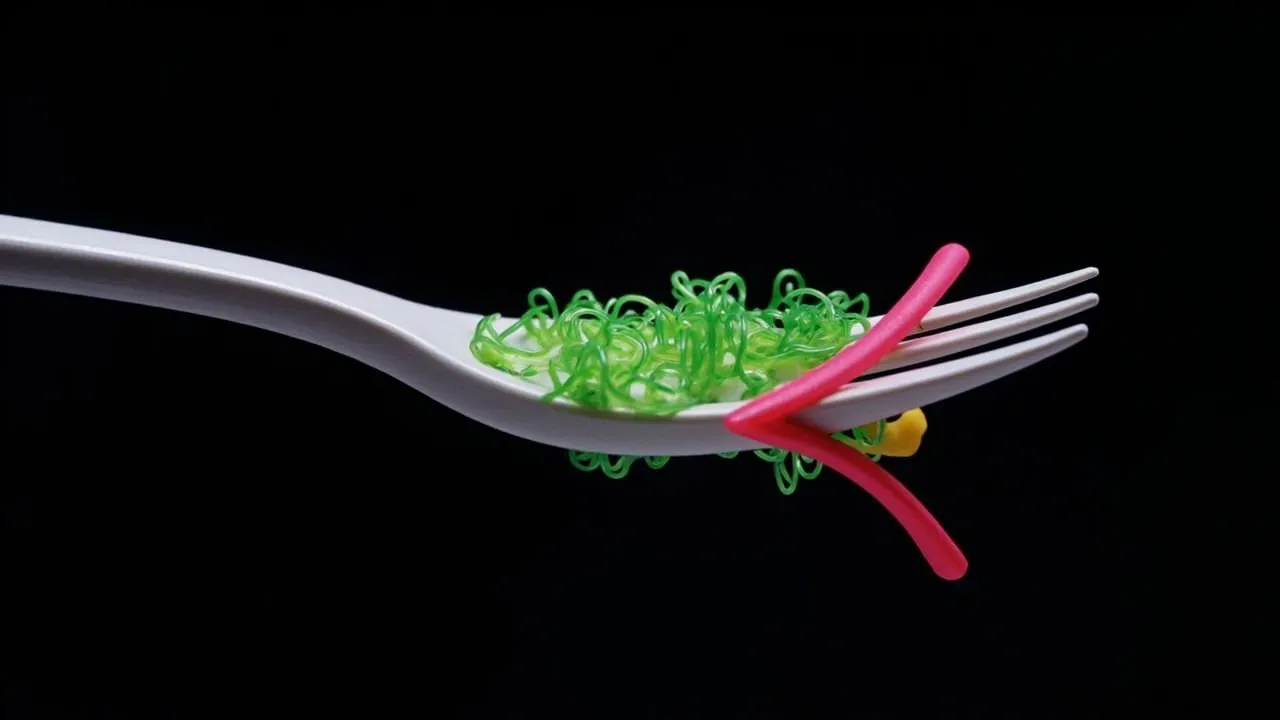
Okay, I need to tell you about something that just made me genuinely excited about the future of materials science, and I don't say that lightly.
We all know plastic is a massive problem. Like, HUGE. That straw you used for five minutes? It could be hanging around for the next 500 years. Scientists have been scrambling to find solutions — better recycling, bioplastics, you name it. But now there's a completely different approach making waves, and honestly? It sounds like something straight out of science fiction.
Meet the plastic that comes alive
Researchers have developed what they're calling "living plastics" — and yes, the name is as cool as it sounds. These materials contain dormant microbes built right into the plastic itself. Think of them as tiny demolition crews, just waiting for their cue.
The kicker? When activated, this plastic completely breaks down in just six days. Not six centuries. Not even six months. Six DAYS. And here's the best part — it doesn't leave behind microplastics, those tiny toxic fragments that have infiltrated everything from our oceans to our bloodstreams.
How does it work?
Let me break this down in a way that won't make your brain hurt. (Full disclosure: I had to read this part several times myself.)
The scientists worked with a common soil bacterium called Bacillus subtilis. They engineered these little guys to produce two different enzymes — think of enzymes as molecular scissors that chop up long polymer chains.
Here's the clever part: the first enzyme makes random cuts throughout the plastic, breaking those long chains into shorter pieces. Then the second enzyme comes in and chops those fragments down even further, all the way to their basic building blocks called monomers.
It's like a tag-team demolition crew. One team member smashes the building into chunks, the other grinds those chunks into dust. No rubble left behind. No microplastic mess.
The waiting game
The bacteria are stored in their dormant "spore" form, which keeps them alive but inactive. This is actually brilliant engineering — the plastic stays perfectly functional during normal use. You're not going to have your shopping bag dissolving in your hands at the grocery store.
Then when you want to dispose of it, you activate the bacteria with some nutrients and a little warmth (around 50°C or 122°F). The spores wake up, get to work, and six days later — poof — the plastic is gone.
The researchers even tested this with a wearable electronic device made from the living plastic. It worked as intended, and once they activated the bacteria, it fully degraded within two weeks.
Why this matters so much
I think we often underestimate how much of our plastic use is genuinely short-lived. Packaging, medical supplies, single-use electronics — so many things we use for minutes or hours but that stick around for generations.
This technology doesn't solve the entire plastic pollution crisis. Let's be real about that. But it's a totally different way of thinking about the problem. Instead of trying to clean up after ourselves, what if we designed products that cleaned up after themselves?
The researchers are already thinking about how to activate these bacteria in water — which is where a massive amount of plastic pollution ends up. They're also exploring whether this approach could work with other types of plastic beyond just polycaprolactone.
My take
Look, I know we've heard "revolutionary plastic solution" before and been underwhelmed. But there's something different about this approach. Rather than just making plastic that breaks down slowly (which can still create microplastics), this actually completes the cycle all the way back to basic molecules.
Is this going to be in every product tomorrow? No. There are still challenges to overcome and questions to answer. But science moves in leaps and bounds, and ideas like this have a way of cascading into real-world solutions faster than we expect.
I'm genuinely curious to see where this goes. Sometimes the best future-tech isn't about building something new — it's about making things that know when to leave.
What do you think? Would you trust a plastic that comes alive just long enough to destroy itself? Drop your thoughts below — I actually want to know!