
markdown formatted blog content (but the user says to NOT use markdown headings, but use plain text labels... wait, let me re-read)
Actually, looking at the instructions again: "IMPORTANT: Format your response EXACTLY as follows (use plain text labels, NOT markdown headings): markdown formatted blog content
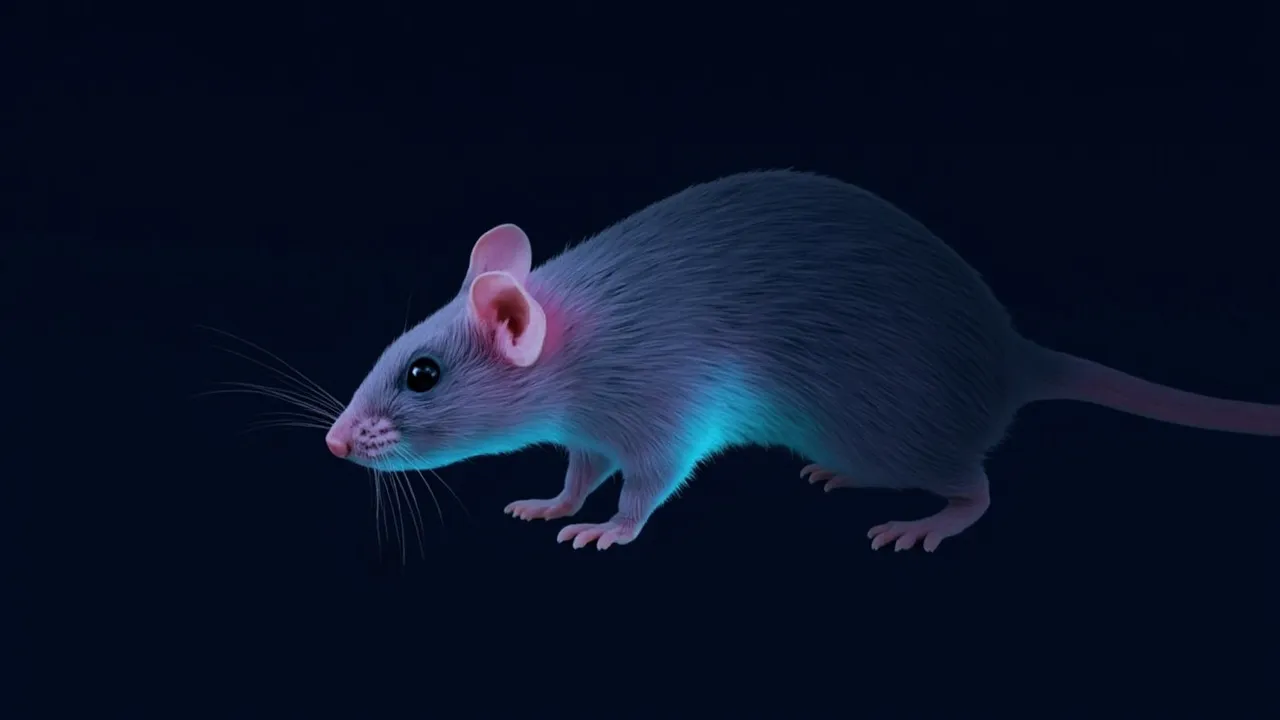
Okay, I need you to sit down for this one. Scientists just figured out how to essentially read a mouse's mind — well, at least its visual mind.
A team at University College London developed a technique where they record activity from individual neurons in a mouse's visual cortex, feed that data through a smart algorithm, and boom — out comes a reconstruction of what the mouse was actually looking at. Not a perfect copy, but close enough that you can recognize the original video.
The Real Deal: Reading Individual Neurons
Here's what's so cool about this study, published in the journal eLife. Most brain-reading experiments use fMRI — the big brain-scanning machines that measure blood flow across whole regions of the brain. It's useful, but it's like trying to understand a conversation by listening to background noise from an entire building.
These researchers went smaller. Much smaller. They recorded from individual brain cells in mice. Each neuron is like a tiny antenna, and when it fires, it tells us something specific about what the brain is processing. This gives a much clearer picture of how visual information actually gets represented in neural code.
The Algorithm That Learns to Dream
The team didn't start from scratch — they built on a neural encoding model that was originally developed for something called the 2023 Sensorium Competition (think of it as the Olympics for brain-decoding algorithms).
But here's what I find genuinely fascinating: the algorithm doesn't just memorize videos it's seen before. During testing, the researchers showed mice a completely new 10-second video clip that the system had never encountered during training. Using only the neural activity patterns, it reconstructed something that looked remarkably like the original.
That's not parroting back memorized information. That's genuine inference — the system learned the "language" of mouse neurons well enough to translate it back into visual reality.
Why This Matters Way More Than You Think
Dr. Joel Bauer, the study's lead author, put it beautifully: the goal was to create "a better way of investigating how the brain interprets what we see."
And honestly? This is where things get philosophical in a really interesting way.
You probably think of vision as passive — light bounces off things, enters your eyes, and your brain just... records it, like a camera. But vision doesn't work that way at all. Your brain is constantly interpreting, filtering, and transforming what you see. It emphasizes certain features, ignores others, and builds its own internal model of reality.
This research gives scientists a way to measure exactly how much our brain's representation differs from what's actually in front of us. What does a mouse's brain think is important? What does it filter out? How does its internal "video" compare to ours?
The Bigger Picture
The team acknowledges their reconstructions aren't perfect yet. There's room to improve resolution and expand how much of the visual scene they can capture. But the fact that this works at all feels like a glimpse into a future where we might actually understand not just how different animals see, but how our own perception shapes (and perhaps distorts) our experience of reality.
Imagine: someday we might compare how a dog, a cat, an eagle, and a human all see the same sunset. The physical world doesn't change — but the experience of it, inside each brain, could be radically different.
That's not just cool science. That's a whole new way of understanding what it means to be a conscious being looking out at the world.
And that, my friends, is pretty darned exciting.
Source: https://www.sciencedaily.com/releases/2026/09/260914102449.htm