
When Your Hobby Collection Turns Out to Be a Time Capsule
Okay, can we talk about this story for a minute? Because it's one of those "science is amazing" tales that makes you stop and think about how much history is hiding in plain sight.
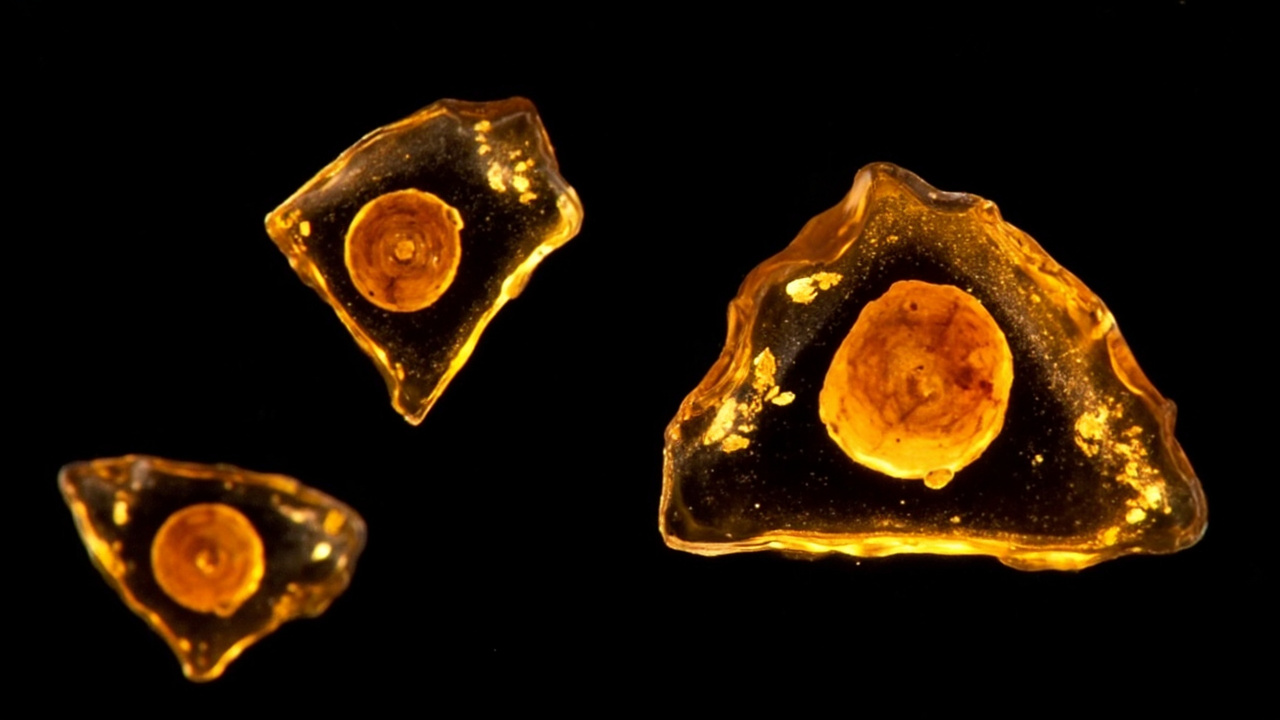
Johann Wolfgang von Goethe—you know, the famous German writer, poet, and all-around Renaissance man—had a collection of Baltic amber pieces. He wasn't collecting them for their scientific value, though. No, Goethe was more interested in what the fossilized tree resin could do for his work on color theory. He literally ground lenses from these 40-million-year-old specimens to study light effects.
Can you imagine? Goethe was literally crushing ancient time capsules to make optical lenses, completely unaware that tiny creatures from the Eocene epoch were trapped inside.
The Discovery That Took 180 Years
Here's where things get really interesting. Goethe's amber collection is now housed at the Goethe National Museum, and researchers from the University of Jena recently decided to take a closer look at two of the 40 pieces. The problem? These specimens had never been polished, which meant the fossils inside were practically invisible to the naked eye.
So what did scientists do? They hauled the amber pieces to the German Electron Synchrotron (DESY) in Hamburg and used synchrotron micro computed tomography—a seriously fancy scanning technique—to create detailed 3D images of the contents.
The results? Three perfectly preserved insects: a fungus gnat, a black fly, and an ancient ant. And the ant? It's absolutely stunning.
Why This Little Ant Is a Big Deal
The ant belongs to the species Ctenobethylus goepperti, which scientists already knew existed. But here's the thing—this specimen is so exceptionally preserved that researchers were able to examine anatomical features that had never been documented in such detail before.
We're talking fine body hairs on the worker ant. Internal skeletal structures within the head and thorax. Things that normally don't survive the fossilization process were visible thanks to these advanced imaging techniques.
One of the researchers, Bernhard Bock from the Phyletisches Museum, explained that the team was able to describe this ant "in greater detail than ever before" and gain new information about the species and its relationships.
The team even created a complete digital 3D reconstruction of the fossil and made it available online. How cool is that? Scientists anywhere in the world can now study this specimen without having to handle the original amber.
What Did These Ants Look Like?
Here's where things get speculative but fun. By comparing the ancient ant with its modern relatives—specifically the genus Liometopum, which is found today in North America and warmer parts of Europe—researchers think they've figured out how these 40-million-year-old insects lived.
The ancient ants likely built large nests in trees. This makes sense because it would explain why they're so commonly preserved in amber. When ancient trees produced sticky resin, ants nesting in the bark would get trapped and preserved for eternity.
Pretty humbling to think about, right? Somewhere in what is now the Baltic region, an ant crawled over a tree 40 million years ago and ended up becoming part of a famous poet's collection.
The Poetry of Scientific Discovery
What gets me about this story is the timing. Goethe lived from 1749 to 1832, and by his time, scientists were already studying amber and the fossils inside it. Early scientific publications on the subject were even in his personal library.
But the techniques available today? The idea that you could scan a piece of amber and see a perfect 3D reconstruction of an insect's internal anatomy? That would have seemed like pure science fiction to researchers of Goethe's era.
Bock put it beautifully: "Goethe is regarded as the founder of morphology and would likely have been delighted to see how we were able to gain valuable insights in this field using entirely new methods."
And here's the really thought-provoking part: "At the same time, the results demonstrate the value of such historical collections. It is truly fascinating that an object originating from his hand and his era, when this science was just beginning, can still enrich us so much today."
The Takeaway
This story is about more than just a cool scientific discovery. It's about how museum collections from centuries ago can still yield groundbreaking findings. Objects that seemed ordinary, that were studied for entirely different purposes, hold secrets we didn't have the technology to uncover until now.
Every old cabinet of curiosities in every museum basement might contain specimens that will revolutionize our understanding of ancient life. We just need better tools to look.
And isn't that kind of beautiful? Goethe, who spent his life trying to understand the world through observation and inquiry, is still contributing to science 190 years after his death—just because someone decided to look more closely at his old amber pieces.
Makes you wonder what other hidden treasures are waiting in collections around the world, doesn't it?