
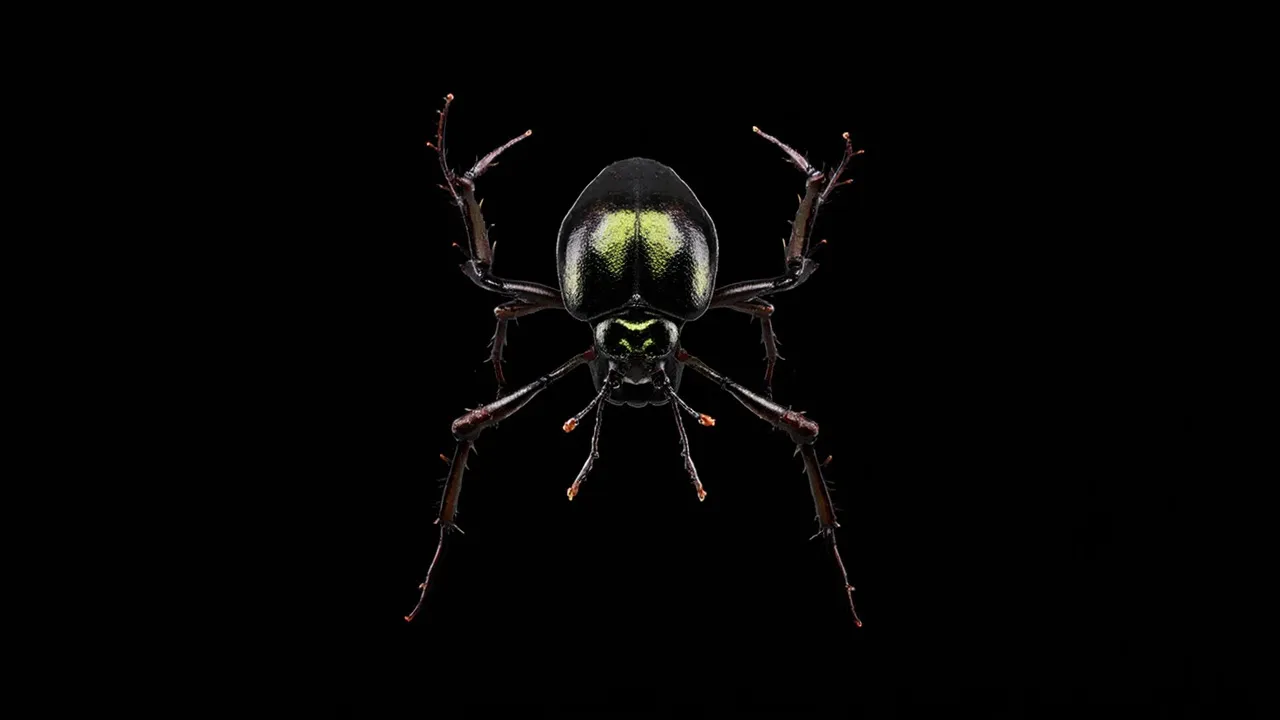
When Anime Meets Entomology: The Stretchy Beetles Named After Luffy
Okay, I have to be honest with you — I've seen some pretty wild naming conventions in science, but this might be my new favorite.
Researchers have officially established a brand new genus of beetles called Luffy. And yes, it's absolutely because these little guys look like they could stretch their limbs across oceans just like their namesake from the anime One Piece.
What's the Big Deal About These Bugs?
Picture a beetle. Now imagine someone grabbed it by the antennae and mandibles and gently (please, gently) stretched them out to absolutely ridiculous lengths. That's basically what we're dealing with here.
These Luffy beetles belong to the rove beetle family, which already contains thousands of species known for their elongated bodies and compact wing covers. But even among their relatives, these new arrivals stand out. Their mandibles, antennae, and maxillary palps (those little mouth-part appendages scientists love to study) are exceptionally long and slender.
The research team — led by PhD student Fang-Shuo Hu along with Alexey Solodovnikov from the Natural History Museum of Denmark — didn't just stumble upon these beetles and think "haha, they look stretchy, let's name them Luffy." There was actual taxonomic reasoning behind the choice. They observed that the exaggerated proportions genuinely reminded them of Luffy's iconic Gomu Gomu no Mi powers, which let his rubber body extend and contort far beyond normal limits.
And honestly? I respect the commitment to making taxonomy fun.
Meet the New Species
So far, scientists have officially described two species in this stretchy new genus:
Luffy schillhammeri was found chilling in the broadleaf forests of Yunnan Province, China. The species name honors Dr. Harald Schillhammer from the Natural History Museum Vienna, recognizing his significant contributions to rove beetle research. Because naming things after helpful humans is another proud tradition in science.
Luffy nika was discovered in Louang Namtha, northern Laos. The "nika" part? That's a direct reference to Luffy's legendary Devil Fruit awakening — the Hito Hito no Mi, Model: Nika, which fans know as his Gear 5 transformation. You can probably guess what clued the researchers in: this particular species has prominent white bands of hair covering its elytra (those hardened front wings) and much of its body. The scientists looked at this white, almost smoke-like appearance and thought immediately of Luffy's Nika transformation, when he becomes this wild, laughing figure wreathed in white.
I love that the researchers clearly had fun with this.
More Than Just a Gimmick
Here's where things get genuinely scientifically interesting, though. Beyond the clever naming, these beetles might be evolutionary missing links.
Hu and Solodovnikov weren't just discovering new species — they were doing a deep dive into the entire Ocypus group of rove beetles. They examined relationships between genera whose positions in the beetle family tree have been debated or unclear, including groups like Acupronotes, Apostenolinus, and Staphylinus.
After studying numerous specimens and carefully comparing tiny anatomical details, they identified characteristics that define what's called the "Eucibdelus lineage." These beetles share certain derived traits, like specific ridge teeth on their left mandible and a completely hardened labrum (the plate above the mouth).
Here's the cool part: Luffy beetles share some of these traits but not all of them. They have those dorsal ridge teeth, but their labrum isn't completely hardened like their relatives. They also have several unique features that don't appear in other groups.
This combination of "almost like group A, but with these weird differences" suggests that Luffy is probably the sister group to the entire Eucibdelus lineage. In other words, they're sitting at an important evolutionary crossroads — related enough to help us understand where the lineage came from, but different enough to show their own unique path.
The researchers put it well: this genus shows "a unique combination of characters intermediate between the Eucibdelus lineage and other members of the Ocypus-group."
Why This Kind of Naming Matters
Look, I know some people might roll their eyes at researchers naming insects after anime characters. "Where's the rigor? Where's the seriousness?"
But here's my take: science communication is hard. Taxonomy is hard. Getting people — especially young people — excited about biodiversity and classification is genuinely challenging when the work involves examining microscopic anatomical features and writing descriptions that sound like they belong in legal documents.
But telling people "we found stretchy beetles and named them after One Piece's rubber-man"? That people remember. That sparks curiosity. That makes someone google "rove beetle" or "what's a mandible" or "why does taxonomy matter."
The researchers themselves said they hope the Luffy story helps bring science closer to the public and encourages more young people to explore biodiversity research "with the same adventurous spirit associated with Luffy."
And honestly? That's pretty smart science communication. Some of the best discoveries have the most memorable stories behind them. Darwin's finches, the platypus, the dodo — the names and stories matter almost as much as the science itself.
The Bigger Picture
Every new genus description adds a piece to the puzzle of life's history. These stretchy, oddly proportioned beetles aren't just curiosities — they're data points that help us understand how rove beetles evolved, how they're related to each other, and how the Ocypus group diversified over time.
The Luffy genus specifically occupies a weird in-between position that makes it valuable for understanding evolutionary relationships. By sitting near the base of the Eucibdelus lineage, these beetles help scientists draw clearer boundaries between groups and understand which traits came first and which evolved later.
Pretty cool for little bugs that some people might otherwise step on without a second glance.
So next time you're watching One Piece and see Luffy stretch his arms across the deck of the Thousand Sunny, spare a thought for the tiny beetles in Yunnan and Laos that inspired their own rubber-named genus. Science can be serious and silly at the same time — and honestly, that's part of what makes it wonderful.
Source: ScienceDaily, August 2026 — https://www.sciencedaily.com/releases/2026/08/260802223430.htm