
When Sunlight Gets Weird: The Quantum Camera Revolution
Here's something that blew my mind when I first read about it: scientists have figured out how to use sunlight—the same light that hits your face every morning—to do quantum optics tricks that usually require expensive, finicky lasers locked away in climate-controlled labs.
I know, I know. It sounds like science fiction. But it's real, and it's actually pretty clever.
The Laser Problem Nobody Talks About
For decades, quantum optics researchers have relied on a specific trick: shooting a super-powerful, incredibly stable laser into a special crystal to split the light into pairs of "spooky" connected photons. It's called SPDC (spontaneous parametric down-conversion if you're curious, but don't worry about memorizing it).
The catch? This whole process depends on having laser light that's basically perfect—pure, stable, and consistent. You need a laboratory with climate control, power supplies, specialized equipment, the works. It's the kind of setup that costs hundreds of thousands of dollars and requires a PhD just to keep it running.
For years, physicists just accepted this as a limitation. Quantum optics = labs only. That was the deal.
But then something interesting happened. Researchers started asking: "Do we actually need perfect laser light?" And the answer, it turned out, was... no.
The Plot Twist: Imperfect Light Works Too
It turns out that you don't need laser-grade perfection. Even "messy" light—light that's partially coherent and bouncing all over the place—can produce those quantum-entangled photon pairs. The light just needs to have certain properties, and it'll transfer some of those properties to the photons it creates.
Which led to the obvious next question: What about sunlight?
On paper, this seems ridiculous. Sunlight is about as imperfect as light gets. It's constantly changing brightness, shifting position as the sun moves across the sky, and fluctuating in intensity depending on clouds and atmospheric conditions. It's basically the opposite of what quantum optics researchers typically want.
But that's also the genius part. Sunlight doesn't need electricity. It doesn't need complex equipment. If you can make it work, you could do quantum imaging in the middle of the desert, on a mountaintop, or even in space.
The Experiment That Changed Everything
A research team at Xiamen University in China decided to actually try it. And they weren't messing around—they built a full system to prove it could work.
Here's what they did:
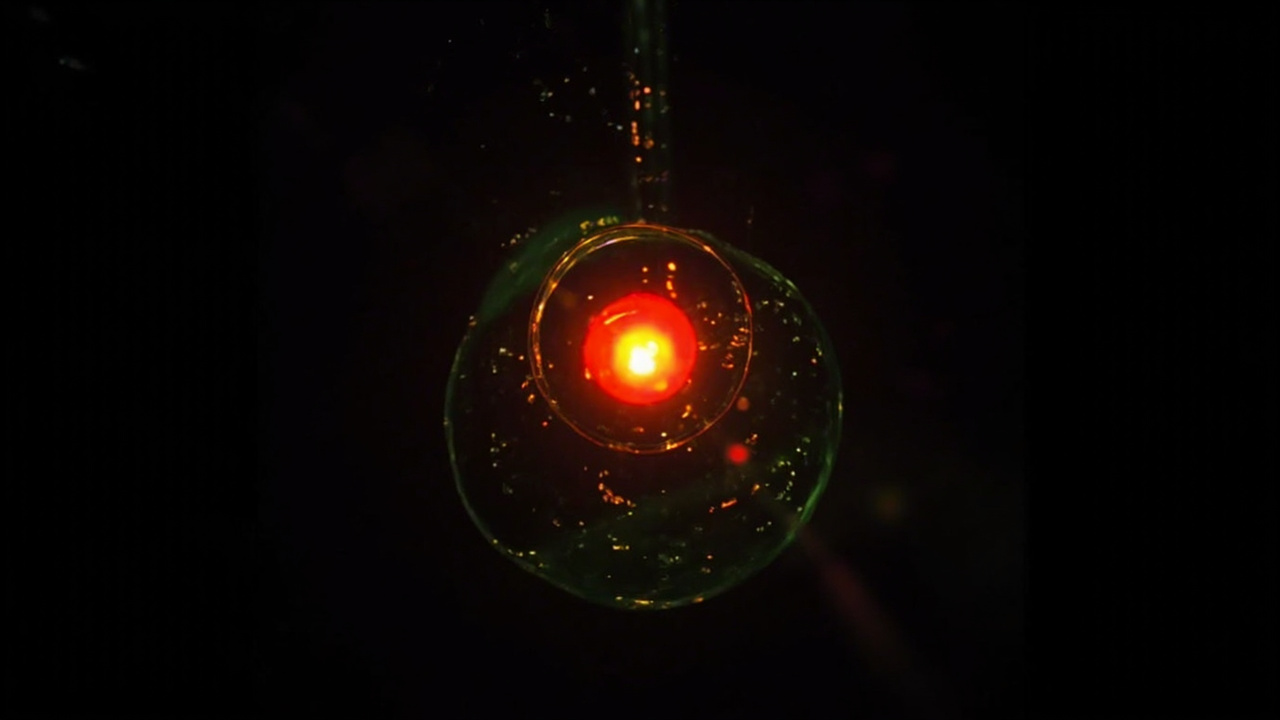
They set up a sun-tracking device (basically a motorized mount that acts like a mini telescope) that follows the sun throughout the day. This tracker feeds sunlight into a 20-meter optical fiber, which transports it into a dark laboratory inside a building. Then that sunlight hits a special crystal designed to split the light into entangled photon pairs.
The whole setup is beautifully simple when you think about it. It's like they took the most sophisticated quantum optics technique and asked: "How do we make this work with just... sunlight?"
And It Actually Worked
Here's where it gets genuinely impressive. Despite all that natural variation in sunlight—the flickering, the position shifts, all the chaos—the system successfully created correlated photon pairs with strong position relationships.
To test it, they used these pairs to perform "ghost imaging," which is basically quantum photography. Instead of a normal camera that directly captures light, they reconstructed images using the quantum correlations between paired photons. It's like painting a picture using invisible connections.
The results? The sunlight system achieved 90.7% visibility in its images. For comparison, a standard laboratory laser pulling the same power gets 95.5%. That's incredibly close—basically the same performance with free fuel from the sun.
They even reconstructed a detailed 2D image using this sunlight-powered quantum system. Not just a simple pattern, but an actual detailed picture. The researchers call it the "ghost face," which I think is a perfect name for quantum imaging.
Why This Actually Matters
I get it—quantum imaging sounds like something that only matters to physicists publishing papers. But this breakthrough has real implications:
First, it removes the biggest barrier to quantum technology in remote areas. Need a quantum imaging system on a remote island? On top of a mountain? In the middle of a desert for geological surveys? Now you can do it without worrying about power grids or equipment transport.
Second, this opens possibilities for space-based quantum systems. Spacecraft could run quantum sensors and imaging equipment without the weight and power demands of laser systems. That's genuinely transformative for future space missions.
Third, it's philosophically cool. We're figuring out how to use one of the most abundant resources available—literal sunlight—to do cutting-edge quantum tricks. There's something beautiful about that.
The Road Ahead
The researchers aren't claiming this is perfect yet. They noted that improvements in how we collect sunlight, better crystal engineering, and smarter algorithms (including AI-powered image reconstruction) could make the whole system even better.
But that's the exciting part. This isn't a dead-end curiosity. It's a foundation. We're just getting started.
What I find myself coming back to is the bigger picture: scientists looked at a technique that was considered "strictly laboratory only" and asked "what if we could make it work with the sun?" And then they actually did it.
That's the kind of creative, practical thinking that moves technology forward. Not just doing what's comfortable, but asking what's possible.
The quantum revolution might be powered by free energy from space after all.