
The Water Crisis Is Getting Worse
Let me start with a number that'll make you pause: 2.2 billion people still don't have access to safely managed drinking water. That's nearly one in three people on this planet. And as climate change intensifies and populations grow, that problem is only going to get worse.
Many coastal regions — from California to the Middle East — have turned to desalination plants to bridge the water gap. But here's the thing: traditional desalination is expensive, energy-hungry, and creates a massive environmental headache in the form of concentrated saltwater brine that's toxic to marine ecosystems when dumped back into the ocean.
So what's the alternative?
Well, a team at the University of Rochester just unveiled something that might change everything. They've created a solar-powered desalination system that produces clean drinking water without producing toxic waste. And honestly? The way it works is pretty fascinating.
The Secret Ingredient: Laser-Textured Black Metal
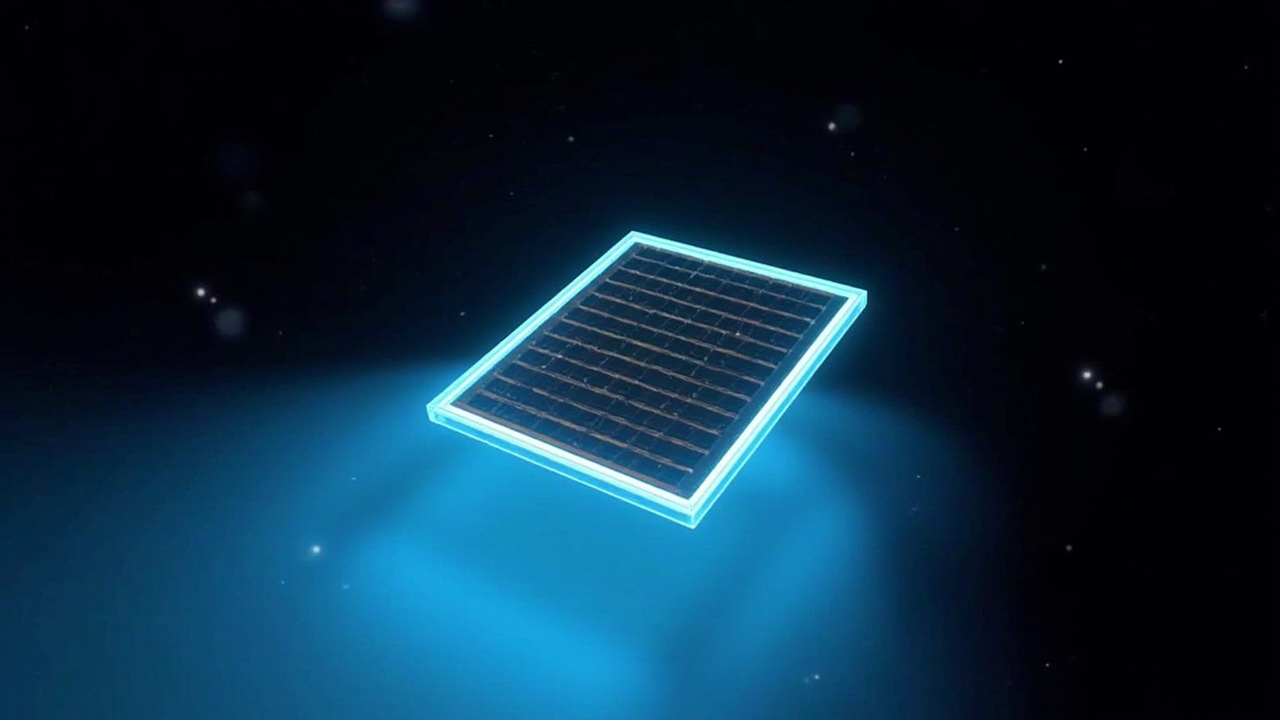
The system uses solar panels made from a special kind of black metal that has been treated with ultra-fast lasers — specifically, femtosecond lasers that pulse for quadrillionths of a second. This treatment creates a surface that does two remarkable things:
First, it absorbs nearly all incoming sunlight (we're talking about 99% absorption). Second, it becomes superhydrophilic, which means water literally clings to it and spreads across the surface like it's been oiled.
Here's where it gets clever. The researchers create microscopic patterns on the metal using the laser — an "active region" where water is drawn in and evaporated, and "passive regions" where dissolved salts get pushed away. Think of it like a tiny highway system for water molecules and salt ions, sending them in opposite directions.
Self-Cleaning Science (Finally!)
Now, here's where most similar technologies fail. When seawater evaporates and leaves behind salt, those minerals tend to accumulate and gum up the works. Over time, the system clogs up and stops working. That's been a huge barrier for many solar desalination approaches.
But these researchers found a clever workaround using something called the coffee ring effect — you know how when you spill coffee on a table, the liquid evaporates and leaves a dark ring of concentrated coffee at the edges? The team designed their surface patterns to take advantage of this phenomenon, actively pushing salts toward the passive regions where they can be collected as solid materials rather than building up at the evaporation site.
When they tested the system with real ocean water from the Pacific, Atlantic, and Indian Oceans, it kept working continuously without fouling. The surface essentially cleaned itself.
The Unexpected Bonus: Mining Minerals From Seawater
Here's what really excites me about this technology. Traditional desalination leaves you with liquid brine — essentially a toxic soup that's a nightmare to dispose of. This system instead collects salts in solid form, which is much easier to handle and transport.
But it gets better. Those recovered materials aren't just garbage; they're potentially valuable resources. We're talking about minerals like lithium, which we desperately need for electric vehicle batteries and consumer electronics. Seawater contains significant amounts of dissolved lithium, but extracting it has always been too expensive and complex to be practical.
The same laser-treated panels used for desalination can apparently separate lithium from seawater. So we're not just solving the water crisis — we're potentially creating a new pathway for mineral extraction that doesn't require destroying mountains or poisoning groundwater.
Why This Matters (A Lot)
Let's zoom out for a second. We're living through a water security crisis that doesn't get nearly as much attention as climate change or AI, but it's arguably just as urgent. Desalination has always been part of the solution, but the environmental costs have always been a dealbreaker.
This technology sidesteps those problems entirely. It's powered by sunlight, produces no toxic brine, and might actually generate valuable materials instead of waste. If it can be scaled up and deployed in water-stressed regions, we could be looking at a genuinely transformative approach to global water access.
Is it a magic bullet? Probably not. There are still engineering challenges to solve and costs to reduce before this becomes mainstream. But for the first time in a long time, I'm genuinely optimistic about where this could lead.